


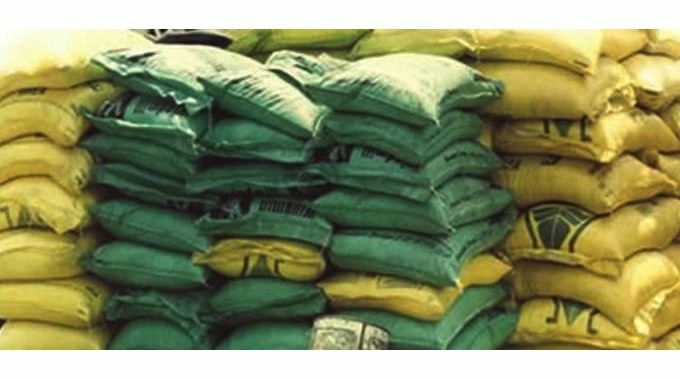
AGRO-INPUT stockists have reduced prices for some inputs in a move that is meant to encourage farmers to procure more inputs and increase area under crop production to enhance the production of most summer crops.
A comparison of some of the prices that obtained at the start of the season on October 24 and December 21 has shown a decline in price both in local and implied US dollar currencies.
Although a 25kg bag of maize seed has maintained the same price of $76 500, it has recorded a seven percent decline in the implied US dollar price calculated on the basis of the interbank rate.
The price of a 50kg bag of Compound D fertiliser has recorded a nine percent drop from $31 050 to $28 120.
There was also a 16 percent drop in the US dollar price from US$49 to US$42.
Top dressing fertiliser had the largest reduction from $44 850 to $39 960 per bag, marking an 11 percent change. In US dollar terms, the price dropped from US$71 to US$59, a 17 percent tumble.
In the herbicides category, atrazine suffered an eight percent knock from $6 094 to $5 600 and 14 percent drop in US dollar terms from US$10 to US$8.
Contacted for comment, Zimbabwe Commercial Farmers Union president Dr Shadreck Makombe said this would not have any impact on new plantings.
“The prices are falling simply because there is low demand for the commodities in question. We always warn businesses not to kill their business by charging high prices and now they are stuck with loads of inputs and trying to lure customers but that’s too late.
“Most people are done planting and these dealers should be acquainted with the characteristics of today’s farmer who is very particular about their spending ways with demand slackening if prices become exorbitant,” said Dr Makombe.
Tobacco Farmers Union Trust vice president Mr Edward Dune scoffed at the reduction in input prices at this time of the year saying farmers do not have local currency in their accounts to purchase the inputs but relied on barter trading in their localities.
“Even if prices may have declined in local or US dollar terms, most farmers don’t have the money to buy from these shops but barter trade with other farmers from their localities who might have left-over inputs from some previous contracting arrangements. – The Herald