


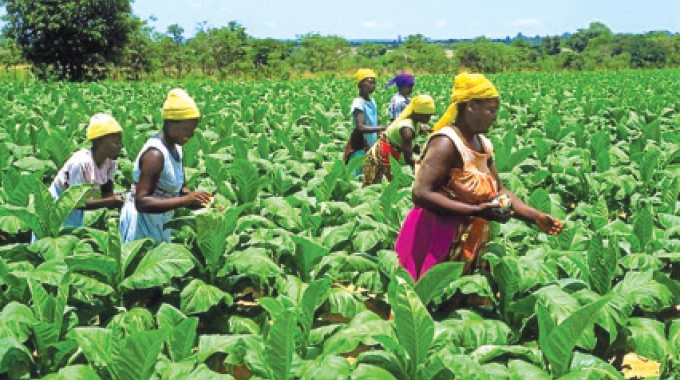
WITH the 2023 tobacco marketing season expected to begin soon, farmers have urged merchants still owing growers to clear outstanding payments for last year’s deliveries. This comes after more than 300 farmers thronged the offices of Voedsel Tobacco, a locally owned tobacco company demanding their payments last week. In an interview on Monday, Mr George Seremwe, president of the Zimbabwe Tobacco Growers Association (ZTGA), an amalgamation of four trade unions said it was disturbing that the 2023 marketing season will open with some farmers still being owed. “More than 300 farmers camped at Voedsel offices in Glen Lorne demanding their money,” said Seremwe. “(Its) promises after promises. Some spent several days expecting their money. As we go into the next season, we are urging the authorities to ensure that the merchants owing the farmers clear all outstanding payments.”
A farmer, who spoke to this publication said he was owed more than US$4 000, but only got US$50 after spending more than three days. “We are appealing to TIMB to intervene because it appears that they (Voedsel) are reluctant to pay,” said the farmers. Calls seeking comment from Tennyson Hwandi, director of Vodsale were not answered. Voedsel is among the companies that were blacklisted by the Tobacco Industry and Marketing Board (TIMB) for failing to pay the farmers last season. “We need our farmers to be protected and we believe it is the responsibility of the authorities to take action so that there is sanity in the tobacco industry,” said Seremwe. Last year, the TIMB said it was working to ensure that all outstanding payments are disbursed and advised affected farmers to approach the regulator for assistance. The 2023 marketing season is expected to start on March 8, with the country anticipating to produce 230 million kilogrammes from 212 million kg last year. Mr Seremwe told a local news agency, New Ziana that output was expected to be high in both volume and quality due to the good rains that the country received this cropping season. He said the quality of the tobacco crop was good and would fetch top prices. “This year, we have got a very good crop. The rains were good, even the dry land crop which is rain fed could be looking like the irrigated crop because the rains were quite good. “We are expecting a very good quality crop. We are only concerned that the inputs were quite expensive, so the prices we are going to fetch from the market should reflect that,” he said. Tobacco is the country’s biggest agricultural export and second largest single commodity export after gold, raking in around US$800 million in 2021. The output has grown from 48 million kilograms in 2008 to over 200 million kilograms now, and the bulk of it is produced by small-scale farmers. Currently, only 18 percent of the crop is grown under irrigation, and the intention is to expand this to at least 40 percent. sophie rain real name The TIMB said it was working with its parent ministry of Lands, Agriculture, Fisheries, Water and Rural Development to bring order and sanity to the industry as it seeks to achieve a US$5 billion industry by 2025. According to the Tobacco Value Chain Transformation Plan, approved by the Cabinet in 2021, local funding of tobacco has the potential to maximize net export proceeds. But only to the extent banks have the capacity to fund local input producers with domestic currency. The plan seeks to raise localization of tobacco funding to 70 percent by 2025, boost output to 300 million kilogrammes, increase the level of value addition of the leaf into cutrug and boost the production of cigarette to 30 percent from 2 percent. – The Herald