



THE effective engagement of men and boys in the fight against HIV and Aids is key in ending the epidemic as a public health threat by 2030.
Men and boys are less likely to test for HIV, to initiate antiretroviral therapy and to remain engaged in care.
Many of them are therefore dying of Aids-related illnesses and many other diseases at disproportionately higher rates than their female counterparts.
This has become increasingly clear over the past decade.
Globally, antiretroviral therapy coverage of men lags behind that of women.
In many countries in eastern and southern Africa, the region with the highest HIV burden, more than half of men aged 24-35 years living with HIV are unaware of their status and therefore not on treatment.
This imperils their own health and increases the risk of HIV transmission.
The diagnosis of undiagnosed men is essential for promoting their health and breaking the cycle of HIV transmission.
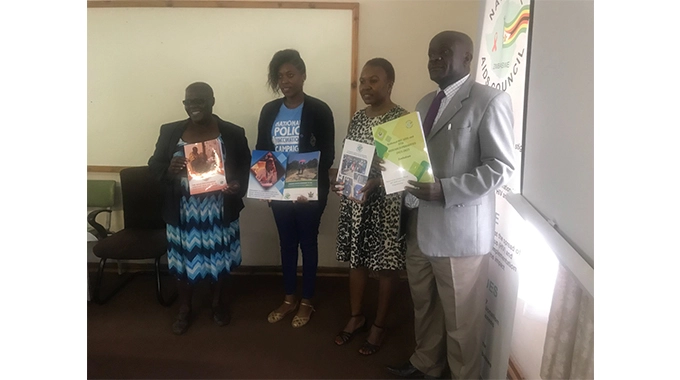
The National Aids Council (Nac) yesterday launched the Zimbabwe Male Engagement Strategy for HIV, Sexual Reproductive Health and Rights (SRHR) and Gender-Based Violence (GBV) in Gweru.
Officiating at the launch, the Ministry of Women Affairs Community, Small and Medium Enterprise Development Midlands provincial head Ms Sithembile Dube said HIV and Aids public health prevention and treatment campaigns have largely focused on women and girls.
“I feel greatly honoured to be here to officiate at this very important meeting to launch the Zimbabwe Male Engagement Strategy for HIV, Sexual Reproductive Health and Rights (SRHR) and Gender-Based Violence (GBV). It is gratifying to note that the consultative and development process which was conducted in 2022 gave birth to the documents we are here to launch,” said Ms Dube.
She said the main objective of the male engagement strategy is to strengthen efforts towards increased engagement and participation of men and boys in the national HIV, SRHR and GBV responses.
This, Ms Dube said is part of fast-track efforts to end Aids as a public health threat by 2030.
“The Strategy was developed through a consultative and participatory process involving key stakeholders at national, provincial and district levels as well as traditional and religious leaders and men, women, and girls at community level. I wish to thank all the partners for your valuable contributions during the consultative process and more specifically thank the UNAIDS for providing valuable technical and funding,” she said.
Ms Dube said Zimbabwe has made considerable progress in the fight against HIV, with HIV prevalence and incidence decreasing by 23,6 percent and 75 percent over the past decade respectively.
However, she said, despite the notable achievements, the burden is still huge for the country and requires all concerted efforts and collective responsibility if Aids is to be ended by 2030.
“In sub-Saharan Africa and specifically in Zimbabwe the focus of the epidemic has historically been on women and girls.
Women are considered to be particularly vulnerable to HIV infection in this setting because of biological factors, their reduced sexual autonomy, men’s sexual power and privilege over them and GBV,” said Ms Dube.
She said this understanding has led HIV and Aids public health prevention and treatment campaigns to focus on women and girls.
“As a result, men have received considerably less attention in the epidemic and receive less targeted HIV prevention and treatment programmes. The effective engagement of men and boys in the fight against HIV and Aids is key in ending the epidemic as a public health threat by 2030,” said Ms Dube.
She said population-based HIV surveys show that men consistently lag behind women in awareness of their HIV status.
In some settings, Ms Dube said men diagnosed with HIV are also less likely to adhere to antiretroviral therapy (ART) and maintain viral suppression.
“Although women and girls are disproportionately affected by HIV, the effective engagement of men and boys is also critical for both equity and effective HIV epidemic control. Minimal male engagement in HIV programmes is typically attributed to several key barriers,” she said.
Ms Dube said men interact with the health system less frequently than women, who are more likely to visit health facilities in the context of family planning, antenatal services and paediatric care.
“These contacts provide ongoing opportunities to access information about HIV and related services. Male gender norms present a second barrier, prompting concerns about compromised masculinity for men who use health services in general and HIV services in particular. Stigma is another important deterrent of male interaction with HIV services,” she said.
Ms Dube said the overarching aim of the strategy is therefore to provide a framework for mainstreaming male engagement and participation in national HIV, SRHR and GBV responses.
United Nations representative Ms Linda Hwenga said for the country to achieve its target of ending Aids by 2030, it has to deal with the inequalities driving the epidemic.
She said the Zimbabwe National HIV and Aids Strategic Plan 2021 – 2025 seeks to address the inequalities and resource needs among others.
“HIV and Aids remain a global health crisis as efforts to prevent infections have been less successful,” said Ms Hwenga. – The Chronicle