


ZIMBABWE would leverage enhanced bilateral cooperation with Belarus to drive its industrialization transformation agenda with a special focus on the leather and manufacturing technology sectors, Industry and Commerce Minister, Dr Sekai Nzenza, said yesterday.
The minister was part of the high-level delegation that accompanied President Mnangagwa and his Belarus
counterpart Alexander Lukashenko during a tour of the resort destination of Victoria Falls.
She said as a follow-up to some of the agreements already signed between the two countries, her ministry was
pursuing areas of cooperation on leather and cotton value chains.
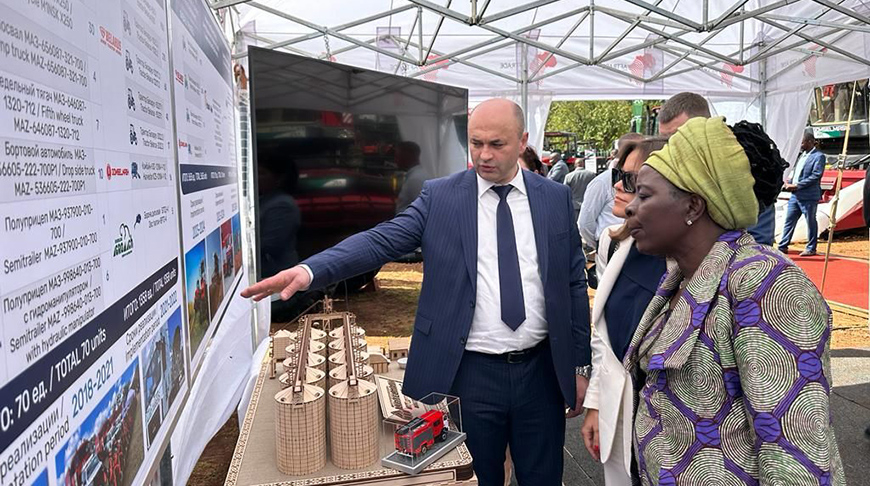
Already, the Second Phase of the Zimbabwe-Belarus Farm Mechanisation Programme has been launched in Harare where eight agreements were signed in education, agriculture, and economic cooperation, on Tuesday.
Dr Nzenza said the Ministry of Industry and Commerce signed the agreement on textile manufacturing aimed at tapping into the huge livestock sector in the country.
“His Excellency the President (Mnangagwa) has been talking about Zimbabwe being open for business and engagement and re-engagement. So, what we have witnessed here with the visit by the Belarusian President is quite clearly a fulfillment of a promise whereby we are now out to trade and have bilateral relationships,” she said.
“A number of agreements have already been signed in agriculture and also in higher education and this morning the Ministry of Industry and Commerce signed an agreement on textile manufacturing, leather manufacturing.
“Very soon we will be talking about increased fertilizer production. So, conversations are happening.”
Dr Nzenza said the enhanced cooperation was a critical development that will translate into huge industrial growth.
“So, the realisation of this visit is that we are moving to implementation and also looking at technology, skills sharing and utilising the natural resources of this country to benefit Zimbabweans creating more jobs and creation production,” she added.
“What it means is that we have seen the revival of industry especially manufacturing and mining where we are talking about value addition and more importantly looking at what Zimbabwe has and what Belarus has and then we find the middle ground where there is shared value between the two countries.”
The minister said Zimbabwe has vast leather sector potential but due to lack of investment, it is exporting the product mainly in its raw form.
She said the time has come for manufacturing to take place locally through value addition and for Zimbabwe to have its own world-class handbags, fabrics, and other refined products.
Zimbabwe has livestock and Government has committed to increasing livestock population, said the minister.
Dr Nzenza sad there are opportunities in the cotton sector and discussions are ongoing to sign an agreement on leather cotton and fertilizer production as well. – The Chronicle
- Latest
- Trending