


NINE-YEAR-OLD Ngakudzwe Mwanditani was diagnosed with inguinal hernia when he was only four.
With little knowledge of the condition — and not enough money to seek medical help — his father, Mr Nicholas Mwanditani, had no option, but to just pray so that his son’s pain would subside.
“As a father, it really broke my heart as I watched my son in pain for years. I was hopeless most of the time, knowing I could not do anything. The hernia repair surgery costs US$500 and l could not afford it. I only make less than US$50 a month as a tiler,” explained Mr Mwanditani.
Ngakudzwe missed school frequently for five years due to unbearable pain caused by hernia. Mr Mwanditani remembers how his son’s academic performance suffered as a result.
Ngakudzwe was unable to participate in activities such as athletics, running, playing with wire cars and soccer — his favourite sport — like other children of his age.
He was reduced to being a mere spectator of the fun and playing soccer seemed an unattainable dream because of his condition.
When Mr Mwanditani heard about the Ministry of Health and Child Care paediatric hernia repair camp on social media, he immediately borrowed some money for transport from his friends in Harare so he could travel to Mutare, some 300 kilometres away. This was his only chance to change his son’s life.
Speaking after the surgery, Mr Mwanditani explained with tears of joy: “This camp has been a dream come true. My son’s life has been changed forever. He can now have a normal life and play his favourite sport — soccer. l am so grateful to those who made it possible. l only had to spend money on transport, a smaller cost compared to the amount l would have paid for this surgery.”
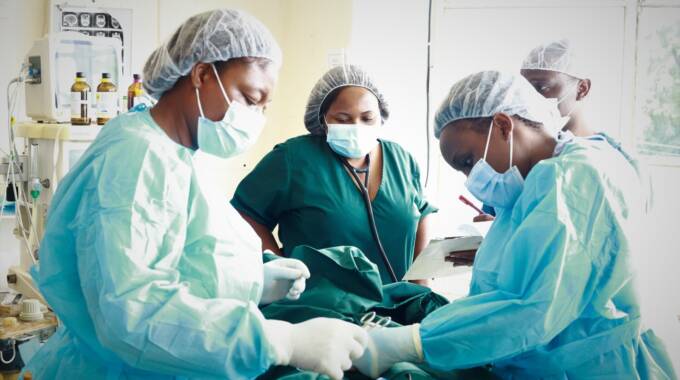
Ngakudzwe is one of the 101 children aged two to 12 years who received free hernia repair during the Ministry of Health and Child Care surgical camp held between March 20 and 24 at Victoria Chitepo Provincial Hospital in Mutare.
The surgical camp was led by Sally Mugabe Central Hospital paediatric surgeon Dr Precious Mtambanengwe, whose team comprised six anaesthetists, three paediatric surgeons, six surgical nurses and 24 registered nurses from Victoria Chitepo Provincial Hospital.
Dr Precious Mtambanengwe said the surgical camp demonstrated that Zimbabwe has qualified health workers who can execute complex surgeries.
“This camp brought the services close to the people,” she said.
Victoria Chitepo Provincial Hospital medical superintendent Dr Jaensch Mutende highlighted the importance of the surgical camp, which addressed the need for hernia repair in the community and allowed them to attend to more children, thereby reduce the number of patients on their long waiting list.
The surgical camp was conducted with technical and financial support from the World Health Organisation (WHO), Celebration Health, Smile Train and the United Nations Children’s Fund (UNICEF).
The camp is a testimony of the ministry’s efforts to accelerate access to essential surgical services, in line with the National Surgical, Obstetric and Anaesthesia Strategy 2022-2025.
WHO’s support was made possible through funding from the government of Japan, which committed US$633 975 to strengthen access to safe, timely and affordable surgical, obstetric and anaesthesia care services in Manicaland and Matabeleland North provinces in 2023.
“This intervention directly contributes to Zimbabwe’s national health agenda, which aims to achieve universal health coverage (UHC) by 2030. Surgical services are a crucial component of UHC,” said Dr Thenjiwe Sisimayi, WHO Zimbabwe SDG3 GAP technical officer. A hernia occurs when an organ or tissue in the body, such as a loop of the intestine, pushes through a weakened area in the abdominal wall.
This bulge is called hernia. It may look like a lump, which causes discomfort in children, such as swelling of the abdomen.
Corrective surgery is required to treat an inguinal hernia. In many cases, surgery is done soon after the hernia is found.
The two most common paediatric hernias in Zimbabwe are inguinal hernias in the groin area and umbilical hernias in the belly button area.
* Tatenda Chimbwanda is a communications specialist at WHO Zimbabwe.