



IMAGINE at the age of 22, you are a woman and the baton is passed to you following the death of your father who was a chief.
You become unapproachable for courtship because this could be seen as a sign of disrespect for the traditional leadership institution.
You are now also responsible for allocating land to your subjects and even settling disputes in the community.
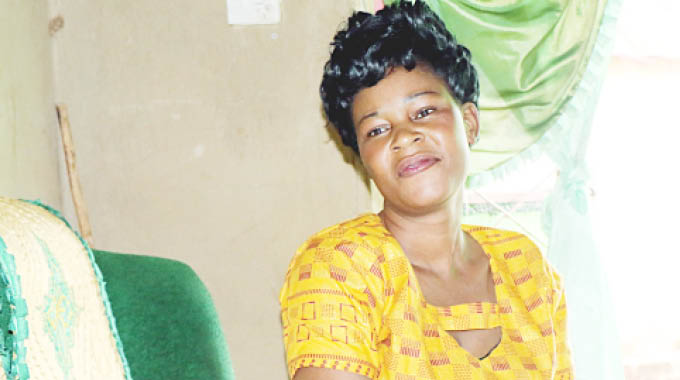
It might seem to be a fairy tale but that is the reality for Chief Ndube, real name Nonhlanhla Sibanda (38) from Insiza District in Matabeleland South. She was installed as a chief in 2001, when she was just 22 years old.
Her life turned upside down as she had become a community leader in an area where even elders would approach her seeking counsel.
But for the past 16 years, Chief Ndube has navigated challenges that come with her position and is proud to have held the male-dominated position.
Chief Ndube is among just a handful of female chiefs in the country as society is still finding it hard to accept that a woman can be a chief.
“When I started it was difficult but now, I don’t think there is anything challenging especially when you know your responsibilities. I have been a chief for 16 years and this means I was installed when I was still very young. I was 22 years old then,” she said.
Chief Ndube was speaking in an interview on the sidelines of the annual National Chiefs Conference 2023 which ended in Bulawayo yesterday.
She said while the community easily embraced her as a chief, there were some from the political circles who doubted her capabilities.
“Most of the people in the community didn’t mind but politically there was a problem. Ngingathi babedelela.
“They did not respect me but this happened for a short time and we managed to fix the issue and we are now smooth sailing,” she said.
Chief Ndube said being a female traditional leader puts her in a position to help many women as they are the majority who present their cases before her customary court.
She said when women appear before a female chief they are more open unlike when they appear before male ones.
“I know that some traditional courts still do not have female assessors which puts a woman to a disadvantage. When a woman is dominated by men, she becomes afraid and may struggle to openly speak out and even tell the truth because men are already feared,” she said.
Chief Ndube said her court has gender balance with male and female assessors to help her make rulings.
She said she also has aquota for youths to ensure that there is inclusivity in making judgements.
Chief Ndube said coming from a gold rich district, she handles marital and infidelity related matters mostly in her court as money can cause problems in families.
She said the motherly touch always plays out in her court.
“In most cases, it is difficult to find me ordering someone to pay a fine of cattle. In my court, I think I am mainly doing counselling, I don’t rush to punish someone. I try to make people understand what they would have done wrong especially if they are first offenders. In most cases, I give the aggrieved an opportunity to suggest what kind of fine should be extended to the offender and they will guide the process,” she said.
Chief Ndube said while she has been a chief for years it remains a challenge for other women who are in line to become chiefs to be accepted even at family level.
She said there is nothing to fear in having a female chief.
“The chieftaincy lineage is not affected because this does not mean that my children are going to bein line to take over from me.
“If I had a male sibling, he is the one who was going to take over from me but since I’m the last born in my family and we were just girls the five of us, it means the chieftaincy is going to move from my father’s house to one of my uncle’s children,” she said.
Chief Ndube said as a child it never dawned on her that she was going to be a chief.
She said Government’s gender equality policies have empowered women to take up the position with confidence.
“This is new to have female chiefs; families still do not want to accept that women can lead. At that time, it was even worse. I was very young. Growing up, I didn’t even expect to become a chief. The Government gender equality programme really helped empowerment and helped me to reign after my father. It will also assist other women. I’m now an example to other women that they also can be leaders,” said Chief Ndube.
She said being a traditional leader also comes with a lot of disadvantages as men under her jurisdiction find it difficult to seek her courtship.
Chief Ndube, now married, said her husband Mr Prosper Moyo from Binga did not know that she was a chief when he approached her.
“No one can approach you knowing that you are a chief. So, you have to be approached by those who come from afar and do not know who you are. Someone has to be seen as an ordinary person because there is no way someone in the community could approach me,” said Chief Ndube.
“So what happens is that my husband didn’t know that I was a chief when he approached me because if he had prior knowledge I don’t think he was going to proceed.”
She said being a chief comes with a lot of responsibilities, forgoing some liberties that one enjoys as a young person.
“You are not as independent as your peers. The moment you are installed as a chief, your life changes, whatever you do is under scrutiny and limited. Most of the time you will be expected to act like an adult but you will still be a young person,” she said. – The Chronicle