


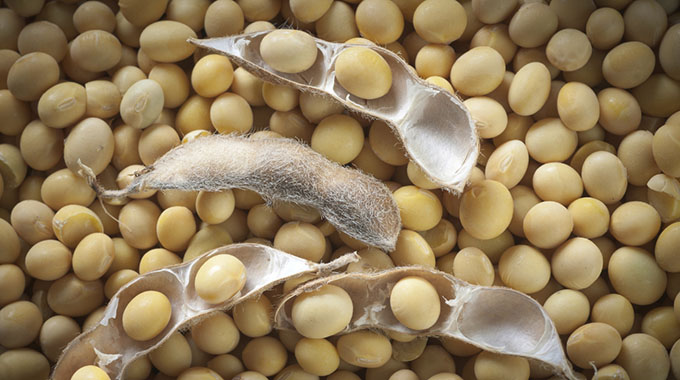
Soyabean contractors are optimistic of a huge harvest this season after a 9 percent increase in the area under soyabean from 51 488 hectares in the previous season to 55 944ha now.
The jump in the area under soyabean is expected to reduce Zimbabwe’s import bill.
This comes as imports of crude and refined soya bean oil and fractions, surged 30 percent to US$290 million last year, from US$223 million in the prior year, according to statistics from the Zimbabwe National Statistics Agency (ZimStats).
The Government has been calling for import substitution through increased local production.
Since 2010, Zimbabwe’s import of crude and refined soya bean oil has been on an upward trend from US$30 million in 2010 to US$290 million last year, representing a whopping 867 percent rise.
Soyabean is a strategic crop and a raw material for oil expressing, stockfeed manufacturing and food industries.
The country requires about 240 000 tonnes of soya beans per annum for cooking oil and stockfeed manufacturing.
Industry has installed oil crushing capacity of about 460 000 tonnes.
The growth of the livestock industry, especially poultry, piggery and fish as well as change in eating habits wherein an increasing number of consumers prefer white over red meat, has driven the demand for soyabeans.
For import substitution, the Government has called on local industries to fund at least 40 percent of their raw material requirements through increased local production as a smart way of avoiding exportation of jobs and expenditure on foreign currency payments from cooking oil imports.
Oil Expressers Association of Zimbabwe chairman, Mr Busiso Moyo, recently said in 2021 they contracted 10 percent of their raw material needs due to limited finance for inputs.
The association was aiming to reach between 40 and 50 percent of their requirements by 2025 and were in negotiations with potential funders and financiers.
However, it is worrying to note that not all the country’s nine edible oil processing plant companies contracted local farmers for their raw material requirements this season.
Some of the companies said they source their raw materials from self-financed local farmers.
But this will result in increased competition for soya bean and sunflower crops between contractors and non-contractors this marketing season, with increased chances of side marketing.
An analyst who requested anonymity said for import substitution to work well, there was need for Government to issue a Statutory Instrument mandating all oil expressing companies to fund at least 40 percent of their raw material needs through local contracting arrangements starting in the 2023/24 agriculture season.
This will be beneficial to the companies as they have processing plants that are lying idle due to lack of raw material.
There was also need for the Government to introduce a reduced quota on the quantity of soya bean and sunflower products that companies can import or outright ban starting in the 2023/24 season.
The first round of crop, livestock and fisheries assessment report indicates that the area under sunflower rose 209 percent from 45 586ha in the 2021/22 season, compared to this season’s 140 940ha.
Food Crop Contractors Association chairperson Mr Graeme Murdoch recently said members under their organisation have surpassed their pre-season target by 10 percent.
“Our members have planted a little over 30 000ha thereby eclipsing our set pre-season soya bean target by 10 percent.
“The early planted crop under irrigation is magnificent and we are optimistic of an optimal yield. On average we are expecting average yields of between 2, 5 and 3 tonnes per hectare,” said Mr Murdoch.
The desire by local oil expressing companies for soya bean oil as opposed to sunflower oil, saw a switch on imports between the two products over the same time period, with soya bean increasing while sunflower decreased. – The Herald