



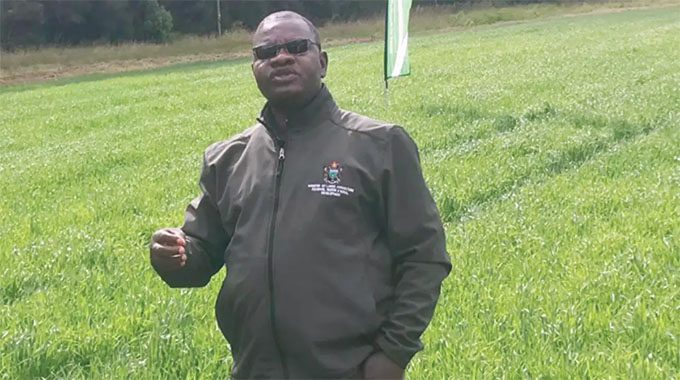
Farmers have now planted 640 000 hectares of traditional grains, almost double the 392 000 hectares they had planted by this time last year.
Currently, planting of potatoes, sugar beans and sunflower is still in progress.
The Government’s push not to leave anyone or any place behind in its developmental programmes is set to see farmers in dry regions benefiting from value addition of traditional grains, now the grain of choice in the input schemes in areas considered very marginal or almost useless of maize.
The move, which is anchored in the Traditional Grains Growth Plan that seeks to boost food security and incomes, is also in sync with the country’s vision of becoming an upper middle income economy by 2030.
Traditional grains are crops for marginal and vulnerable areas highly susceptible to the changing climate.
Under the Presidential Input Scheme (Pfumvudza/Intwasa programme) this season, the Government was targeting 312 890ha under traditional grains such as sorghum and pearl millet with a projected combined yield of 318 383 tonnes.
The farmers went a lot further.
This is reflected in the Pfumvudza/Intwasa programme where farmers in areas unsuitable or marginal for maize have traditional grain seed packs instead, to boost the chances of a decent harvest, and even in the wetter areas are advised to plant one plot to traditional grain.
According to a weekly update on Agricultural Advisory and Rural Development Services (Aards) reveals that pearl millet planting is now at 169 348ha compared to 122 494ha last year. Sorghum planting is at 320 313ha compared to 216 741ha last year, soya bean is at 494 504ha compared to 44 845ha in the same period last year and sunflower jumped to 56 215 ha compared to 8 507ha last year.
Last week, Aards chief director Professor Obert Jiri said the crop condition and situation is much better than last year adding that the northern part is much better in terms of maize and the southern part is much better in terms of traditional grains.
Maize has been a popular crop, with many farmers producing it at commercial level, while others in the drier parts of the country have also continued to try their luck despite low yields and the risk of a write-off.
The value attached to traditional grains had been so low that some were viewing the crops as varieties for the vulnerable.
But traditional crops such as sorghum, millet and rapoko are slowly becoming popular as people are becoming aware of their high nutritional value and improvement in technology which has seen the introduction of machinery for processing them.
Zimbabwe Indigenous Women Farmers Association Trust president, Mrs Depinah Nkomo said most farmers were now considering traditional crops because of favourable returns.
“I encourage most women to grow traditional grains as they perform better than maize and grow even under drought. They are also offered good prices for sunflowers. We are also sure of food security if we also prioritise traditional grains farming,” she said.
Mrs Nkomo said the condition of small grains is satisfactory adding that some farmers are busy right now increasing the hectares under these grains.
Recently, Zimbabwe Commercial Farmers Union president Dr Shadreck Makombe said farmers were diversifying to traditional crops because of their high demand on the market and the awareness campaigns being carried out on the importance of healthy foods.
“More people are now health-conscious with some restaurants now even serving traditional foods. Long back, demand for traditional food was low, as the food was perceived to be for the poor. Now the affluent are the ones who demand traditional food and this has increased the demand for the food on the market,” he said.
Production of crops was financed through the Government’s Pfumvudza/Intwasa programme, private sector contracts and self-financed farmers. – The Herald