


Peri-urban farmers in Bulawayo’s Ward 17 are expecting to start reaping rewards after they received chicks under the Presidential Poultry Scheme in November last year.
Government distributed 10 000 chicks to 1 000 households in Methodist Village, St Peters and Mazwi village in Ward 17.
The Presidential Rural Poultry Scheme’s objective is to commercialise rural poultry production and increase rural incomes while providing households with a rich source of protein.
It intends to provide 30 million rural chickens to three million households throughout the country. The breeds of the chickens include Boschveld, Sasso, Kuroiler, and indigenous chickens. Zimbabwe has over 50 million indigenous chickens.
The scheme has also raised hopes among rural communities that they will soon become hubs for organically-produced live chicken, eggs, and chicken meat in the next two to three years, with the country set to earn thousands of dollars from exports of the products.
This comes as the Second Republic has made food security a priority as shown by the milestone of having achieved a US$8,2 billion agriculture industry economy in a record 18 months, a key driver towards Vision 2030 that seeks to make Zimbabwe an upper middle-class economy.
Despite all the efforts by the Second Republic to empower rural communities in line with its leaving no one and no place behind, some critics have been posting gloomy pictures of the scheme claiming the chicks were sickly and dying within days after being handed over to the farmer.
However, a visit by a Chronicle news crew to St Peters presented a different picture.
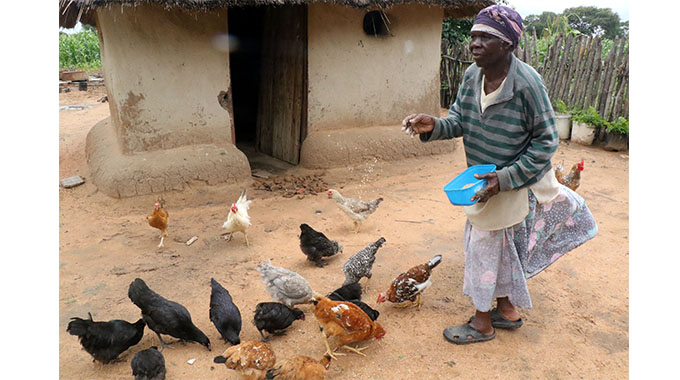
Widow Ms Agnes Mabhande said she still has all the 10 birds she received and was expecting some to start laying eggs anytime from now.
“I’m looking forward to economic benefits from these chickens. When we started hearing about this scheme, there were some negative stories such as the chicks were sickly and would not even last a few days but look now, more than two months later, all of them are alive, healthy and will soon start laying eggs. We are very grateful to the Government for this empowerment and I personally say shame to those who were spreading the lies,” said Ms Mabhande.
She said soon after getting her batch she sought advice from experts on how best to care for the chicks which she did religiously.
Ms Mabhande, who stays with her grandchildren, said the economic benefits will transform their lives for the better.
Another villager Mrs Ranganai Dziso said while she lost three chicks out of the 10 she received, she remains excited at the prospects of rewards that are set to accrue from the remaining chickens which are all healthy.
She said any business has its own risks and the loss of the chicks cannot, therefore, be blamed on the assumed poor health condition of the birds upon distribution.
Mrs Marble Dube, another beneficiary, said the chicks she lost were as a result of her failure to afford the cost of medicine, not because the chicks were already unwell when she received them.
“I still have a few chicks, some, of course, have died and I feel if I had the means of purchasing the necessary medicine that could have been avoided but nevertheless it (Presidential Poultry Scheme), remains a great initiative from the Government,” said Mrs Dube. – The Chronicle