
• Latest
  • Trending
  • All
  • News
  • Economy
  • World
  • Lifestyle
Mysterious Medieval City in Africa Had a Genius System to Survive Drought

Mysterious Medieval City in Africa Had a Genius System to Survive Drought

3 years ago

Sécurité et fiabilité de l’outil prospective style artistique

1 day ago

X3Bet Casino site officiel – Sécurité, licence et jeu responsable

2 days ago

faircrown online casino – Sicherheitsguide für deutsche Spieler

3 days ago
China in Africa: Who is fooling who?

China in Africa: Who is fooling who?

2 years ago
Sino-Zim: Turning the ironclad pact into dollars

Sino-Zim: Turning the ironclad pact into dollars

2 years ago
If our friends in China did it…

If our friends in China did it…

2 years ago
Handbook to guide Gukurahundi Outreach

Handbook to guide Gukurahundi Outreach

2 years ago
Harare building collapses, woman dies

Harare building collapses, woman dies

2 years ago
Africa backs Zimbabwe’s Security Council bid

Africa backs Zimbabwe’s Security Council bid

2 years ago
ED says no to third term

ED says no to third term

2 years ago
Banks start changing accounts to ZiG

Banks start changing accounts to ZiG

2 years ago
SADC will prioritise food security, says Incoming Chairperson

SADC will prioritise food security, says Incoming Chairperson

2 years ago
  • About
  • Advertise
  • Privacy & Policy
  • Contact
Saturday, April 25, 2026
  • Login
Zim Sentry
  • Local News
  • Africa
  • International
  • Thought Leader
  • Economy
  • Lifestyle
  • SportsTrending
No Result
View All Result
Zim Sentry
No Result
View All Result
Home Thought Leader

Mysterious Medieval City in Africa Had a Genius System to Survive Drought

January 31, 2023
in Thought Leader
0
Mysterious Medieval City in Africa Had a Genius System to Survive Drought

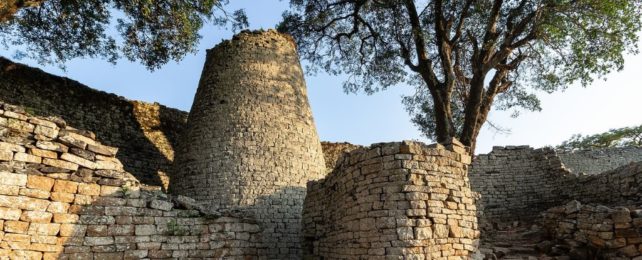
Great Zimbabwe. (Andrew Moore/Wikimedia Commons/CC BY SA 2.0)

499
SHARES
1.4k
VIEWS
Share on FacebookShare on Twitter

Great Zimbabwe was the first major city in southern Africa, home to an estimated 18,000 people at its peak. Yet no one really knows why it now lies in ruins.

The demise of the once-thriving Medieval metropolis is sometimes boiled down to drought and a drying climate, but archaeologists have now found evidence of careful water conservation amid the wreckage.

A team of researchers from Denmark, South Africa, England, and Zimbabwe argue that a series of large, circular depressions known as ‘dhaka’ pits, found around the city, were not used for digging up clay, as experts once thought, but for capturing water.

At the base of several hillsides, for instance, lie numerous dhaka pits, strategically placed to capture rain and groundwater. Other pits surrounding the city straddle streams.

By collecting rainwater and cordoning off some parts of a river or stream, researchers argue the people who once lived here could have ensured water was available for drinking and agriculture through most of the year, even in dry season.

Many of the plant remains found near dhakas, for instance, are known to thrive near rivers or groundwater sources that hold high soil moisture.

The new perspective of Great Zimbabwe’s dhaka pits was made possible by using airborne laser scanning to survey the major features of the site, even in places with thick vegetation.

These findings were then complemented by ground surveys and conversations with local communities, who must also conserve water in the arid region.
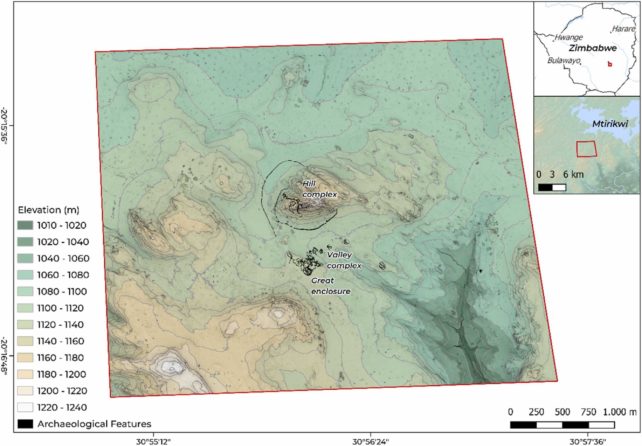
Dhaka Map Great Zimbabwe
A map of the Great Zimbabwe ruins showing the main structures. (Pikirayi et al., Anthropocene, 2023)

Figuring out how much water all the dhakas around the city could have once held is imprecise work, especially since this is one of the first studies to really examine the structures. Nevertheless, estimates suggest these pits might have stored over 18 million liters of water.

In the heyday of Great Zimbabwe, between the 11th and 15th centuries, the city was home to ruling elites, religious leaders, craftsmen, and merchants, all of whom would have shared spring water and rainwater in an integrated and flexible system.

During the rainy season, experts say some areas of the city would have become wet and marshy. These locations appear to have been perfect for mining clay to build houses. In drier times, some of these quarries seem to have been turned into reservoirs to collect groundwater and runoff from surrounding hills.

“This partially engineered landscape required maintenance, though organized in a relatively passive manner as runoff was allowed to wash into these basins,” the authors write.

“Taken together, the new records show that physical forms, ecological functions, and cultural values of water all shaped, and were shaped by, how communities approached, managed, and conserved water,” they add.

Today, very little is known about the history of Great Zimbabwe. It’s still possible that the city collapsed due to climate change, even with such a carefully coordinated water system.

During its existence, the world experienced the Medieval Climatic Anomaly and a Little Ice Age, which could have put the growing city under immense stress. But economic or political strains could have also caused its demise.

More research needs to be done before archaeologists can say what happened to southern Africa’s first city and its people. Perhaps there’s a lesson to be learned in the ruins.

The study was published in Anthropocene.

Tags: Great Zimbabwe
Share200Tweet125Share50
tendaik1

tendaik1

  • Trending
  • Comments
  • Latest
Richarlison World Cup goal voted best of the tournament

Richarlison World Cup goal voted best of the tournament

December 24, 2022
By-election victories have primed us for 2023 polls, says ZANU PF

By-election victories have primed us for 2023 polls, says ZANU PF

October 24, 2022
New pay structure for civil servants

New pay structure for civil servants

January 8, 2023

Sécurité et fiabilité de l’outil prospective style artistique

0
Zim/Iran seek improved economic relations

Zim/Iran seek improved economic relations

0
President Masisi to open Harare Agric show

President Masisi to open Harare Agric show

0

Sécurité et fiabilité de l’outil prospective style artistique

April 23, 2026

X3Bet Casino site officiel – Sécurité, licence et jeu responsable

April 23, 2026

faircrown online casino – Sicherheitsguide für deutsche Spieler

April 22, 2026
Zim Sentry

Copyright © 2022 ZimSentry. All Rights Reserved

Your Trusted Watchman

  • About
  • Advertise
  • Privacy & Policy
  • Contact

Follow Us

No Result
View All Result
  • Local News
  • Africa
  • International
  • Thought Leader
  • Economy
  • Lifestyle
  • Sports

Copyright © 2022 ZimSentry. All Rights Reserved

Welcome Back!

Login to your account below

Forgotten Password?

Create New Account!

Fill the forms below to register

All fields are required. Log In

Retrieve your password

Please enter your username or email address to reset your password.

Log In

You cannot copy content of this page

no_deposit_bonus