



ZIMBABWE’S multi-million-dollar and private sector-backed debt instruments to fund several infrastructural projects are not peculiar in any way, as they are “part of Government’s on-going domestic capital mobilisation strategy”, according to analysts.
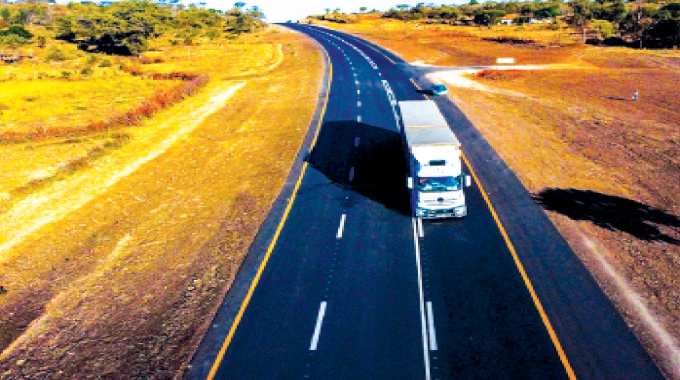
This comes as Finance and Economic Development Minister, Professor Mthuli Ncube, has inked several deals, including the US$360 million Harare-Kanyemba (HEKA) private-public sector partnership (PPP), which was born out of a 2018 international tender and to help Harare tap into the lucrative north-south transit traffic as well as fully utilise its assets such as the new Beitbridge Border Post (BBP).
“The infrastructure bond represents a step in the right direction in which development is funded through savings in the economy… attracted by the project’s credentials..,” Trigrams analyst Walter Mandeya told our sister paper Business Weekly recently.
“This approach ensures that funds held through liquidity aggregators such as pension and other (institutional investors, including real estate investment, unit trusts and other domestic household savings can earn a fair (value and) return without causing inflation,” he said.
Furthermore, Mr Mandeya said another benefit of the self-funded model such as the Platinum Investment Managers (PIM) proposition — based on global bond pricing benchmarks, easily convertible and value-preserving proposition as well as schedule of how the US$360,5 million would be utilised — was that it could help government unlock more facilities.
As such, this represented the President Mnangagwa-led administration’s desire to “shift approaches in allowing markets to determine their capacity with this short-term facility, which could spur more long term bonds”.
This comes as Government advisor and University of Zimbabwe lecturer Professor Ashok Chakravarti recently said the relative stability in the economy was partly due to measures “in controlling money supply and public expenditure”.
“ . . . we have to continue doing . . .until the market understands that these measures are here to… create stability..,” he said.
Last year, Zimbabwe National Chamber of Commerce (ZNCC) president Mr Mike Kamungeremu also reiterated the need for government to rethink its infrastructural funding model, among other positive monetary and fiscal policy measures or interventions.
In order to sustain the current environment, Treasury must avoid pre-paying contractors and except for those in the road, and dam construction sectors, as forward-pricing was killing the economy.
“To sustain the prevailing economic stability . . . Government must reconfigure its financing model for key infrastructure projects, with the floating of public bonds for long-term ventures in order to avoid upsetting the market,” Mr Kamungeremu said.
“So, we need to get the diaspora to finance (such projects) . . . as long as we structure proper schemes,” he said.
Professor Gift Mugano has always maintained that Zimbabwe must consider such “innovative and less inflationary ways of funding long-term infrastructure” as PPP’s, and pension endowments.
“This will reduce the burden on Government while… reducing current abuses of (public tender) funds, which have been fuelling the parallel market,” he said.
With the PIM-led HEKA project concluded after two rigorous tenders — RDS 02 and RDS 10 of 2018 — PIM is expected to unroll its initial US$42 million bond soon, analysts see this as a litmus test for funding Zimbabwe’s infrastructural needs – put at US$3 billion a year by Prof Ncube’s office.
Zimbabwe only budgeted 26 percent of the national fiscal vote for infrastructure development this year.
Apart from seeking to bridge the northern most parts of Zimbabwe and unlocking the economic potential of mining, and recreational opportunities in the Zambezi basin, the 354km venture — where six bridges, a border post and four tollgates will be constructed — is seen as part of an integrated transport system to benefit the likes of BBP and just as transit cargo is big business the world over.
And under the new funding model, which was approved by government’s external and domestic debt management committee early last year and ratified as part of the 2023 budget, “the Government will unlock each facility with a 30 percent contribution (US$18 million and) total contribution… of US$108 million leaving a balance of US$252 million to be raised.”
As it is, PIM and its lead contractor Exodus & Company have not only funded feasibilities, and construction of a Y-bridge linking Zimbabwe, Mozambique and Zambia, but Cabinet has recently approved the Kanyemba border project.
As the venture enjoys national project and prescribed asset status, this must give comfort to investors and as it also attests to the integrity of the issuers.
“The loan facility shall be utilised for the sole purpose of rehabilitation and upgrading of the… road over five years,” Prof Ncube said, adding another US$600 million would be availed to the Zimbabwe National Roads Authority for other emergency road rehabilitation programmes and to enhance national connectivity.
Recently, AfDB president Akinwumi Adesina also said Zimbabwe needs to find new ways of funding its infrastructural programmes beyond using foreign debt.
“ . . . in many African countries, more than 80 percent of the debt . . . is infrastructure-related debt,” he said.
“As we rebuild… (we can have) domestic financing . . . Today, pension funds and sovereign wealth funds . . . have about US$2.1 trillion in assets . . . yet Africa has a US$108 billion a year financing gap.”
With foreign taps closed and in a dead end, Zimbabwe has had to go it alone and in funding key infrastructural projects. – The Herald