


WHILE some people find a visit to a maximum-security prison dreadful and nerve wrecking, Ruth’s* (we have changed her name to protect her identity) five kilometre walk from her homestead to the Khami Maximum Prison is a journey that she looks forward to.
Surrounded by high walls, armed prison guards, the sight of Khami Maximum Prison is not for the faint-hearted but not so for the 50-year-old woman, it is a place of hope. Her regular visits to the prison are not to check up on an incarcerated relative or friend but for essential health services that she and her fellow villagers can only access at the Khami Maximum Prison Staff Hospital.
The hospital has become a health services sanctuary for thousands of villagers from surrounding villages, newly resettled areas and even townships such as St Peters, a peri-urban suburb on the outskirts of Bulawayo.
Ruth is HIV positive and receives her antiretroviral therapy (ART) treatment at the prison hospital as well as getting regular checks up from the facility when her health deteriorates or she simply falls sick from ailments like flu.
While her fellow villagers see Khami Maximum Prison as a place for those that wronged society and are condemned to a life behind bars, Ruth sees it as a lifesaving facility whose services are essential to the community.
“I have been coming here for my ART treatment since 2012 and I have always been treated with respect by the staff that work at this hospital. I live in the new resettlement area that is about five kilometres from the prison and I prefer coming to this hospital instead of the clinics in Bulawayo because the service here is fast.
“I have been in the queue to get my medication for about 30 minutes and as you can see the queue is moving really fast and in no time, I’ll be heading home with my medication,” Ruth told Saturday Chronicle.
73-year-old Angelina Ncube has been battling diabetes for years but is grateful for the services offered by doctors and nurses at Khami Maximum Prison Staff Hospital – they attend to her life-threatening condition with warm hands.
She hails from Nkayi but has been receiving treatment at the hospital for the last 12 years by virtue of being a villager in a nearby community.
“Old age is catching up with me but the doctor who first diagnosed me with diabetes in 2014 has been very helpful together with nurses that assist me whenever I come here for check-ups and medication.
“As you can see, the matron is going around asking the patients if they have been assisted, something that you don’t see at many hospitals and clinics even in big cities like Bulawayo. They (hospital staff) treat us with dignity and I’m grateful for everything that they do to assist villagers and everyone who comes to this hospital,” said Gogo Ncube.
Situated 25 kilometres from Bulawayo, Khami Maximum Prison is a bastion of prisoner protection – a gigantic complex that houses over 2 000 inmates including women and patients suffering from mental health conditions.
Several resettlement areas have mushroomed around the prison over the years and its occupants are in constant need of medical services, which they would ordinarily travel long distances to access in the absence of interventions by the prison hospital.
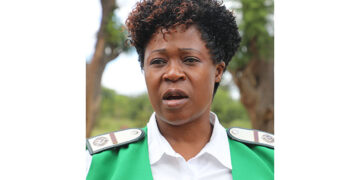
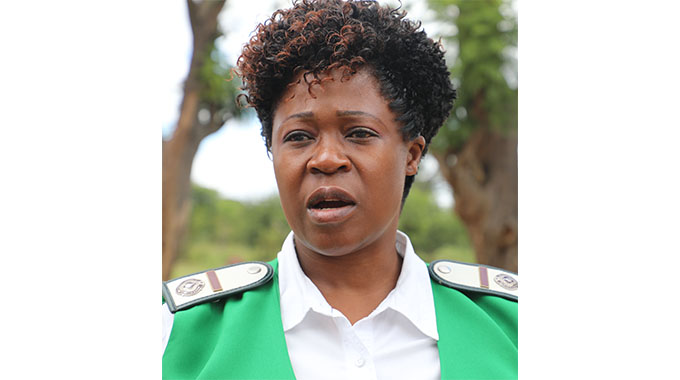
Acting hospital matron Patricia Manditswanga says the health institution services an area within a radius of 20 kilometres.
“We assist patients coming from areas such as Bells, St Peter’s and surrounding resettled villagers and as we say in our profession ‘good health for everyone’ so no one is turned away regardless of where they come from.
“The hospital offers services such as post-natal, immunisation, consultations, emergency services, HIV and Covid-19 testing, vaccination among a wide range of services and we are open 24 hours a day.
“I would say that on average we assist about 20 patients a day from the surrounding villages, although the number fluctuates on a daily basis.
“Just yesterday (Thursday) we vaccinated 53 people against the Covid-19 virus and are expecting more school children to come for their first doses next Monday,” said Manditswanga.
For 23 years, Doctor Taurai Rugara has seen it all in the medical field and being part of the health personnel that has been rendering services to less privileged communities around the Khami Maximum Prison warms his heart.
“I have been working at the hospital for over 20 years, a lifetime one might say, so I have been involved with the operations of the institution for a long time and how it assists villagers from surrounding communities.
“Apart from general coughs and diarrhoea, we cater for emergency services where a patient will come into the hospital, be it day or night, and they need treatment for injuries, we also offer HIV testing and treatment services as well as TB (tuberculosis) testing,” said Dr Rugara.
The year 2020 was a difficult one for the country after the outbreak of the Covid-19 pandemic, which stretched health institutions to the limit, but curiously Khami Maximum Prison Staff Hospital were not overwhelmed with patients complaining of coronavirus complications.
“We didn’t experience a flood of patients complaining of Covid-19 symptoms and I think the reason for that is because we are in an area that is not too congested like Bulawayo so the spread of the virus among villagers was minimal,” he said.
The hospital administration would appreciate the assistance of partners, the corporate world and Non-Governmental Organisations in expanding its infrastructure and other facilities that the health institution needs. – The Chronicle