


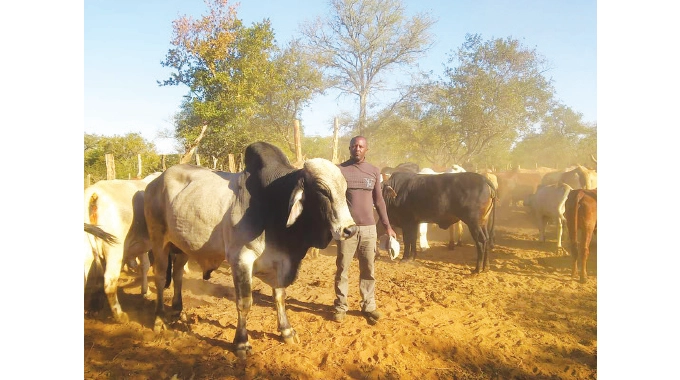
RAINS that have been received in some parts of Matabeleland South over the past few days have brought some relief to livestock farmers as pastures had depleted in some areas.
Over the years, the false start to the rainy season, recurrent mid-season droughts, heat waves, floods and premature termination of the rainfall season have brought to the fore the need for farmers to diversify cropping programmes to spread risk and improve productivity.
Acting provincial director of agricultural rural development and advisory services for Matabeleland South, Mr Mkhunjulelwa Ndlovu said farmers in areas that received rains should plant sugar beans, African beans, cow peas, sweet potatoes and fodder legumes for their animals.
He said these crops mature fast and are drought tolerant.
Mr Ndlovu said farmers need to adopt climate smart crops that help mitigate the effects of climate change.
“Gone are the days when farmers had to grow the traditional crops such as maize during the rainy season. Farmers have to take into consideration lucrative crops like sugar beans, cowpeas and sweet potatoes. These crops can be planted around this time. These crops mature fast and they do well even in poor rainfall conditions,” he said.
“Legumes like sugar beans are rich in protein which will guarantee farmers of a nutritional component. In addition, these crops are lucrative as farmers can sell them in order to get income. Farmers should also grow fodder legumes which will help them have supplementary feed for their animals. Fodder legumes are drought resistant and they can produce continuously without replanting.”
Mr Ndlovu said some parts of the district have received significant amounts of rain over the past few days.
A farmer from Insiza District, Mr Sisa Sibanda said the rains have helped to revive pastures.
“The situation was now bad and we are relieved that we received some rainfalls. The rains have revived the pastures and we now have some water in the dams. We hope that the rains will continue. Last farming season we received low rains which caused pastures to deplete fast,” said the farmer.
“The condition of our animals had started to drop because of shortage of pastures and drinking water. It’s too early for our animals to run out of pastures and running water and if we don’t receive significant rains we will be in trouble. By the time we reach the next farming season we would have lost a lot of animals.”
Mr Mbongeni Ncube a communal farmer from Garanyemba in Ward 13 said it is a relief that rains came before his animals deteriorated any further.
He said it is difficult for them as communal farmers to sell their animals to buy stockfeed as they had small herds. Mr Ncube said they have fodder legumes under production but at a low scale.
“I think that it’s no longer wise for us to bank on the veld for our animals to graze because given the poor rains that we have been experiencing over the past years, we will lose a lot of animals. Growing fodder crops should become a major area of production for us so that our animals don’t perish,” he said.
Mr Thabani Sibanda who is an A2 farmer from Mkashi area in Gwanda said poor rains affect the condition of animals. He said while the grazing could be substituted with supplementary feed, it is difficult to substitute water. Mr Sibanda said it is difficult for a farmer with a large herd to drive all his animals to a borehole for water. He said he hopes that more rains would fall soon. – The Chronicle