


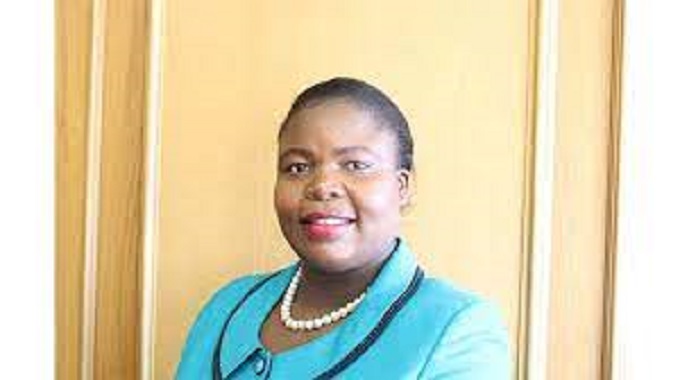
The Government considers the recapitalisation of the National Railways of Zimbabwe (NRZ) critical to the country’s grand plan to grow the economy as envisioned under Vision 2030. The parastatal is expected to play a central role in facilitating Zimbabwe’s transformation into a regional logistics hub. The Sunday Mail’s TANYARADZWA RUSIKE (TR) spoke to NRZ general manager Ms Respina Zinyanduko (RZ) on what the country can expect from the entity going forward.
**********
TR: Can you outline NRZ’s strategic plan for 2023?
RZ: As NRZ, we are working on recapitalising the company.
As you may be aware, we are in negotiations with Rites Limited of India and have reached the stage where we are about to sign the contracts.
We are just waiting for confirmation of funding from the Government.
Also, while we are waiting for the recapitalisation through procurement of locomotives and wagons, we are working on the refurbishment of existing locomotives and wagons.
We have realised that we need a lot of money to do the refurbishment.
So, we have engaged a number of our customers, including mining companies in Zimbabwe, who have come on board to assist.
They will advance to us funding for the refurbishment of the wagons and locomotives and then we will set off with providing our services to them.
This will create additional capacity for us.
As we speak, there are four such public-private partnerships that are already running.
One was initially for the refurbishment of four locomotives and 100 wagons.
The other is for the refurbishment of 100 tankers, while the other one is for the refurbishment of two locomotives and 100 tankers.
We are trying by all means to create additional capacity, which will help us generate the much-needed revenue to then recapitalise further using our own funds, apart from looking for loans from stakeholders.
TR: How much funding is required to recapitalise NRZ?
RZ: A lot of money is needed.
Before anything else, attending to our infrastructure is important.
So, it’s not like we only need to buy wagons and locomotives. We also need to rehabilitate our infrastructure, because without that, our turnaround time will be affected, and also our wagons will be damaged as a result of derailments.
However, through the Rites deal, we are looking at accessing funding of between US$115 million and US$120 million in the short term.
TR: Can you outline the current state of NRZ’s infrastructure?
RZ: We have 2 760km of rail, of which about 254km have 67 portions that have been damaged, meaning that about 10 percent of our infrastructure is in a bad state.
Our signalling CTC (centralised traffic control) was vandalised and we need to replace it.
We need something between US$30 million and US$60 million, depending on the package to rehabilitate our signalling.
TR: What is the latest update on the Yapi Merkezi deal?
RZ: On the Turkish deal, we managed to have our tracks surveyed and the due diligence report is now ready.
They have invited us to Turkey for presentation of the report and that is when we expect them to offer us the financial package for the deal.
That deal is mainly on the rehabilitation of tracks, although they said the package will also include locomotives and wagons to make it a comprehensive one.
So, we are still to get feedback on their findings in terms of the due diligence and track assessment that was done last year.
TR: Can you outline the major operational challenges facing NRZ?
RZ: Our major challenges in terms of operations include legacy debts that were taken up in the 1990s.
These debts are affecting our profitability.
As we speak right now, NRZ is generating a surplus.
However, after factoring in conversion losses, we end up making a loss.
It is unhealthy for us to continue making losses, but that is something that is beyond our control.
We also have aged equipment.
Our mainline locomotives are more than 30 to 45 years old, and we operate shanty locomotives, which are about 40 to 60 years old.
That’s a lot because the average lifespan of a locomotive is 25 years.
We need to replace both the shanty and mainline locomotives.
Our wagons also need replacement.
So, aged equipment is hindering our performance.
TR: When are we likely to see the resumption of NRZ’s intercity service?
RZ: Before we resume the intercity service, we have to attend to our infrastructure first.
If we don’t attend to the infrastructure, it will be very difficult and dangerous to reintroduce that service.
We know that passenger train accidents can cost lives.
We also have to consider our turnaround times.
At the moment, the time it takes to travel from Harare to Bulawayo is too long for the comfort of our passengers.
So, we need to address those issues before the reintroduction of intercity trains.
TR: How much is NRZ losing to vandalism?
RZ: Over the last five years, we have lost about US$3,5 million worth of property to vandals.
TR: Are there plans to develop a new track linking Zimbabwe with Mozambique?
RZ: There is the portal-tube line that is being worked on by Botswana, Mozambique and Zimbabwe.
This project is still at feasibility stage.
Through this project, we are supposed to expand our rail network and linkage into Maputo from Botswana through Chicualacuala.