


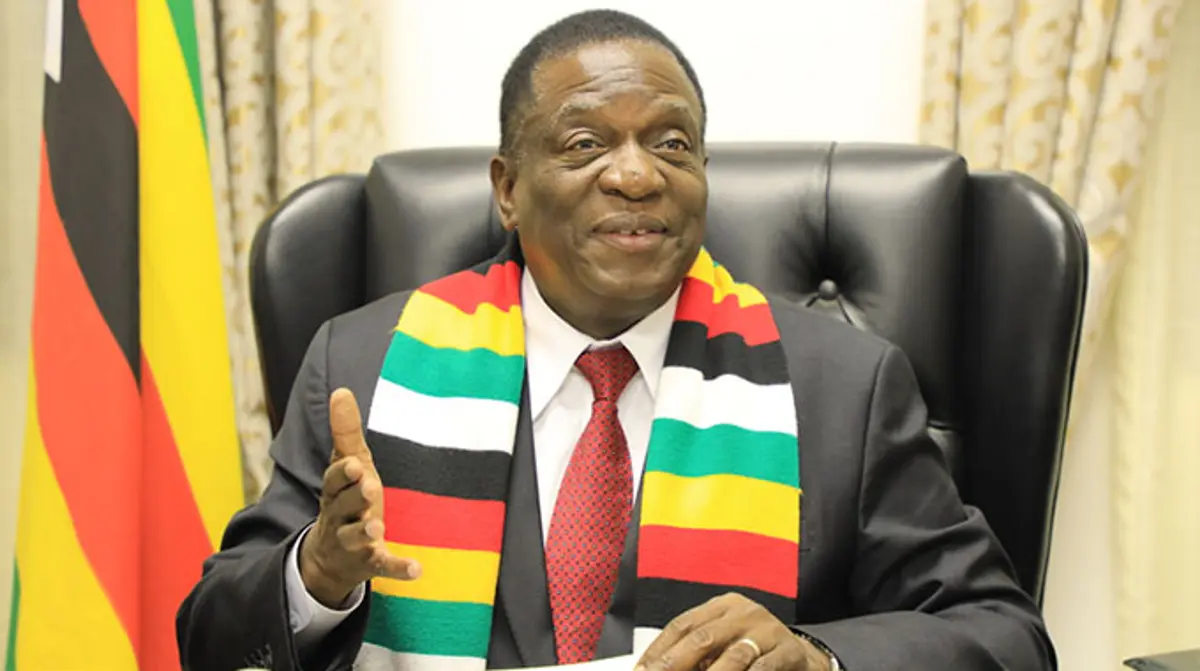
Harare – President Emmerson Mnangagwa on Tuesday said Zimbabwe would likely hold its harmonised general elections in July this year.
While the President retains the prerogative to proclaim the election date, section 158 of the Constitution states that a general election must be held so that polling takes place not more than thirty days before the expiry of the five-year period of Parliament.
Parliament is elected for a five-year term which runs from the date on which the President-elect is sworn in and assumes office.
President Mnangagwa took oath of office on August 26, 2018 after winning an election held on July 31.
Asked whether there was a possibility to postpone the forthcoming elections, President Mnangagwa said; “The first part of the question relates to the forthcoming general elections in Zimbabwe, sometime in July possibly. Let me assure you that since Independence, Zimbabwe has never omitted to hold general elections when they fall due.”
“Every five years we have held elections since 1980 when we got our independence and the ruling party Zanu PF has been winning all these elections and we shall continue winning them,” he said during a press briefing held after he and visiting Belarus President Alexander Lukashenko witnessed the signing of several cooperation agreements between the two countries.
In preparation for the 2023 polls, Zec has produced a provisional delimitation report after conducting a delimitation exercise to set new electoral boundaries.
While the voters’ roll for delimitation purposes closed in March, voter registration is still ongoing for purposes of by-elections and the 2023 elections.
Early last year, Zec conducted a voter registration blitz, as part of several pre-election activities that the electoral management body and other relevant stakeholders carried out in preparation for the 2023 polls.
One such stakeholder, the Zimbabwe National Statistics Agency, conducted a national population census in April last year whose results guided the proposed new electoral boundaries to be used in the 2023 elections.
The population census was held a year earlier specifically for that purpose.
In the same vein, the Civil Registry Department conducted a national mobile registration blitz between April and September.
Over three million people secured crucial documents including birth certificates and national identity cards for free during that exercise after the registrar’s department accumulated a huge backlog owing to the travel and working restrictions imposed to combat Covid-19.
- Latest
- Trending