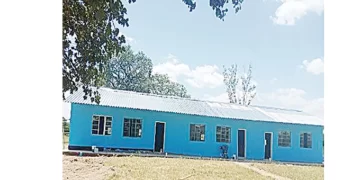




NKAYI Rural District Council (RDC) has bought a new ambulance and refurbished a classroom block at Sisemba Primary School as well as staff cottages at Sebhumane Rural Clinic, through devolution funds.
The local authority also put up a solarised pump and water reticulation system at the clinic as well as installed water taps at the business centre and public toilets.
Nkayi RDC chief executive officer Mr Silibele Mpofu said the classroom block at Sisemba Primary School was badly damaged by weather conditions which rendered the place unfit for learners to attend classes hence the decision by the council to rehabilitate the damaged block.
“It could not be considered an appropriate learning facility. We did roofing, mended cracks and also reinforced the wall as well as plastering. We also solarised the water reticulation system at Sebhumane which supplies the school, the clinic there as well as the community,” said Mr Mpofu.
Government identified devolution as a key pillar to achieving an upper middle-income economy status by 2030. The framework for devolution is enshrined in section 264 of the Constitution of Zimbabwe and other subsidiary legislation such the Urban Councils Act (Chapter 29:15), and Rural Councils Act (Chapter 29:13).
Part of the objectives of devolution as enshrined in the 2013 Constitution are to give powers of local governance to the people and enhance their participation in the exercise of the powers of the State and in making decisions affecting them, to promote democratic, effective, transparent, accountable and coherent Government in Zimbabwe as a whole.
The implementation of the devolution objectives began with the coming in of the Second Republic under President Mnangagwa when funds disbursed under devolution kept increasing, to augment those funds that local authorities raise through their own means for infrastructural development.
This year treasury allocated $195,5 billion in devolution funds, up from $16,7 billion last year with councils sharing the amount equally.
The Government ring fenced the $195,5 billion being five percent of the anticipated revenue resources towards lower tiers of Government in support towards construction, upgrading, and rehabilitation of facilities in health, transport, education, water and sanitation as well as procurement of plant and equipment by local authorities.
Devolution has transformed several districts, including the previously marginalised ones in the Matabeleland region and the rest of the country in general as the Second Republic walks the talk in the leaving no one and no place behind philosophy.
Government believes the devolution agenda is a key pillar of developing vibrant provincial economies and rural industries as it moves to attain an upper-middle income economy by 2030. – The Chronicle