



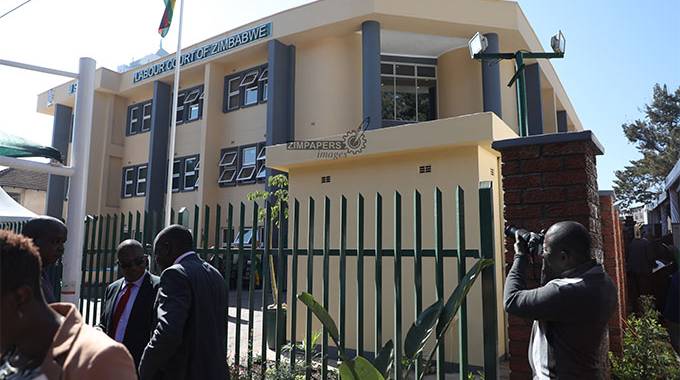
The digitisation of the country’s courts of law has entered its second phase, with the Labour Court and the Administrative Court going digital on February 1 this year.
The Judicial Service Commission (JSC) last year introduced the Integrated Electronic Case Management System (IECMS), which digitised the Constitutional Court, Supreme Court and the Commercial Court.
The Commercial Court became the country’s first paperless court when it was commissioned in May last year.
That first phase of the IECMS also transformed the Constitutional Court and Supreme Court into digital courts.
JSC head of corporate services Mr Daniel Nemukuyu said the implementation of the second phase of IECMS starts on February 1 this year, targeting the Labour Court and the Administrative Court.
Mr Nemukuyu encouraged all court users to register with the system to enable them to litigate in the Labour Court and Administrative Court.
“On February 1, we are going live at the Labour Court and Administrative Court. We are entering the second phase of IECMS which covers the Labour Court and the Administrative Court,” he said.
“We call upon all current and potential court users to register with the system. For one to create an IECMS account, they should visit our website, zimiecms.org.zw and an online form, requiring you to fill in some information, will appear on the screen.
“We are running training sessions for court staff and other court users on how to use the new system ahead of the official implementation of the second phase on February 1.”
Registering is creating an account within the system which will be accessible using the passwords provided.
With the account, a citizen can file a case at any of the active registries.
Under the system, parties to a court case can follow cases from their phones, tablets, laptops or computers as long as they have an internet connection and have registered on the system.
Parties to a case receive a link of the hearing to enable them to follow proceedings in the comfort of their homes, offices or any other places.
The implementation of the IECMS will bring about efficiency, expedite case disposition and deliver access to justice. It also seeks to minimise corruption.
The system seeks to reduce case backlog and to prevent the loss and physical damage of documents in a case file. It enhances information accessibility and modernises the justice sector’s operations. – The Herald