



WHILE the just-ended year had its own challenges, the local industry’s resilience and Government’s bold and timely intervention kept the economy on a growth trajectory.
The first half of the year was characterised by a highly inflationary environment that was largely driven by market indiscipline.
Disruptions caused by the Covid-19 pandemic and the war in Ukraine compounded the situation.
A combination of these internal and external shocks meant the Government had to continuously intervene to keep the economy afloat.
Zimbabwe National Chamber of Commerce (ZNCC) president Mr Mike Kamungeremu said the measures introduced by the authorities resulted in stability in the latter part of the year.
“We know there was a lot of turbulence when the exchange rate was moving fast during the early part of the year, but we saw Government introducing a raft of measures. They include the introduction of gold coins, suspension of payments to contractors and implementation of the value-for-money (audits), which resulted in economic stability . . . We hope it will be sustained during 2023,” he said.
The exchange rate volatility during the first half of 2022, he said, forced some businesses to adopt forward-pricing models.
However, there was improved cooperation between Government and business to find common solutions to economic challenges.
“I think for the first time since 1996, we had a report from the Tripartite Negotiating Forum (TNF) – which is a joint forum for Government, business and labour that discusses and negotiates key socio-economic matters – being tabled in Cabinet.
“That was positive, because there was convergence. In December, there was a retreat in Victoria Falls, where Government, labour and business also met, and there was an agreement going forward into 2023 in terms of the priority areas to focus on,” said Mr Kamungeremu.
Government and business, he added, are also actively working together to find solutions to current challenges in power supply.
Support
In 2022, industry benefitted from various Government facilities designed to increase production.
The facilities include the US$15 million support from the US$958 million Special Drawing Rights fund received from the International Monetary Fund.
Industry lobby group Confederation of Zimbabwe Industries (CZI) also secured a US$200 million facility, in partnership with a Pan-African institution – Loita Capital Group, to help companies buy raw materials and equipment.
“If Government continues to sustain the current economic reform agenda such as efficiencies in spending and plugging leakages, the macro-economic environment will continue to stabilise, which is a key ingredient to economic growth,” said economist Dr Prosper Chitambara.
“We need to further reduce annual inflation, which is still on the high side, but it has been moving in the right direction, having eased for the fourth straight month since September 2022.”
Another economist, Mr Clemence Machadu, believes Government made a timely decision to open up the economy after positive strides in managing Covid-19.
“Measures by the authorities that helped save the year were timely opening up of the economy after positive strides in managing Covid-19, aggressively targeting inflation as well as currency and economic stability, easing import duty on some essential products and raw materials, and incentivising the increased production of commodities such as gold and wheat,” he said.
“We started to see inflation easing since September, with black market activities decreasing, which improved economic order and eased speculation,” he said.
He further said the private sector should be applauded for addressing supply chain bottlenecks that were experienced mostly in the first half of 2022.
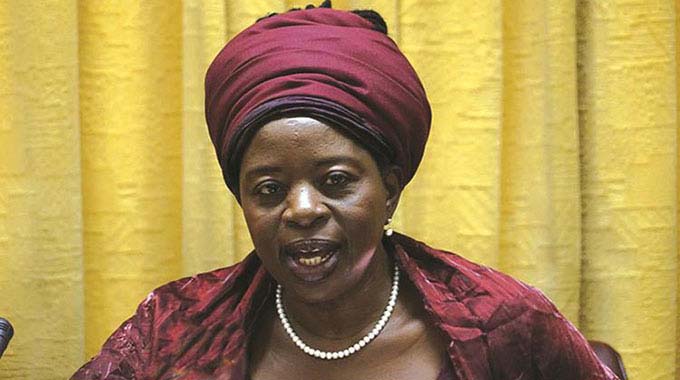
According to Industry and Commerce Minister Dr Sekai Nzenza, the manufacturing sector is projected to grow at an average of 3,7 percent this year on the back of value addition and beneficiation activities in the industrial, mining and agricultural sectors. – The Sunday Mail