


Parliament has adjourned to next year with the Senate on Tuesday passing the 2023 National Budget, a few days after the National Assembly, and so giving the required approval to the taxation changes and allowing the Government to spend this money in line with the detailed estimates of expenditure.
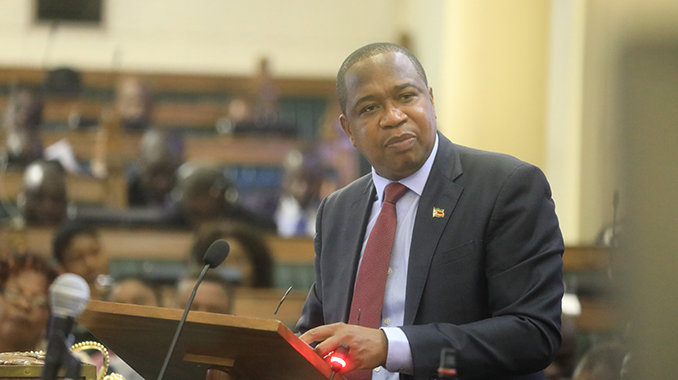
Finance and Economic Development Minister Professor Mthuli Ncube last month presented a $4,5 trillion Budget that was welcomed as people-centred by ordinary Zimbabweans.
The Budget comprises the Finance Bill, which deals with taxation changes and other revenue matters, and the Appropriation Bill, which gives permission to the Government to spend as detailed very precisely in the long estimate of expenditure.
The National Assembly passed the Budget last week and will resume business on January 24 while the Senate will begin its 2023 business on January 31.
The Finance Bill seeks to amend the Finance Act, the Income Tax Act, the Value Added Tax Act, the Capital Gains Act, the Customs and Excise Act and the Revenue Authority Act.
Every tax and every change in rates of tax has to be approved by Parliament, and the Finance Bill gives effect to the fiscal measures mentioned by Prof Ncube in the National Budget statement.
The Appropriation Bill provides for the money allocated to all ministries and Government departments. The detail is very fine to ensure that the money can only be paid for exactly what was proposed and what Parliament then agreed.
Both Bills were passed by the Senate without amendments, the widening of the zero-rate income tax band to $1,1 million a year in the main change wanted by the House of Assembly being approved by the Senate.
Minister Ncube said civil servants salaries would account for 52,4 percent of the total expenditure for 2023, a marked increase from 42,3 percent this year.
Some of the tax measures contained in the Finance Bill include the adjustment of the tax-free threshold from $900 000 to $1,1 million a year following lobbying by backbenchers in the National Assembly.
The main thrust of the National Budget for next year is to accelerate economic development, find more money to give civil servants and ensure the wide range of vulnerable people needing help to get it.
Prof Ncube projected that the stability being experienced in the economy will persist into 2023.
The country has enjoyed more stable macro-economic conditions since the beginning of the second half of the year after the Government rolled out measures to tame hyperinflation and stabilise the exchange rate.
The measures included freezing payments to Government contractors accused of manipulating currency, raising interest rates to curb speculative borrowing and introducing gold coins as an alternative investment instrument to mop up excess money. – The Herald