



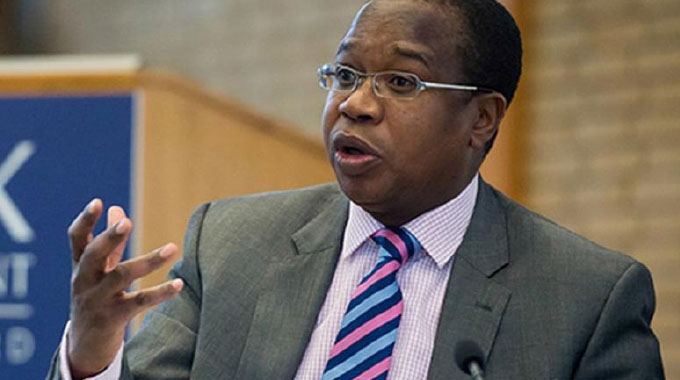
FINANCE and Economic Development Minister, Professor Mthuli Ncube, has hinted that there are no immediate plans to scrap the two percent intermediated money transfer tax (IMTT), popularly known as the two cents tax levied on electronic transactions.
Legislators, business leaders and local authorities have been lobbying for the removal and exemption in paying the tax, which Treasury says has become handy in raising funds for national development.
Speaking in Parliament recently, the finance minister said the IMTT tax has over the past years generated substantial resources that have enabled the Government to support various infrastructure projects including responding to shocks such as COVID-19 and other climate shocks that the economy has experienced.
He was responding to legislators in the National Assembly who suggested the tax head be scrapped.
Prof Ncube said the proposal, if acceded to, will have a major impact on revenue erosion.
“There is a request that there should be exemption of local authorities from paying the IMTT tax. The Committee on Local Government, Public Works and National Housing recommended that local authorities should be exempted from paying the IMTT tax,” he said.
“The proposal to exempt local authorities will erode our revenue base but besides, these local authorities at that level are also benefiting from the devolution budgets to deal with infrastructure developments at that local level.
“We feel that it will erode the revenue base but we will examine it going forward and try to see whether we can proceed with this kind of proposal but for now we feel there would be major impact on revenue erosion.
“On IMTT, I reduced it from four percent (on forex) to two percent but total scrapping not yet.”
With many transactions now being in foreign currency, the IMTT on domestic foreign currency transfers has been reduced to two percent.
The government has deliberately sought to promote the use of local currency in domestic transactions while allowing the use of foreign currency in the meantime to enhance stability.
In a bid to avoid the tax, some entities are now preferring to settle transactions in cash instead of electronic transfers.
Minister Ncube has proposed in the 2023 national budget to align the IMTT on foreign currency transactions to local currency transactions at two percent from January 1, 2023.
According to the 2023 national budget statement between January and September this year, slightly over $100 million had been raised through the tax.
The IMTT was introduced to capture the informal sector that ordinarily did not pay any taxes despite making up a huge chunk of local transactions, now accounting for nearly half the contribution of corporate tax — the biggest revenue head.
However, captains of industry and commerce claim the IMTT adds a significant additional cost to numerous other onerous tax obligations they pay for. – The Chronicle
- Latest
- Trending