


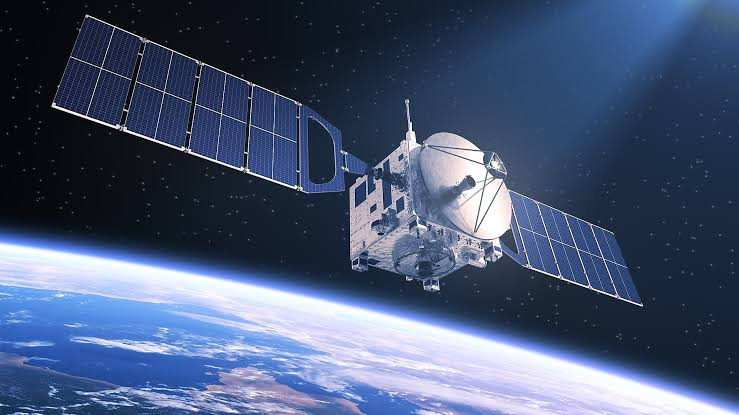
Harare –Zimbabwe is banking on its first satellite, ZimSat-1 to give impetus to plans to solve the country’s power challenges, as it has capacity to, among other things, map regions where there is high solar intensity for effective solar farm distribution. ZimSat-1, built by Zimbabwean scientists with the assistance of their Japanese counterparts under the Joint Global Multi-Nation Birds Satellite (BIRDS) Project, was launched into orbit on Friday from the International Space Station where it arrived last month. For Zimbabwe which is battling acute power shortages due to frequent breakdowns at Hwange thermal station and water shortages at Kariba, the satellite gives impetus to the pursuit of strategies meant to ensure a healthy energy mix to guarantee sufficiency. Project manager Victor Mukungunugwa said the satellite would play a key role in the development of solar farms. “(The satellite will also provide) solar illumination mapping for effective solar farm distribution,” he said in a presentation before ZimSat-1 and Uganda’s Pearl of Africa-1 deployed into orbit. Lil red erome “Through solar illumination, the satellite maps the regions where there is high solar intensity and thereby optimising the deployment of solar farms in Uganda and Zimbabwe to solve the electricity distribution.”
Zimbabwe has already expressed its determination to accelerate the use of renewable energies such as solar, to boost local power generation capacity. Other economic sectors, such as agriculture would also greatly benefit from the satellite, including through the provision of vital information such as harvest estimates, and crop health. “This is with the aim to promote agriculture in Zimbabwe and Uganda,” he said. “It will also provide soil fertility assessments to support agricultural activities. This will optimise the distribution of agricultural inputs to various agricultural regions in Uganda and Zimbabwe.”
ZimSat-1 also has the ability to provide data on water quality. “The satellites seek to survey the water bodies in Zimbabwe and Uganda to see sources of contamination and eliminate the contamination at the source. This will, to a great extent, minimise the amount of chemicals used to purify drinking water,” he said. Part of its mission also includes providing early warning services for incoming natural disasters such as floods and landslides. At its launch into space last month, President Emmerson Mnangagwa hailed the occasion as a proud moment symbolising a nation on a technology driven trajectory to achieve its developmental aspirations. The satellite is a culmination of the 2018 launch of the Zimbabwe National Geospatial and Space Agency (ZINGSA), which operates under the Ministry of Higher and Tertiary Education, Science and Technology Development. The satellite is also expected to enhance mineral exploration and mapping human settlements.