
Ahmadi Ali
When Iran and six global powers announced a nuclear deal in the summer of 2015, there was substantial global diplomatic optimism. The pact, officially known as the Joint Comprehensive Plan of Action (JCPOA), capped Iran’s nuclear programme and provided the country relief from many of the sanctions imposed over the previous decade.
The United States, however, withdrew from the agreement during the presidency of Donald Trump. Now, after almost a year and a half of negotiations, the US — under President Joe Biden — and Iran appear on the brink of a new understanding to revive the fledgling accord.
As always in such high-stakes diplomacy, there are last-minute niggles to navigate. Iran has demanded that the International Atomic Energy Agency end an investigation into safeguards in place at the country’s nuclear facilities, as a precondition for the deal. Meanwhile, the world is waiting to hear back from Iran, which is reviewing US responses to a European Union-drafted text for a revived nuclear deal.
Yet, even if Iran and the US manage to strike a fresh agreement, the hope and momentum of 2015 will be difficult to resurrect. The optimism back then was about more than just the terms outlined in the text. The deal represented a triumph for conflict resolution and created a new esprit de corps among diplomacy-focused politicians around the world. Importantly, it was seen as a harbinger of a new era of moderation in the long-tortured US-Iran relationship.
The environment in 2022 is considerably darker. Hanging over proceedings is the knowledge that any commitment made by the US can only be counted upon as long as the administration that made it is in office. That reduces the incentive for all sides to meaningfully build on the agreement.
From Tehran’s perspective, any potential economic benefits for Tehran are in doubt if it can’t trust that the deal will last beyond 2024. Meanwhile, Iran’s nuclear programme has advanced to the point where it no longer needs a year for a nuclear breakout — the timeline that was the basis for Washington’s demands in the original negotiations.
So while the text of the agreement remains unchanged, both sides will have to settle for a diminished version of the benefits they successfully bargained for in 2015. Ultimately, what this agreement — if it comes to fruition — will yield is a stripped-down version of the JCPOA, with little hope of advancing towards a more comprehensive accommodation.
That’s no coincidence. When the two sides first set about trying to revive the deal last year, many argued that there should be a “less for less” interim agreement reached first. Some said that this would help reduce tensions and improve the atmosphere for negotiations, while others in Washington saw this approach as a means to halt Iran’s ambitions while retaining parts of the sanctions regime.
Unlike in 2015, a new deal won’t be an historic trust-building opportunity — just the opposite, in fact. Still, both sides will see a key gain there.
A chance to drift away
While the complicated and hostile entanglement between Washington and Tehran is set to continue, the agreement represents an opportunity for both sides to devote more of their attention elsewhere.
Iran has already resolved to look East, particularly for its economic aspirations. This is both a result of sanctions and economic practicalities. Even with a deal, lingering restrictions on business with Iran and the precedent Trump set will mean that Western firms are unlikely to flood the Iranian market any time soon. Tehran knows that. On the other hand, the centre of the global economy continues to move eastward, driven by Asian economies, especially China.
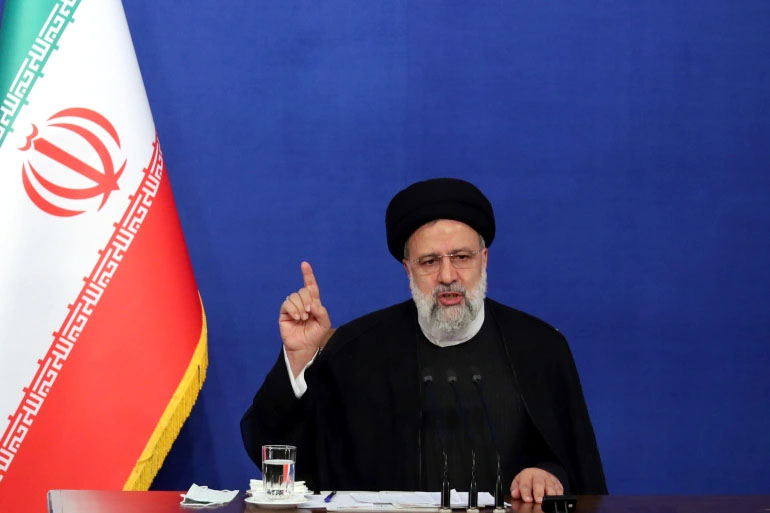
To be sure, Iran under President Ebrahim Raisi will want to make sure it doesn’t become over-reliant on China. However, while the administration may court economic interactions with Europe, it’s clear to most where Iran’s actual opportunities lie.
Meanwhile, reduced tensions with Iran will allow the Biden administration to finally downgrade the Middle East in America’s strategic calculus. Before Biden was even inaugurated, his senior foreign policy aids were telling seemingly any reporter who would listen that the Middle East was a “distant fourth” in their ranking of regions to focus on behind the rest of Asia, Europe and even the Americas.
The “war on terror” and Washington’s historic fixation with the Middle East have so far distracted the US from what it has — since the Obama administration — formally acknowledged as its biggest strategic challenge: its competition with Russia and China. While a reconstituted JCPOA does not mean that the US will forget the Middle East entirely, it will give the Biden administration the freedom to redirect more of America’s capacities to a new era of great power competition.
Any real opportunity for more meaningful discourse and compromise between the US and Iran will likely arrive only once it is clear that a future Republican president won’t abandon a deal. Looking at the current slate of possible GOP nominees for the presidential election in 2024, that’s not a very hopeful prognosis.
Still, any future US president contemplating the abandonment of a revised nuclear deal would have to contend with new realities and a more complex international environment as the American moment of unrivalled primacy fades and more powerful adversaries than Iran challenge the potency of Washington’s economic arsenal. Would it make sense to unsettle the little calm that an agreement with Iran would bring?
For the moment, it’s impossible to know how a future American administration might answer that question. That’s why, rather than hope for a more civil bilateral relationship, we are left with a guarantee of continued confrontation in the region, policies defined by leverage seeking and one-upmanship, and likely another decade of this hostile saga.
The views expressed in this article are the author’s own and do not necessarily reflect Al Jazeera’s editorial stance.