



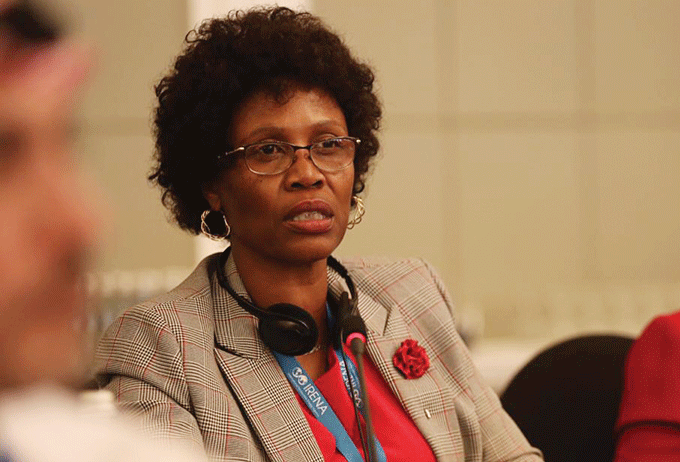
SHARM EL-SHEIKH, Egypt – Investors can take advantage of the vast opportunities in renewable energy in Zimbabwe, including mining and processing lithium resources, with the considerable demand for electricity letting them make money and participate in Harare’s drive to attain an empowered upper middle-income society, Ministry of Energy and Power Development Permanent Secretary Dr Gloria Magombo said yesterday.
Speaking at the Zimbabwe Pavilion at the United Nations climate change conference underway in Egypt during an investment conference that attracted potential investors from across the globe, Dr Magombo said Zimbabwe was rich in mineral resources and had a lot of sun and wind for the generation of renewable energy.
“We want partners to come in and join us to exploit these resources,” she said.
“We are looking for technology partners who can provide solar panels and other technologies. We need partners who can provide us with the technology transfer.
“We need partners who can come in and exploit the resources so that we contribute to Vision 2030 and bring renewable energy into the country.
“We have critical energy minerals like lithium and others, which we would want to see being value added to create the necessary economy and also de-carbonisation of the economy. We also have a very critical element in our own country, the demand for electricity.”
In Zimbabwe, only 52 percent of the entire population has access to electricity, according to the 2022 census statistics.
This creates opportunities for further investment in power generation, especially renewable energy in an era of climate change that is attributed in part to burning fossil fuels.
At the same time the economic growth sees ever higher demand by miners, industrialists and farmers for more power.
On Tuesday, the power deficit was 407MW, but with more investors heeding President Mnangagwa’s “Zimbabwe is open for Business” mantra and the general improvement in the investment climate since 2018, about 2 300MW of generating capacity is required to service all customers by 2025.
Dr Magombo said the electricity deficit presents an opportunity for investors targeting the energy sector to establish power stations and generate energy from water, wind and solar.
With developed countries declining to support developing countries financially to move away from fossil fuels to renewable energy, investors can also take advantage of the huge coal resources in Zimbabwe to venture into thermal electricity generation.
Director conservation and renewable energy in the Ministry of Energy Dr Sosten Ziuku said in terms of solar energy, the solar resource was good throughout the country, with areas in western Zimbabwe providing the best opportunities.
For hydro-electricity, Zimbabwe can generate up to 5 000MW along the Zambezi River.
There is also potential to generate about 150MW from small hydro stations in the Eastern Highlands with just 40MW now being fed into the grid from small hydros.
For wind power, eight sites were identified and mapped. Additional pre-feasibility studies conducted by the International Renewable Energy Agency showed potential for 220MW at five sites.
Zimbabwe is determined to cut carbon emissions while growing the economy and giving everyone access to electricity. The critical nationally determined contributions, which every country is required to give to show their plans, sees a reduction of 40 percent in per capita carbon emissions, across all sectors of the economy by 2030 in the fight against climate change. This requires that the extra power generated must come largely from renewable energy. – The Herald