


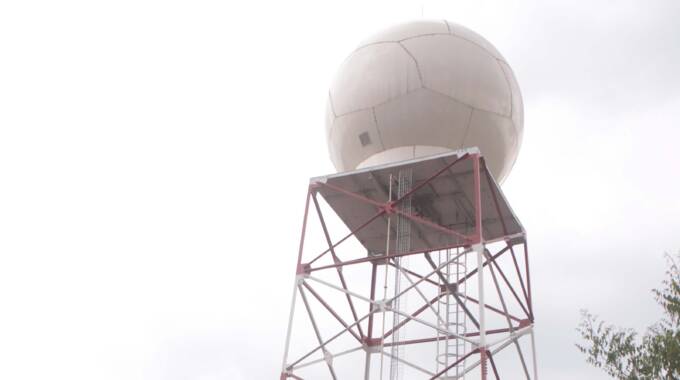
Five high-tech Doppler radar systems, which will enhance the country’s ability to mitigate the effects of rain-induced natural disasters like cyclones and floods, will go live before year-end, The Sunday Mail has learnt.
One of the radars has already been installed at the Meteorological Services Department (MSD) in Harare, while the other four will be stationed at airports in Bulawayo, Buffalo Range, Victoria Falls and Kariba.
Doppler radar systems are instruments that send vibrations of electromagnetic energy into the atmosphere to detect precipitation such as rain, snow, hail or other weather phenomena.
In an interview with The Sunday Mail, Environment, Climate, Tourism and Hospitality Industry Minister Mangaliso Ndlovu said the radar systems will strengthen the country’s early warning systems. He said this will reduce loss of lives and damage to property caused by climatic hazards.
“The weather radars will assist with tracking and monitoring of storms, expected rainfall estimation and identifying areas within the storm trajectory. This means we will now be better equipped for floods and cyclones,” he said.
“Doppler radars continue to be the best forecasting tool that is used to provide high-resolution weather information on how storms are developing, their trajectory, how much rainfall they can dump in a particular area and the lead time of at least six hours before a particular place is affected.
“Radar infrastructure will definitely result in more information being available to both the Met Services and the general public to be better informed and prepared for extreme weather events.”
Department of Civil Protection deputy director, Mr Farai Hokonya, said the radars herald a new dawn in enhancing disaster preparedness.
“The Meteorological Services Department has been equipped with weather radars, which are very important in depicting and disseminating early warning messages to the communities.
“Our role involves co-ordinating with others, hence capacitation of the Meteorological Services Department helps us in early action planning, which includes evacuation and temporary shelter prepositioning. The five weather radars are going to be located in Harare as well as at the Joshua Mqabuko Nkomo, Buffalo Range, Victoria Falls and Kariba airports. They will cover the whole country, allowing monitoring of hydro-met hazards in all areas in Zimbabwe.”
Deputy director for public weather services in the MSD, Mrs Linia Gopo, said: “We are grateful that the project was wholly funded by Government. This is a major development for us, as we will be able to cover the whole country and be better equipped to give early warning services that there is a flood or severe storm taking place in a particular area.”
In 2019, Zimbabwe witnessed the worst weather-related disaster after Cyclone Idai claimed 340 people and displaced 270 000. – The Sunday Mail


