



Ivor Ichikowitz
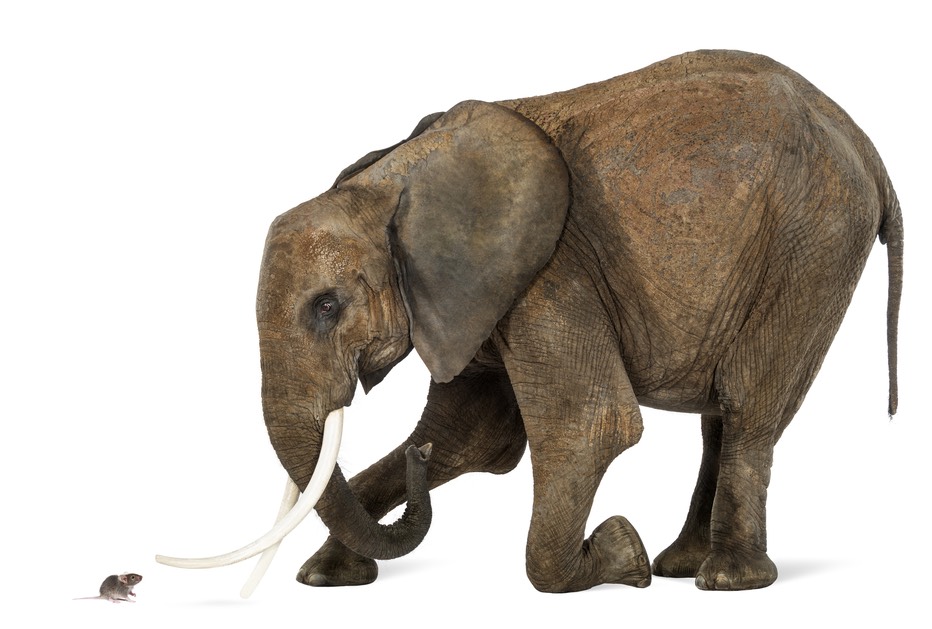
There is an old African adage which warns us that when the elephants fight, the mice get trampled. It’s an allegory that almost everyone on the continent is aware of because that has been their lived reality since birth – and the reality of their ancestors too.
The winds of change might have blown in Ghana’s uhuru from colonialism in 1957 and stopped in 1994 with the liberation of Africa’s last country, South Africa, but domination by the foreign elephants has never let up.
Overt and unequivocal foreign subjugation might have been consigned to the history books but economic colonialism continues. We see this in the form of foreign aid with pernicious conditions. Then there are the cases where important infrastructure projects, like railway lines and ports – or maritime and air – end up being effectively owned by the ostensible funders rather than the sovereign states they were built for.
There has been no respite either in the major world powers’ interest in Africa since the end of colonialism. On the contrary, China has ramped up its involvement with the establishment of the Forum on Africa China Cooperation (Focac) at the start of the millennium. In 2003, Chinese investment in Africa was US$74.8 million, by 2018, this had grown to US$5.4 billion. Since 2014, China has been the fourth largest investor in the continent, outstripping the US.
This year, interest in Africa has peaked again as the world emerges from its enforced coronavirus lockdown and begins to makes sense of the seismic shifts between East and West precipitated by Russia’s invasion of Ukraine.
Russia, long a player in Africa through its military and political support of liberation movements, and latterly through providing defence materiel and military advisers to many independent countries, embarked on a deliberate charm offensive in July in the wake of its disastrous invasion of Ukraine. Foreign Minister Sergei Lavrov went about actively wooing four selected African Heads of State to choose sides between it and the US.
The US followed suit a week later, at the beginning of August, with Secretary of State Anthony Blinken visiting three African countries, calling on Africa to work as “equal partners” and not take sides. The US then promptly contradicted itself by issuing a new policy document calling on African countries to expose the “negative activities” of China and Russia!
Battle of perceptions
There’s a lot at stake for African countries, especially for Southern Africa where there has been no concrete commitment by the US to extend the vitally important Africa Growth and Opportunity Act (AGOA), due to expire in 2025, which provides preferential access to US markets for goods made in southern Africa.
In this new scramble for Africa, China certainly appears to be winning the battle of perceptions – according to the second edition of the African Youth Survey (AYS), which was released this year. The US is seen as the second most important in terms of influence behind China.
54 percent of the respondents believe China has a lot of influence in their country, with a further 23 percent believing China has some influence. The US has slipped in the youth’s perception – from a high of 78 percent in 2019 to 69 percent last year. The African Union, the European Union, the United Nations, the World Trade Organisation are perceived as far less influential.
Africa’s youth are wary of foreign influence though; 69 percent of them are highly concerned. In South Africa, 40 percent of the youth believe foreign influence negatively impacts their country. The exception across the continent is China, with 82 percent of the youth believing the superpower wields a positive influence in their country – a view informed by the availability of cheap and affordable products and the investment offered by the country’s belt and road initiative.
But there is no room for complacency: a significant number of the respondents believe China is a malign influence too – even more guilty in some respects than others of the age-old issues; taking from Africa without giving back, extracting vital raw materials without a concomitant lasting investment in the country concerned.
The AYS, only in its second edition, has become a vital tool for gauging the temperature on a range of critical concerns for a group that will form the next generation of the continent’s leaders.
Based on more than 4,500 face-to-face interviews, conducted last year in Angola, Congo Brazzaville, DRC, Ethiopia, Gabon, Ghana, Kenya, Malawi, Mozambique, Nigeria, Rwanda, South Africa, Sudan, Uganda, and Zambia and collated this year, the AYS project has now measured the hopes, dreams, fears and concerns of almost 10,000 young Africans aged between 18 and 24. It is the only survey of its kind on the continent.
The youth want jobs. They want to unlock the potential they know they have. They understand and welcome foreign investment
by governments and companies in their countries, especially where it leads to the building of vitally needed infrastructure projects, but they do not want it if it means being exploited once more.
Born-free generation
For the entirety of Donald Trump’s administration, Africa was pushed into the background; developments since February with the invasion of Ukraine and the dramatic realignment and polarising of the globe have made Africa a target once again.
At the end of this year, American President Joe Biden will be convening a major US-Africa Summit in Washington. It is ostensibly to discuss pressing matters of mutual concern, from food security to climate change. It will cover those topics, but it will also be an opportunity for the US to present subtle – and not so subtle – inducements to its African guests to be part of a coalition on one side of a new Cold War, with Russia and China on the other side.
During the Cold War, Africa was the literal proxy battleground between East and West; now it is the focus of the war for hearts and minds. This generation of Africans is very different to their parents and grandparents, newly liberated from the shackles of colonialism. These are the born-frees, positive about the future of their motherland, yet in no way blind to the challenges.
The new scramble for Africa is underway, but it’s not the same as when the freebooters and charlatans set out 150 years ago to carve out empires where the sun never set – this time the continent holds the power.
Its leaders have been gifted an epochal opportunity, not to be forced to take sides as supplicants dependent on aid being doled out, but to be active partners with full agency to get the very best deal for their countries, for their people and for their continent – from East, West, or both.
The only question is whether these leaders will have the gumption and the independence to do just that. If they don’t, the ramifications for their continued tenure will be dire.
We saw this in Zambia. The AYS 2022 fieldworkers returned to tabulate their findings – pointing out that the youth were becoming more politically involved, with distinct aspirations and expectations. The Presidential elections that followed several months later provided a stunning victory for President Hakainde Hichilema – thanks in no small measure to the turnout of young voters.
There is no reason why this will not be replicated elsewhere in Africa, if leaders fail to grasp the opportunity that presents itself now – because the mice aren’t prepared to stand by and suffer any more when the elephants fight. – New African
Ivor Ichikowitz is a South Africa-born industrialist and philanthropist. He chairs the Ichikowitz Family Foundation, which conceptualised and funds the African Youth Survey, and is the founder of the African Oral History Archive