


IN a groundbreaking display of commitment to equitable development, the Government disbursed $1, 4 billion in devolution funds to Matabeleland South rural local authorities. This tremendous investment has fueled the implementation of vital service delivery projects that have had a profound impact on the lives of the province’s residents.
The year is marked by even greater promise as the Government has allocated $10 billion to support the development initiatives of the seven rural local authorities within the province. These devolution funds have proven to be a lifeline for local authorities, empowering them to enhance access to social amenities and vital infrastructure across the country. Clinics, classroom blocks, roads, bridges, and street lighting are just a few examples of the transformative projects made possible through this visionary approach to development.
Aligned with the National Development Strategy 1 (NDS1), a five-year economic management master plan running from 2021 to 2025, the Government is keenly focused on building, expanding, and restoring key enabler infrastructure, such as roads and energy. These ambitious infrastructure development efforts play an indispensable role in propelling the country towards its goal of attaining an upper middle-income economy by 2030.
Over the past few years, the Government has proven its dedication to fostering growth and prosperity in Matabeleland South by disbursing an impressive $1, 6 billion in devolution funds to the province. This unwavering support has garnered appreciation from the rural councils, who acknowledge the profound impact of these funds in fulfilling their service delivery obligations.
Mangwe Rural District Council’s Chief Executive Officer, Mr Bongani Ngwenya, highlighted the wide-reaching impact of the devolution funds during a Matabeleland South Provincial Development Committee (PDC) meeting recently.
“The devolution funds have gone to various sectors which include education, health, WASH, and roads, and we have also purchased equipment. Throughout the province, all seven local authorities have schools that they have built using devolution funds, and clinics have also been built, renovated or equipped using devolution funds,” he said.
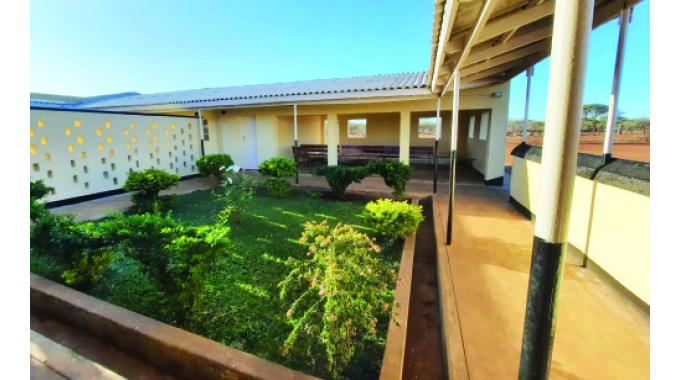
The funds have been instrumental in constructing schools and clinics across the province, reducing the distances learners must travel and addressing issues of school dropouts due to the burden of long journeys. One such success story is the Mandihongola Clinic in Gwanda RDC, which is soon to be commissioned. Additionally, the Tshanyaugwe Clinic, Garanyemba Clinic waiting mother’s shelter, Mashaba Clinic waiting mother’s shelter, and Mzimuni High School girl’s hostel have been brought to life, enriching the lives of countless individuals in the region.
Matobo District has seen the realisation of stalled projects, such as Mlugulu and Nhlupho Clinic, thanks to the infusion of devolution funds. Insiza District’s Bekezela Primary School has been a beacon of hope for decongesting Filabusi Primary School, while Montrose Seven Clinic has brought vital healthcare services closer to villagers who previously endured arduous journeys for medical care.
The transformative power of devolution funds is evident in Beitbridge District, where Dumba Clinic and Novhe Primary School have been established, and several other schools and clinics are undergoing construction and rehabilitation.
Notably, the devolution funds have facilitated the realisation of longstanding aspirations, like the construction of Izimnyama Clinic in Mangwe District, a project that had remained a mere dream for an astonishing 70 years. Efforts to revive the project were made in the 1980s but bore no fruit until the devolution funds made it a reality.
“The funds have also helped to assist in building two primary schools in the district in areas that have been recording high cases of school drop outs because of long distances. Councils have also managed to purchase service vehicles and capacitate its staff with equipment, which has helped to improve service delivery,” Mr Ngwenya said.
The visionary leadership of President Mnangagwa has led to the operationalisation of the devolution concept as enshrined in the Constitution, setting aside five percent of fiscal disbursement from Treasury for local authorities. This momentous decision has transformed not only Matabeleland South but also the entire nation, embodying the principles of inclusive development and leaving no one and no place behind.
The devolution programme stands as a cornerstone of NSD1, the country’s first five-year medium-term plan aimed at realising Vision 2030 while aligning with the Sustainable Development Goals (SDGs) and Africa Agenda 2063. Guided by the overarching goal of achieving high, accelerated, inclusive, and sustainable economic growth, the Zimbabwe strides towards becoming an upper middle-income society by 2030. – The Chronicle