
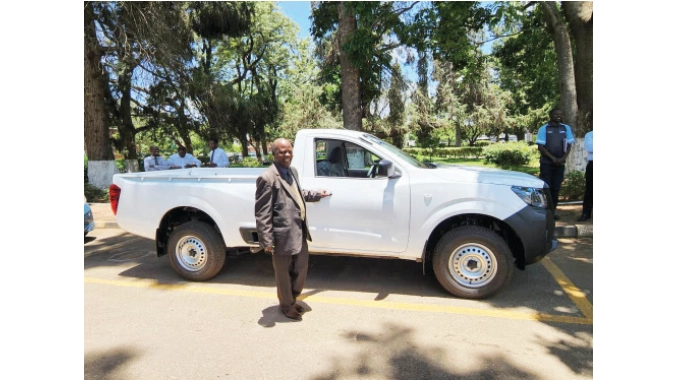
SUSPENDED Gweru City Council (GCC) acting town clerk Vakayi Douglas Chikwekwe has recently made headlines with his dramatic resignation from the council. While his departure might have seemed like a typical bureaucratic event, Chikwekwe claims that his decision was made under extreme pressure and threats to his life from certain CCC council members.
Chikwekwe, who previously served as the substantive chamber secretary, assumed the role of acting town clerk after the suspension of Elizabeth Gwatipedza. However, his tenure was short-lived as he faced legal troubles following his arrest by the Zimbabwe Anti-Corruption Commission (Zacc) in April. The arrest was made in connection with alleged violations of tender procedures, specifically related to the awarding of contracts for the servicing of Mkoba 21 and Randolph Phase 1 suburb stands to Sheasham, Casas, and Wackdrive companies.
After appearing before Gweru magistrate Miriam Banda on charges of criminal abuse of office, Chikwekwe was granted bail of $100,000. Meanwhile, the council took action by suspending him and outlining various reasons for his suspension, including failure to coordinate departments, negligence of duty, and financial prejudice to the council.
However, in his resignation letter, Chikwekwe paints a picture of a toxic work environment and an unjust investigation process. He expresses his frustration with what he perceives as a lack of ethical conduct by a group of councillors who he believes have been overstepping their bounds and failing to understand the separation of powers between councillors and management.
“I hereby notify you that I am resigning with immediate effect from the employment of the City of Gweru as substantive chamber secretary. It follows that I am also stepping down from the position of acting town clerk. This is because I cannot bear the toxic environment at the City of Gweru anymore, the hate against management and in particular myself for standing my ground against unethical conduct by a band of councillors who have been usurping executive powers and failing to appreciate and apply the cardinal rules of the doctrine of separation of powers between councillors and management.”
One of Chikwekwe’s main grievances revolves around the appointment of Councillor Josiah Makombe to investigate the tender matter in which he was directly involved. Chikwekwe argues that this appointment goes against principles of good corporate governance and implies a cover-up for Makombe and other councillors who were involved in awarding the contract. He also accuses Makombe of hand-picking a personal friend to chair the disciplinary committee responsible for his case, further undermining the fairness of the proceedings.
“Councillor Makombe cannot preside over a case in which he called for a Special Council Meeting and presided over allowing the signing of contracts before reviewing by the Special Procurement Oversight Committee (SPOC). He cannot be a judge of his own matter.
“The shock of my life came when I appeared before a disciplinary panel for the first time in person. I noticed that the disciplinary chair was a familiar face I had been introduced to by the former Mayor Josiah Makombe in 2019 after the suspension of the town clerk Ms Gwatipedza.”
“In 2019 I accompanied the former Cllr Makombe to the disciplinary panel chair’s offices in Harare. He told me that he was a friend and would protect the council’s interest. After leaving the office I gave legal advice to the contrary. The former Mayor grudgingly abandoned the idea and another disciplinary authority was settled for. The hiring of this chair is not in good faith at all. If he was abandoned in 2019 what makes him legible this time? Allowing such conduct is tantamount to hiring mercenaries with a predetermined outcome.”
Chikwekwe highlights what he sees as selective amnesia among council members regarding the Memorandum of Agreements for Mkoba 21 and Randolph Phase 1. He clarifies that as a council official, he did not have voting power or decision-making authority during council meetings. He questions why he is being targeted when Makombe, who also signed the agreements, seemingly faces no repercussions.
In addition to these issues, Chikwekwe recalls a previous incident involving the recovery of a Toyota Prado V8 vehicle used by Makombe after his recall by the Movement for Democratic Change party. Chikwekwe claims that he faced backlash for implementing a council resolution to reclaim the vehicle, which actually belonged to Gwatipedza and was purchased with Cabinet authority. He argues that council members should not sit on boards of council companies, receive benefits, and simultaneously play an oversight role in the same company during full council meetings.
Chikwekwe suggests that his removal from the council is part of a larger scheme to create confusion, allowing certain councillors to engage in corrupt activities such as unauthorised trips, embezzlement, land allocation to themselves and their allies, nepotism in hiring practices, and the promotion of unqualified individuals against council policy.
With Chikwekwe’s resignation now public, the GCC spokesperson, Vimbai Chingwaramusee, states that she was unaware of the resignation letter and its contents. This development adds another layer of intrigue to the already complex narrative surrounding Chikwekwe’s departure. – The Chronicle
- Latest
- Trending