



THE National Peace and Reconciliation Commission (NPRC) managed to handle and conclude 73 percent of conflicts brought to it in 2022 as part of its mandate to prevent conflict and foster peace and reconciliation.
Having targeted a response rate of 70 percent, the commission surpassed that target and was able to attend to a majority of complaints from around the country ranging from land disputes, political violence, human wildlife conflicts, chieftainship and jurisdictional wrangles, community-investor conflicts, among others.
According to its 2022 annual report, the NPRC was unable to deal with all conflicts received as well as to clear the backlog emanating from funding challenges.
The commission’s key result area was measured through the National Development Strategy (NDS1) whose outputs include resolving conflicts, strengthening infrastructures for peace, setting up mechanisms to detect and respond early to conflicts, supporting victims of conflict through healing, reconciliation, rehabilitation and other victim and diversity-centered approaches.
“During 2022, the commission investigated and concluded 73 percent of the complaints received from all over Zimbabwe. However, having established effective referral pathways, some complaints were referred to other relevant state and non-state bodies thus guaranteeing assistance to victims who required support services that the commission could not offer or had no mandate to address,” read the report.
“To ensure that Zimbabweans knew the commission’s complaints handling and management platforms; awareness, sensitisation and consensus building engagements were conducted with stakeholders at national, provincial and district levels.”
NPRC also conducted research into the issues that unite or divide Zimbabweans.
“The research, named Social Cohesion and Reconciliation Index (Score) was carried out in the ten provinces and conducted by a team of consultants and enumerators identified and contracted by the commission. The findings from this research were being finalised by year-end and will form the basis for the development of a localised Social Cohesion and Reconciliation Index as espoused in the National Development Strategy (NDS1).”
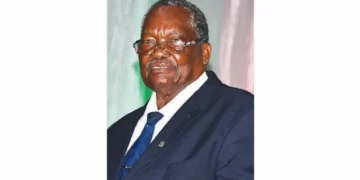
In his foreword, NPRC chairperson Retired Justice Selo Nare said a peaceful Zimbabwe was possible if everyone plays their part.
“Conflict is inevitable in any society; and despite all efforts made in peacebuilding, conflicts will always arise. It takes the efforts of all Zimbabweans to heed the messages of peace, unity, love, tolerance and reconciliation that are spread in our political, social, religious, spiritual, traditional, institutional and local spheres so that we harness the positives that our unique differences present. I, therefore, implore all of us to remain united for peaceful elections this year and beyond,” said Justice Nare.
“An upper-middle-income society by 2030 is better achieved when we harness our developmental targets as a unified and cohesive collective. A peaceful Zimbabwe for all generations is possible.” – The Chronicle