



Farmers in Mashonaland West have already started planting winter wheat early to ensure that their crop will not be affected by early rains at the start of the summer season.
Last season, over 3 980 hectares of wheat were affected by rains with Mashonaland West having the largest wheat area affected because of some late-planted wheat. Wheat needs to be harvested in dry conditions to get top quality and while rain does not destroy the mature crop it can reduce quality and add to costs of harvesting.
Farmers in other provinces are currently doing land clearing and tilting in preparation of planting.
This year’s winter wheat will be planted on 85 000ha, and as the crop is entirely grown under irrigation, and so has negligible risk, for the second year running Zimbabwe will have a surplus.
The harvest is expected to be in the region of 408 000 tonnes, well above the 375 000 tonnes of last year and the minimum of 360 000 tonnes needed for self-sufficiency.
This means that Zimbabwe can start building some minimum reserves, or even look at modest exports.
A target of 7 700ha has been set for barley this year, most of which goes to malt for beer.
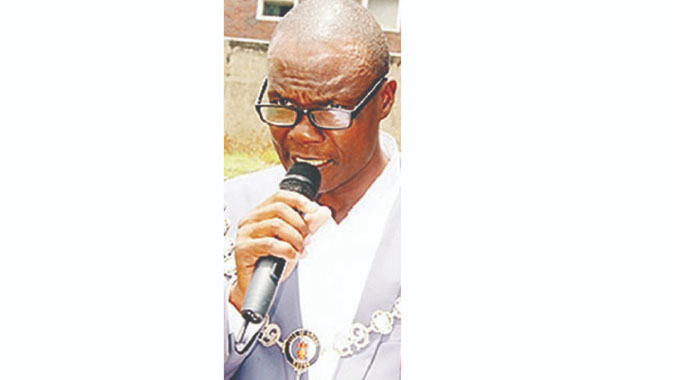
Zimbabwe Commercial Farmers’ Union president Dr Shadreck Makombe said farmers should use the soil moisture still available from the summer rains, with early planting enhancing productivity and being harvested before the next summer rains start.
Dr Makombe urges wheat farmers to seek advice from experts and practise good agronomic practises to maximise productivity.
“Also farmers should scout for pests so that action is taken. This is the correct time to start planting,’ he said.
Dr Makombe said the current rains received by the country will ensure another bumper harvest this season.
Speaking during the wheat planting preparedness discussion held in Marondera on Wednesday,Permanent Secretary for Lands, Agriculture, Fisheries, Water and Rural Development Dr John Basera urged agriculture extension officers to organise pre-planting sessions with farmers, to educate them on various agricultural activities.
“I urge each and every extension officer, especially in the wheat planting cluster to organise pre-planting sessions and seminars. This is where farmers relate to real issues of agriculture.
“This is a platform where information on farming is shared. So farmers should attend these sessions and get information on wheat production, stage by stage,” he said.
Food Crop Contractors Association chairperson Mr Graeme Murdoch said there was need to assure farmers of the availability of continuous electricity supplies to avoid disrupting their irrigation rosters given that adequate water is key for the successful production of the crop. Contractors are looking at around 25 000ha.
“Wheat farmers’ access to electricity must be prioritised during the whole wheat production period,” said Mr Murdoch.
Recently, Zimbabwe National Water Authority spokesperson Ms Marjorie Munyonga said there is sufficient water for this year’s winter cropping season after dam levels rose above 90 percent of their total capacity.
“As the rainy season winds up, Zinwa wishes to advise farmers and stakeholders in the agricultural sector that there is sufficient water in the dams for winter cropping and early summer irrigation activities,” she said.
The wheat crop would be supported through private contractors, Government’s National Enhanced Agricultural Productivity Scheme (NEAPS), Presidential wheat support scheme and self-financed growers.
CBZ Agro-Yield is targeting at contracting 20 000ha and a harvest of 96 000 tonnes, AFC Land Bank 15 000ha and 72 000 tonnes, the private sector and self -financed scheme will contract 25 0000ha of wheat and 120 000 tonnes while the Presidential scheme is targeting 20 000 ha 96 000 tonnes. All schemes estimate the yield should be 4,8 tonnes/ha
The Government has been targeting increases in wheat production to meet the national requirement in line with the Agriculture and Food Systems Transformation Strategy, the Agriculture Recovery Plan and the National Development Strategy 1 and in pursuit of the vision of becoming an empowered and prosperous upper middle income society by 2030. – The Herald