



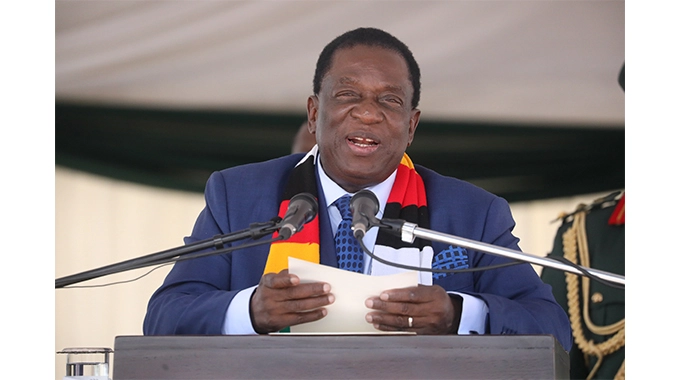
PRESIDENT Mnangagwa has said it is imperative for all sectors of the economy to adopt a whole-of-economy approach and complement each other towards greater integration through cross-sector value addition and chains.
The Second Republic has always stressed the need for the industry to implement value addition strategies in its production process.
The government is working on promoting selected value chains to realise the country’s industrialisation agenda and in line with provisions of the Zimbabwe National Industrial Development Policy (ZNIDP), targeted value chains include pharmaceuticals, leather, cotton to clothing, dairy sector, fertiliser industry, bus and trucks manufacturing.
Zimbabwe’s exports are dominated by semi-processed gold, raw tobacco, ferro-alloys, nickel ore and diamonds translating to low revenue earnings.
As such, there remains a need to enhance the number of local value chains in the local industry, which will translate to better-valued exports.
Writing in his weekly column for The Sunday Mail, President Mnangagwa expressed satisfaction with the direction the economy is taking.
However, he said there is a need for the “sectors must talk to each other” adding that “no economic sector must lag behind, or run away un- or dis-connected from the rest.”
“I am quite pleased that our whole economy is moving beyond little, unconnected enclave sectors, towards greater integration through cross-sector value addition and chains.
“Going forward, sectors must talk to each other so we have a Whole-of-Economy approach to economic development for a Whole-of-Society approach towards Vision 2030,” said President Mnangagwa.
“ Value chain approach to economic planning and development is the panacea to little enclaves and isolated prosperity in pockets of the economy, amidst omnipresent backwardness in many other sectors.
“No economic sector must lag behind, or run away un- or dis-connected from the rest. An upper middle-income economy for an upper middle society imply greater integration across sectors.”
He added that the thrust is beginning to guide industry, and to inform the national quest for and selection of Foreign Direct Investments, (FDIs).
“We must go tertiary, but on the strength of a strong agriculture and a strong mining base. Our continued emphasis on agriculture, and the recent ban on raw mineral exports, must be seen from this philosophy and perspective of rejecting a baneful primary economy status we were designed to be under the Western colonial dispensation.
“We must become a modern, fully developed economy,” said the President.
Last year, the Government banned raw chrome and lithium ore exports to encourage building of smelters locally in a development expected to promote the local value-addition chain.
Through (NDS1), the Government is focused on the provision of incentives aimed at improving the appetite to enhance the value addition of products for export markets.
The initiative envisages growing the export basket and stimulating production and beneficiating commodities from Zimbabwe including agricultural produce.
Industry and Commerce minister, Dr Sekai Nzenza recently said that the Government is using US$22,5 million from Zimbabwe’s Special Drawing Rights Fund (SDR) allocations to strengthen value chains.
The International Monetary Fund (IMF) allocated the country SDRs worth US$961 million in August 2021 as part of a US$650 billion distribution to its members. – The Chronicle
- Latest
- Trending