


“UKAONA Dakota rondeya-ndeya, panenge paita mutengesi somewhere, paita mutengesi somewhere” which literally means “if you see a plane there will be a sell-out somewhere.”
These are part of the lyrics of a popular song “Dakota” among Zanu-PF supporters.
The song, which is usually played during rallies among other party events, was sung by Chief Shumba Hwenje famous for composing the “ED Pfee” song.
The Second Chimurenga/Umvukela meaning “revolutionary struggle” or uprising led to the end of white minority rule in Rhodesia in December 1979.
It was a war between African nationalist guerrillas and the predominantly white Rhodesian government. In that war, freedom fighters faced challenges because of some people who sold out to the enemy forces leading to the deployment of airplanes such as the Dakota which was a threat to the freedom fighters.
So history has it that whenever the Dakota (DC-3) was spotted flying — it would be targeting bases belonging to freedom fighters after having been sold out.
As Zimbabwe commemorates its 43rd Independence Day on 18 April, most freedom fighters will certainly remember the menace, the gushing out of the blood, and the loss of life when Rhodesian forces used the Dakota during the armed struggle.
The Douglas C-47 Sky train or Dakota is a military transport aircraft developed from the civilian Douglas DC-3 airliner. It was used extensively by the Allies during World War II and remained in front-line service with various military operators for many years.
The propeller-driven airliner was manufactured by Douglas Aircraft Company.
The aircraft was used in a number of internal and external operations that included attacks on bases of liberation war fighters in neighbouring countries.
The attacks included Operation Dingo, the code name for the Chimoio massacre of Zimbabwe African National Liberation Army (Zanla) cadres by the Rhodesian forces in Mozambique, Operation Uric, the code name for the Mapai attack to cut off Zanla Forces supply route in Gaza Province, Mozambique by the then Rhodesian Forces.
Upon the attainment of Zimbabwe’s independence, it was used by the Air Force of Zimbabwe in the Mozambican campaign from 1988 to 1992.
The plane which is a low-wing metal monoplane with conventional landing gear, powered by two radial piston engines of 750-890kW was last week delivered to the country’s only military museum in Gweru from Manyame Air force Base in Harare
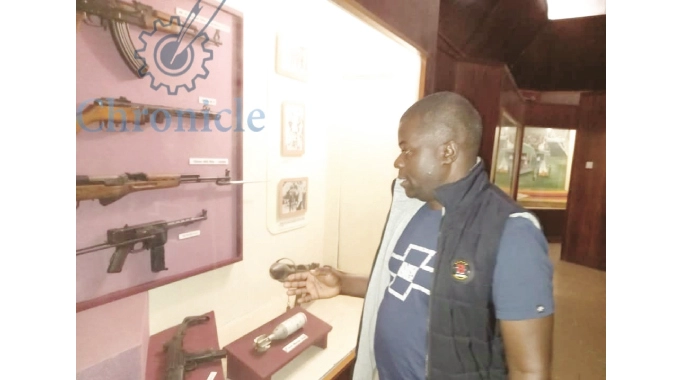
The Zimbabwe Military Museum keeps war memorabilia that are collected because they are connected to the liberation struggle, and these include planes, uniforms of the liberation fighters, medals, guns, hats and shoes.
Other aircraft at the museum include the Hawker Hunter, Vampire FB 9, Canberra, Hunter FGA 9, and Super marine Spitfire.
Acting National Museums and Monuments of Zimbabwe regional director for central region, Mr Clapperton Gutu said the liberation fighters were terrorised by the Dakota which was used by the Rhodesian Air Force.
However, freedom fighters did not give up as they remained resolute until the country attained its independence.
“The liberation fighters were terrorised by the Dakota but they did not give up, they fought until the country got independence in April 1980. While its heritage hurts, we keep it to remind the masses how equipped the enemy was,” said Mr Gutu.
“Remember the song Ukaona Dakota rondeya ndeya panenge paita mutengesi somewhere. This song was actually written with the plane in mind.”
Mr Gutu said after the war, the Dakota was incorporated into the Air Force of Zimbabwe and was used in training military pilots as well we as during the Mozambique campaign in the 1980s.
“All along it was kept at Manyame Airbase before it was delivered to us last week. We are putting it into our collection of liberation heritage that tells the story of the liberation war,” he said.
“We are putting this DC 3 Dakota on display here at the Aviation Museum in Gweru for the sake of preserving Zimbabwe’s aviation heritage.”
Mr Gutu said the whole idea is to preserve the liberation history.
“Other aircraft in our collection include the Hawker Hunter, Vampire FB 9, Canberra, Hunter FGA 9, and Supermarine Spitfire. The Zimbabwe Military Museum keeps war memorabilia collected because they are connected with the war,” he said.
Mr Gutu said the DC-3 has a cruising speed of 333 km/h, a capacity of 21 to 32 passengers or 2 700 kg of cargo, and a range of 2 400km, and can operate from short runways.
The DC-3 had many exceptional qualities compared to previous aircraft. It was fast, had a good range, was more reliable, and carried passengers in greater comfort.
“Before the war, it pioneered many air travel routes. DC-3 production ended in 1942 and many continued to be used in a variety of roles until 2017. The DC-3 was the culmination of a development effort after the 1933 DC-1 and the DC-2 of 1934,” said Mr Gutu.
“Total production including all military variants was 16 079 with 10 048 absorbed in military campaigns.”
DC is an acronym for Douglas Commercial.
Mr Gutu said the Dakota was flown by the Number 3 Squadron in the Rhodesian Air Force and AFZ for para-trooping, search and rescue, re-supply and sky shouting.
“They have been out of service for quite some time now in Zimbabwe and have been parked at the Manyame Air Base in Harare. Although the aircraft have been parked for a long time with the paintwork in need of attention, the critical systems of the aircraft are still intact and functional,” said Mr Gutu.
“The Dakotas were also used to transport mine workers from the then Rhodesia around the 1960s and 1970s to Wenela in South Africa. They were operated by both the Rhodesian Airforce and private companies.”
Mr Gutu said some retired pilots who flew the aircraft after independence include Group Captain Sam Sibanda, Squadron Leader Elijah Oliver Nare, Squadron Leader Dave Rider, Flight Lieutenant Lloyd Kagweda and Flight Lieutenant Ian Mackenzie Stone.
“The aircraft was withdrawn from service in 2001 after having flown 27 292:45 hours and 28 641 landings. It will remain part of the history of the liberation struggle,” he said.
“As we commemorate Independence Day on April 18, Zimbabweans must appreciate the freedom fighters who survived attacks and cherish the legacy of died during the attacks while trying to liberate our country.” – The Chronicle