


Harare- Concerted engagement efforts by the Second Republic with foreign governments have yielded another positive outcome after Japan on Friday announced a $4.7 million fertilizer procurement facility for Zimbabwe’s small holder farmers.
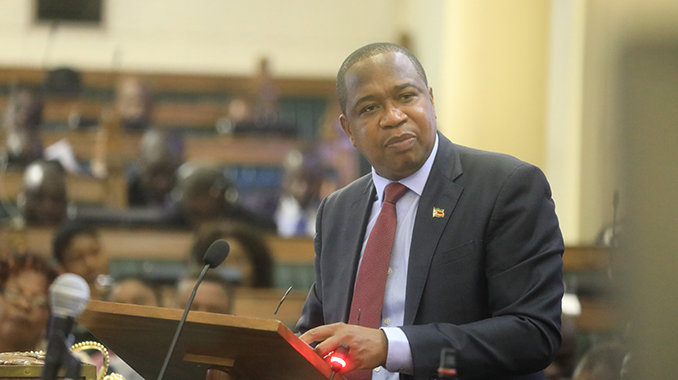
Speaking at the grant signing ceremony, Finance and Economic Development Minister Professor Mthuli Ncube said the facility would cushion farmers from challenges caused by Russia’s special military operation in Ukraine.
The conflict, according to the World Bank, had resulted in fertiliser prices rising by 30 percent.
“Under this support, Zimbabwe is set to benefit from a grant of Japanese Yen 650 million (approx. US$ 4.7 million) under the Economic and Social Development Programme to support the procurement of fertilisers for our vulnerable small-scale farmers,” he said.
“Zimbabwe, like all other countries, has not been spared from this unfortunate development, and as an agro-based economy with most producers being small scale farmers, our people have largely borne the brunt of the unsustainable fertiliser prices.
“It is against this background that Government greatly appreciates the timely intervention by the Government of Japan, which will go a long way in cushioning our vulnerable smallholder farming communities from the soaring global fertiliser prices.”
Ncube said the fertilizer facility would boost food and nutrition security which is one of the 14 pillars of the National Development Strategy 1.
He said the Ministry of Lands, Agriculture, Fisheries, Water and Rural Development would provide skills and coordination to ensure smooth and successful implementation of the programme.
On its part, Ncube said the government was also investing resources in the agricultural sector to achieve national food security, as well as reclaim the regional bread-basket status.
“Just to give a few examples, government is supporting the Climate Proofed Presidential Inputs Scheme (Pfumvudza / Intwasa Programme), under the Vulnerable Input Support Scheme, which entails provision of inputs for vulnerable smallholder farmers to boost their productivity. Through these interventions, we have witnessed increased grain productivity in the recent years,” he said.
“Furthermore, government is also implementing the National Accelerated Irrigation Rehabilitation and Development Programme, focusing on the rehabilitation and development, as well as maintenance of communal irrigation schemes to mitigate against the adverse impacts of climate change and variability.
“We believe that, without food security, we can never be fully independent nor be able to exploit our full potential as a nation.”
Ncube said the support would also be instrumental in reducing rural poverty.
Meanwhile, Ncube commended Japan for its support in other sectors including transport, health, water & sanitation and education.
For example, support to the Zimbabwe Electoral Commission Capacity Building Project Phase 2 to prepare for the 2023 Harmonised Elections under a US$ 1.44 million facility launched in February 2023.
Other support has been for the procurement of medical equipment for 12 hospitals amounting to US$2.85 million.
“Let me also re-assure you of the government of Zimbabwe’s commitment to fully re-engage with the government of Japan, as well as, our other bilateral and multilateral partners,” he said.
- Latest
- Trending