


You’ll often hear about the role of powerful African kings such as Shaka Zulu and Ahmed Baba; or independence leaders such as Jomo Kenyatta, Kwame Nkrumah and Nnamdi Azikwe.
However you’d be hard pressed to recall the important contributions of women to the continent and the world.
Teaching about Africa’s history in the West often focuses on colonisation. But long before Europeans arrived, the continent was home to powerful ancient kingdoms and empires, some of which were led and protected by women.
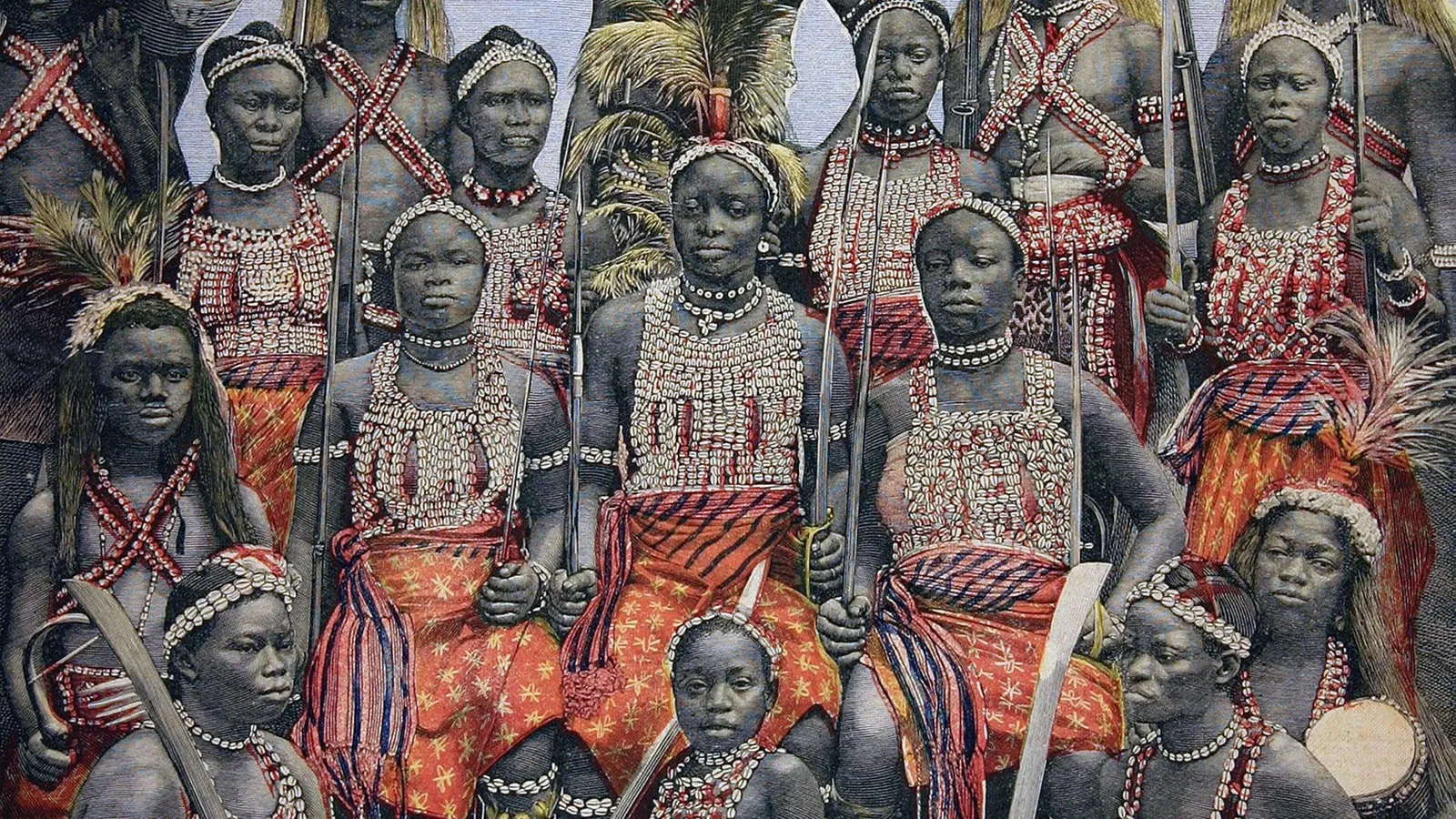
Now the soon-to-be-released film The Woman King is set to highlight the pivotal role they played in Africa’s history. The film centres on the Agojie, an all-women warrior army in the historical African kingdom of Dahomey, now the southern region of the West African nation of Benin.
Oscar and Emmy-winning actress Viola Davis who plays General Nanisca has said Woman King is one of the most important works of her career. Its depiction of strong and courageous Black female warriors has been praised on social media and in reviews.
And the critically acclaimed film, which also stars John Boyega, Lashana Lynch, and Thuso Mbedu, has sparked worldwide interest in the overlooked history of the African women who fought for their communities and led empires and armies.
Here we take a look at some of these trailblazers.
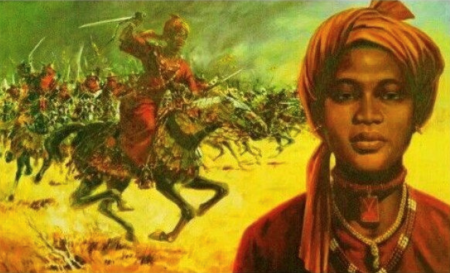
Queen Amina – Leader of Men
Amina, commonly known as the warrior queen, expanded the territory of the Hausa people of North Africa.
She was born around 1533 in Zazzau, which is in present-day city of Zaria in Kaduna Syate, Nigeria.
Her parents were King Nikatau the 22nd ruler of Zazzau and Queen Bakwa Turunku. After both parents died in or around 1566 Amina’s younger brother Karama inherited the throne.
Amina, however, decided to join the military. She worked at improving her combat skills, quickly gaining the admiration and trust of her male peers.
Her first military operation was launched just a few months after she was crowned Queen following the death of her brother.
With 20,000 men under her command several conquests followed. Her military successes led to the expansion of trade routes and resources from conquered lands resulting in Zazzau accumulating immense wealth.
Among her many innovations was the construction of defensive walls around Zazzau which became known as “Amina’s Walls”.
For the rest of her 34-year reign, she continued to fight and expand her kingdom.
Today in Nigeria, she is still celebrated in traditional Hausa praise songs as “Amina daughter of Nikatau, a woman as capable as a man that was able to lead men to war.”
Dahomey Amazons – Defenders of a Kingdom
The Dahomey Amazons (also known as the Agojie in the language of the Fon tribe) were an all-female military regiment in the Kingdom of Dahomey, which was in present-day Benin.
They were named Amazons by European visitors to the West African region, who were reminded of the female warriors or Amazons in Greek mythology.
Dahomey’s male population suffered heavy losses in the regular turmoil and fighting with neighbouring kingdoms, prompting the formation of the Dahomey Amazons in the mid to late 1600s.
They were feared for their courage and bravery in warfare. At times, the Amazons worked with European colonialists to secure and expand their dominion by trading captured enemies for supplies and weapons.
By the mid-1800s it’s estimated there were up to 4,000 women fighting for the expanding kingdom. In their songs they spoke of an aim to be better than men in every respect.
In 1890 the Dahomey women were ordered to attack invading French colonists by King Behanzin. Further battles followed but in 1892 Dahomey fell to the French.
It was the end of the Kingdom of Dahomey and its army of women. But they live on in the dances still performed in Benin today. And their story has inspired the forthcoming film Woman King.
Nanny of the Maroons – National Heroine
Queen Nanny was the leader of the Jamaican Maroons, a community of escaped African slaves who fought a guerrilla war lasting several years against British colonial authorities in Jamaica. It is often referred to as the First Maroon War.
Much of what is known about Queen Nanny comes from oral history as little written documentation about her life survives. According to Maroon legend she descended from the Ashanti tribe in what is now Ghana.
Although the circumstances of her arrival in Jamaica are unknown, it is widely assumed that she arrived there as a slave later escaping to join other formerly enslaved people in the island’s Blue Mountain region.
By 1720, Queen Nanny’s remarkable leadership and military skills saw her chosen as leader of the Maroons. She began to train her people in guerrilla warfare.
Her innovative strategies enabled her soldiers to take the well-armed British colonialists by surprise, decimate their numbers and win dozens of battles. Queen Nanny’s success helped secure the freedom of hundreds of slaves whom she helped integrate into Maroon society.
Their success in battle led the British to sign a peace treaty in 1740 guaranteeing the Maroons’ independence.
In 1975 Jamaica’s government recognised Queen Nanny as a national hero, bestowing her with the title “Right Excellent”. Her likeness appears on the Jamaican five-hundred dollar bill.
Yaa Asantewaa – Freedom Fighter
Yaa Asantewaa was a Ghanaian queen who rose up to lead an army against the British.
She was born into a family of traditional rulers around 1840. In 1900 the Ashanti people were under attack by the British army. However, it was an attempt by one colonial administrator to claim a sacred Ashanti treasure for himself which triggered armed resistance.
For the Ashanti people the Golden Stool, a royal throne, was the ultimate symbol of power.
Ignorant of this fact British Governor of the Gold Coast (as Ghana was then known) Sir Frederick Hodgson made the crucial mistake of demanding to not only to sit on the Golden Stool but own it.
The Ashanti people were outraged. However in a meeting of tribal chiefs, doubts were expressed about whether they could defeat the British.
Yaa Asantewaa came forward and issued a rallying cry.
She told the Ashanti chiefs: “If you the men of Ashanti will not go forward, then we the women will. I shall call upon my fellow women. We will fight till the last of us falls in the battlefields.”
Her speech worked and under the control of Yaa Asantewaa, they took on the British. It was unheard of at the time for a woman to lead in this way.
Beginning in 1900, Asantewaa’s troops laid siege to the occupying British forces, nearly bringing them to their knees. To defeat Asantewaa’s army, the British had to bring in reinforcements numbering in the thousands and tonnes of artillery.
She was later captured and exiled to the Seychelles where she lived until her death in 1921.
But the British never captured the Golden stool. Asantewaa’s fight against the British played a key role in the struggles that led to Ghana’s independence in March 1957. – The Voice


