


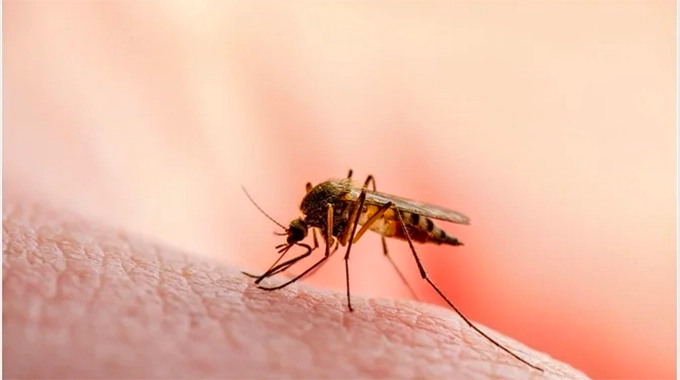
THIRTY-NINE people have succumbed to malaria in Zimbabwe since the beginning of the year, with statistics from the Ministry of Health and Child Care, showing that there has been a total of 17 623 cases recorded countrywide so far.
Of those cases, 299 were children aged under the age of five.
The worst affected provinces are Manicaland and Mashonaland Central provinces.
“The provinces that reported the highest number of cases were Manicaland and Mashonaland Central provinces. The cumulative figures for malaria are 17 623 since the beginning of 2023 and 39 deaths,” read the report.
The ministry said indoor residual spraying (IRS) in 25 districts has been completed as part of efforts to avert malaria cases, which normally go up between October and April.
“Indoor residual spraying is targeted at districts that have high malaria transmission. These districts record cases of five cases and more per 1 000 population. Districts that record four cases and below per 1 000 population are targeted to receive long-lasting insecticidal nets (LLINs),” said the ministry.
Mosquito breeding reaches a peak during the hot, wet months, mainly from September to March.
“For the communities targeted for LLINs, we encourage the communities to sleep under the LLIN every day throughout the year. Communities should ensure that the nets have no holes that will let the mosquitoes in, and any hole should be mended,” said the ministry.
The ministry encouraged communities living near drainable swamps to make drains to enable water to flow as it helps reduce the mosquito density. Mosquitoes breed in shallow and stagnant water, empty containers such as tins, drums, plastics and tyres, roof gutters, disused swimming pools and fish ponds, pits, reservoirs and tanks, including septic tanks.
The ministry also urged members of the public to go for testing and treatment services within 24 hours of malaria symptoms.
These include fever, headache, joint pains, loss of appetite, loss of appetite, nausea and vomiting.
“Seeking treatment early will facilitate early cure and completing the treatment course will break the chain of malaria transmission. Testing and treatment for malaria is free and can be accessed from village health workers and local health facilities,” said the ministry.
“Delays in accessing malaria treatment will lead to severe malaria that can lead to death.”
Signs and symptoms of severe malaria include jaundice in white palms which is a sign of anaemia; very high temperature, severe body weakness (unable to sit, passing very little Coca-Cola-coloured urine or not passing urine at all and severe vomiting.
Malaria is a preventable and treatable disease that continues to have a devastating impact on the health and livelihood of people around the world.
In 2020, there were an estimated 241 million new cases of malaria and 627 000 malaria-related deaths in 85 countries with more than two thirds of deaths recorded among children under the age of five living in Africa.
Zimbabwe uses IRS as the major malaria control strategy to prevent malaria and this has helped to protect an average of 3,3 million people form malaria each year. Between 2010 and 2021, more than 7 million nets have been distributed across the country.
According to the World Health Organisation (WHO), malaria deaths have sharply declined in Zimbabwe with the country achieving a 79 percent reduction in cases between 2004 and 2020.
In Zimbabwe, statistics continuously show that the disease remains a major challenge in certain districts, particularly in seven of the country’s 10 provinces.
WHO recommends protection for all people at risk of malaria with effective malaria vector control. Two forms of vector control — insecticide-treated mosquito nets and indoor residual spraying — are effective in a wide range of circumstances.
British doctor Ronald Ross, who discovered the malarial parasite living in the gastrointestinal tract of the anopheles mosquito in the 19th century, recruited teams to eliminate the larvae from stagnant pools and marshes. – The Herald