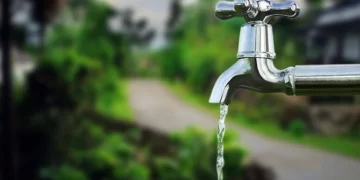




Five villages in Ward 4 in Mangwe District now have access to tap water after they mobilised resources to bring water to their homes.
The villagers were also assisted by Government and developmental partners to have piped water.
DDF chipped in with technical advice.
In the past the area had been facing water challenges, but now households and schools have benefited from these piped water schemes.
Some of the schools that have benefited include Tjingababili Primary, Tshitshi Primary and St Francis Secondary. Previously, pupils had to carry their own water to school.
The first piped water scheme in the area was installed in 2018 in Makuzeze area. The project was funded by Unicef while the community assisted with labour. The project inspired community members from other villagers to follow suit.
Mrs Sikhumbuzo Mabhena from Tjingababili Village installed a tap at her homestead and she said they now have a reliable water source.
“We used to face serious challenges in accessing water. We had to go to the river, dig some wells in order to get water. This was time consuming and it was too much labour. The water we were drinking was also unsafe. We took it upon ourselves to mobilise funds so that we could have a piped water scheme. We get our water from Ramokgwebana River,” she said.
“A pump and solar panels were installed at the river and then some pipes which draw water from the river to some jojo tanks. From the jojo tanks the water then feeds to our taps. We have a community tap for those who haven’t managed to install pipes in their homesteads and then some of us have gone further to install taps.”
Mrs Mabhena said she now collects water from the comfort of her home and her family now has access to clean water.
A villager from Bambanani Village, Mr Lucas Tshuma said the piped water scheme in their area has helped them to establish small garden projects which are a source of livelihood for some families. He said they also have a reliable water source for their animals. Mr Tshuma said the water project has helped to alleviate the livelihoods of the community.
He said they took it upon themselves to mobilise resources to install the piped water scheme as it was going to ease their challenges.
Mr Tshuma said the local community worked together with Diasporans to make the project as success.
“I haven’t installed a tap at my homestead but I’m benefiting greatly from the community boreholes a few metres from my homestead. We have established some small gardens close to the tap where we grow mainly vegetables. We are now guaranteed food for our families because of these garden projects. As a community we realised that in order to address our water challenges we had to take an initiative. We realised that we could not continue struggling when we had underground water that wasn’t being utilised,” he said.
Ward 4 Councillor, Sindisiwe Nleya said the piped water schemes have eased the burden which was mostly affecting elderly women of struggling to collect water.
“Tshitshi area in Ward four has 13 piped water schemes that are operational. These projects were as a result of corroborated effort from community members and developmental partners. The community has however played an active role in making these projects a success by contributing money towards purchasing equipment for these projects.
“When the first two piped water schemes were established in the areas villagers saw the benefit of these projects each village desired to have their own water source. Villagers began mobilising equipment such as jojo tanks, solar power systems and pipes. The first project which was undertaken by the community was Mkhwebane piped water scheme project where over 200 households contributed money for the water project. So far the community has mobilised about R12 000. It’s the biggest project so far,” she said.
Clr Nleya said the local community working members of the diaspora installed pumps and solar panels at Ramokgwebana River and installed pipes running for about 8km. She said a 20 000 litre tank was mounted on a hill which then feeds water to the community. She said households that had not yet installed taps at their homesteads were using community taps.
Clr Nleya said Bambanani water project then followed with villagers getting their water from Embakwe River followed by Tjingababili water project which has also benefited Tjingababili Primary School. She said the project is a result of joint effort from World Vision and the community.
Clr Nleya said from that time onwards, more villages installed the pipe water schemes. She said St Francis Secondary School authorities installed a piped water scheme at the institution which has also benefited the community.
She said the area has also received two boreholes under the Presidential borehole scheme. – The Herald