


SIYAPHAMBILI and Unity farmer field schools in Gwanda, Matabeleland South are producing organic liquid manure as part of climate-smart agricultural programmes being rolled out by the Government.
They are among other farming groups in the province that underwent training on liquid manure production. Organic liquid manure also acts as a pesticide and top dressing.
The programme is part of efforts by Government to promote smart agricultural practices among farmers to improve production and boost food and nutrition security among households.
Government through the Agricultural Rural Development and Advisory Services in partnership with development partners has equipped farmers with liquid manure manufacturing skills.
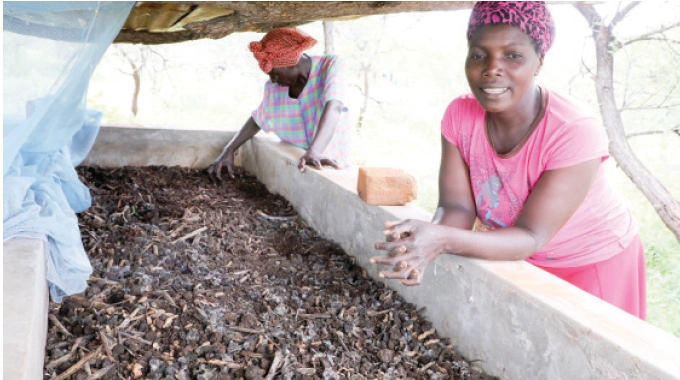
Ms Vivian Mpofu who is the lead farmer for Unity Group said the group constructed a structure at her home where they produce liquid manure.They started the project in September last year after receiving training and have so far produced 230 litres of liquid fertiliser. The group has 23 members and each person contributed R65 towards building the liquid manure production structure.
Ms Mpofu said they have used fertiliser on their crops and it has helped cut down on the cost of buying pesticides.
“We received training on the production of liquid fertiliser, and we were also encouraged to produce the manure as it has huge benefits in terms of the growth of crops. The fertiliser is ideal in the sense that it also acts as a top dressing and kills pests that attack our crops,” she said.
“We spray the liquid manure onto the crops. It does not contain harsh chemicals like other fertilisers hence crops don’t react to it.”
Ms Mpofu said they use the liquid manure on any type of crops for better performance. When producing the liquid fertiliser, they first lay down maize stalks and then add animal manure.
“We then sprinkle some water on top and then add green leaves or green grass. We add chopped melons and continue laying this material in that order until the basin is full,” she said.
“We sprinkle water on top and on the third day, we add worms which help the mixture to decompose.
After three days, we pour a 20-litre bucket of water into the mixture and the water which drips out forms the liquid manure.”
Ms Mpofu said the liquid manure-producing structure has pipe outlets that release the manure.
“This manure making process has a lot of benefits because the residue that remains after the liquid is drained out becomes compost. We use this compost as Compound D or basal fertiliser,” she said.
Ms Mpofu said they are able to use the same mixture to produce liquid manure for three months by just adding water.
“After three months we then change the mixture. This manure can be produced throughout the year. It is very cheap because we just have to invest in the structure and thereafter it is just a matter of collecting animal manure from our kraals, grass, and leaves from the bush and maize stalks from our fields,” he said.
Ms Mpofu said their ultimate target is to have every farmer in their group set up their own facilities for liquid manure production at their homes. Ms Salfina Sibanda who is a member of Siyaphambili Farmer Field School said they dilute the liquid manure before applying it to crops.
She said they either use sleep sacks to spray the liquid manure or just sprinkle it with their hands. Ms Sibanda said they were also trained on how to produce liquid manure using sacks.
“We were also trained on how to produce the liquid manure using sacks. We take the animal manure and put it in sacks without adding anything. We then pour water into a drum and suspend the sack using a rope,” she said.
Ms Sibanda said they have used the liquid manure in their gardens and in the fields.
Acting provincial director of Agricultural Rural Development and Advisory Services for Matabeleland South, Mr Mkhunjulelwa Ndlovu urged farmers to practice organic farming to protect the environment.
He said the liquid manure is not only good for crops, but for the environment as well since it does not contain chemicals that are harmful to the land, water bodies and species.
“Liquid manure retains moisture and soil nutrition. Government rolled out climate-smart agriculture programmes and development partners are assisting with funding that is assisting extension officers to conduct trainings,” said Mr Ndlovu.
“For example, we have the Enhanced Resilience for Vulnerable Households in Zimbabwe (ERVHIZ), a multi-sectoral programme which seeks to develop and equip farmer field schools.”
In line with the recently launched Agriculture and Food Systems Transformation Strategy, Government in collaboration with the International Crops Research Institute for the Semi-Arid Tropics (Icrisat) is promoting low cost, yield-enhancing, and environmental friendly climate-smart agriculture technologies that increase production and productivity in the semi-arid regions of the country. – The Herald