


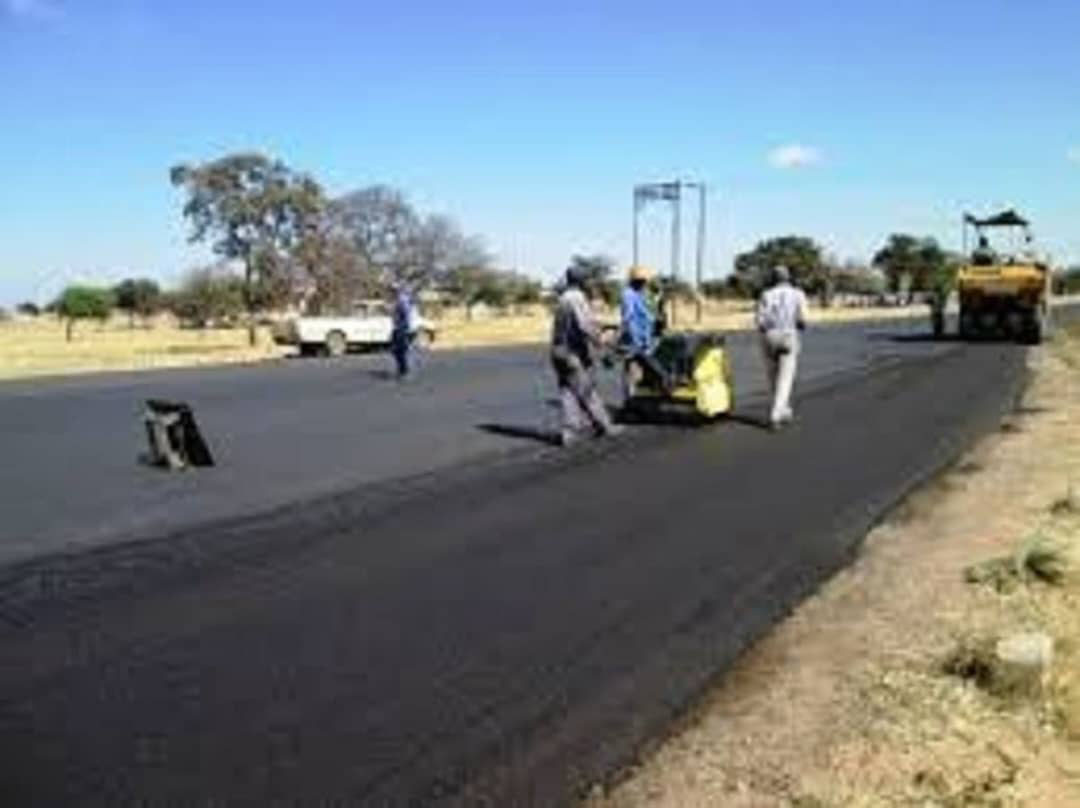
The Rural Infrastructure Development Agency (RIDA) has commended most local authorities in Matabeleland North Province for implementing sound projects using funds allocated under the Emergency Road Rehabilitation Programme.
A team of government officials led by the Rural Infrastructure Development Agency (RIDA) was in Matabeleland North province where they toured projects being funded under the Emergency Road Rehabilitation Programme (ERRP) in selected districts.
Rural Infrastructure Development Agency, Director General Mr Christopher Shumba told the ZBC News, “In Binga, there is good progress. Of the ten kilometres targeted, four have been completed. There is good work on the four kilometres; the weather has disturbed work on the six kilometres. Hwange Rural District Council is doing very well, they showed us several roads which crisscross their district, connecting several important points in the district and we were impressed. We have a few issues that we need them to improve on especially on drainage, otherwise, their effort is worthwhile.”
He added, “There is a lot of commitment from the engineer and the CEO himself, it is commendable. Victoria Falls is doing good work; they are working on their drainage system and we are convinced that if they get more money, they will do more. We were impressed, they are one of the few local authorities who were given a budget and cleared what they have been given and went on to ask for more from ZINARA and were allowed to get much more than they had budgeted for.
“If it was our way, we would allow such councils to be allowed to utilise funds from other local authorities who fail to utilise what has been given to them as a budget.”
RIDA was, however, not amused by Hwange Local Board and Tsholotsho Rural District Council.
Noted Mr Shumba, “Hwange Local Board has a myriad of challenges with its contractors, the local authority needs to be more serious; there is general lack of commitment to the contract work; there is lack of commitment to even utilisation of the funds allocated to the local board. They need to work hard to convince us that they mean business.
“As a team, we need to come back for Hwange Local board only. Our experience in Tsholotsho was that they were doing good work but some contractors did not complete their work, in certain cases, they did not even start. We encourage them to go to the next contractor rather than to waste time arguing.”
The Procurement Regulatory Authority of Zimbabwe encouraged local authorities to collaborate when hiring capital projects equipment to cut costs.
“The ninety-two local authorities were doing individual procurement and they were looking at the same market. The Procurement act allows for shared procurement, where they consolidate their orders, and are given as one order. They enjoy the economies of scale, even when the importer is importing things they will also do it as a consignment.
“They are all getting money from the treasury, so payment can also come from one entity. This is the approach that the treasury is encouraging them to do,” noted Procurement Regulatory Authority of Zimbabwe chief executive officer, Mr Clever Ruswa.
Victoria Falls City Council commended the government for the road rehabilitation programme.
“The funds are critical; they came at a time when our road infrastructure was run down for a long time. These funds are important in that they facilitate the repairs of our road and draining maintenance.
“The funds came at an opportune time when local authorities could not fund these activities on their own, so these funds come very timely for most local authorities. In our case they have helped us do a lot of road damage mostly by the rains and age,” said Mr Ronnie Dube, City of Victoria Falls Town Clerk.
Under National Development Strategy One, the government views infrastructure development as a key pillar towards the attainment of an upper middle-income society by 2030. www.zbcnews.co.zw