



ZIMBABWE is inspiring African countries to transition to Heritage-Based Education 5.0 model, shifting away from the colonial education system that has maintained a biased status quo in favor of developed nations.
Anchored on the adoption of disruptive innovations to produce goods and services, the country’s Heritage-Based Education 5.0 is one of the transformative strategies embraced by the Second Republic.
In the past, the country’s universities were teaching Education 3.0 whose thrust was teaching, research and community engagements but with Education 5.0, higher and tertiary institutions are now focusing on innovation and industrialisation.
The country’s universities proved the impact of Education 5.0 following the outbreak of Covid-19 where they produced personal protective clothing and equipment thereby ensuring the country saved US$12 million.
Apart from that, the ministry has established a local cough mixture — COFSOL through the National Biotechnology Authority, and is producing and packaging bull semen for artificial insemination at Chinhoyi University of Technology while finalising the construction of tar surfacing product. The building of an appropriate factory in Zvishavane is at final stage.
While it was alien in the past that universities run medical schools, Government through the implementation of Education 5.0 has established Mazorodze Medical School at Great Zimbabwe University and is building specialist hospitals in Harare and Zvishavane.
The establishment of agro-innovation and industrial parks is also expected to transform the country’s higher and tertiary sector.
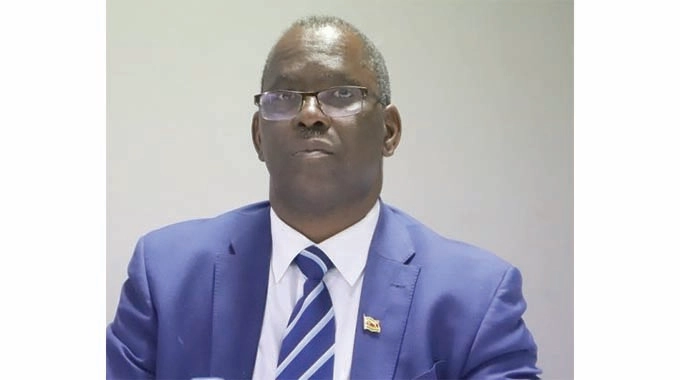
Higher and Tertiary Education, Innovation, Science and Technology Development Permanent Secretary, Professor Fanuel Tagwira, said the success of Education 5.0 has attracted regional attention.
“What you will find out in the implementation of Education 5.0 in its first two years, we can say it was an experiment but an experiment, which we already knew what we wanted to achieve,” he said.
“But the developments that have taken place in the last three years, the transformation in our universities making them more practical, making them more relevant to national development has actually caught the eyes of the people in the region to the extent that many countries are asking their staff to come to Zimbabwe to learn about Education 5.0,” said Prof Tagwira.
He said some universities have even recommended their staff to reconfigure their curriculum to conform to Education 5.0
“Last year, 150 vice chancellors from all over Africa who are part of what we call the Regional University Forum for Agricultural Research, decided they wanted to have their meeting in Zimbabwe because they had heard that Zimbabwe is reconfiguring its education system and that they are already fruits that are derived from that educational system,” he said.
“So, they came and they came and visited our universities and when they visited our universities, they were surprised with what they saw. As I speak to now, that particular forum has actually said they are recommending universities to transition to Education 5.0.”
Prof Tagwira said this testifies to the transformative nature of the country’s higher and tertiary education sector, which is championing a shift from the colonial era education system.
“Remember the colonial education that we inherited was never meant to produce people who can produce goods and services. It was only meant to produce people who would be able to maintain and run systems that were put in place by the colonial Government,” said Prof Tagwira.
He said establishing medical schools at universities will result in specialists’ services being offered in communities.
An innovation hub that was commissioned by President Mnangagwa at Nust recently
“For example, we opened a Medical School at the National University of Science and Technology, we opened a medical school at Great Zimbabwe University, those cities will have specialists who are migrating to live in those cities and provide medical services to the people in those particular provinces,” said Prof Tagwira.
“It is actually a national development thrust when you open a medical school in particular, you are bringing expertise that can be utilised for improving health and wellbeing of that area.” – The Chronicle


