



John Tseriwa
In the twenty-first century, technology is ubiquitous, making it impossible to avoid.
Over the past few years, I have taken it upon myself to bridge the knowledge gap, especially for those not in technology.
My writings aim to help individuals understand how technology operates and how we can use it to improve our lives in all aspects.
In 2021 the Government of Zimbabwe launched The National Development Strategy 1 (NDS1), a five-year economic blueprint to guide the country’s development from 2021 to 2025.
The strategy includes several objectives and initiatives related to technology and digital transformation.
One of the critical objectives of NDS1 is to enhance Zimbabwe’s digital infrastructure, including expanding broadband and developing a national fibre optic backbone.
The strategy also aims to increase access to digital services like e-government and e-commerce and promote local technology companies’ development.
This week we shall discuss the 4IR and the industrial revolutions that preceded it.
First Industrial Revolution (the 1760s-1840s)
This revolution was driven by the development of new manufacturing techniques and machinery, such as the steam engine, spinning jenny, and power loom.
This led to a significant increase in productivity, the growth of factories, and the expansion of transportation networks.
Second Industrial Revolution (late 19th century)
The Second Industrial Revolution was characterised by the rise of electricity, mass production techniques, and the introduction of the assembly line. These innovations led to a further increase in productivity and the growth of new industries, such as cars and steel production.
Third Industrial Revolution (the 1960s-2000s)
This revolution was driven by the development of computers, digital technologies and automation. It led to the growth of the technology sector, the rise of e-commerce, and the development of new forms of communication and entertainment.
World Economic Forum founder and executive chairman, Klaus Shwab, published a book titled “The Fourth Industrial Revolution” in January 2016.
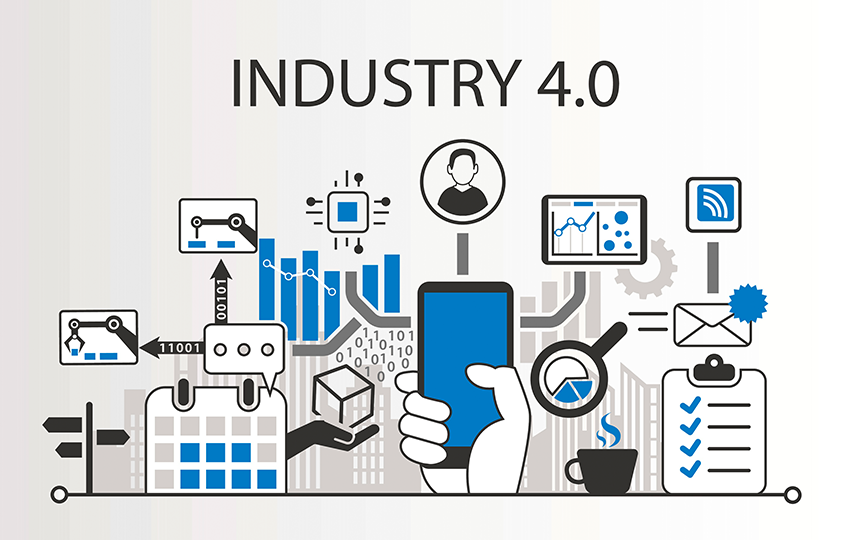
Since then, the term “Fourth Industrial Revolution” (4IR) has been used to describe the fusion of technologies that eliminate the boundaries between the physical, digital and biological spheres. The 4IR is an amalgamation of advances in artificial intelligence (AI), robotics, the Internet of Things (IoT), Web3, blockchain, 3D printing, genetic engineering, quantum computing, and other technologies.
4IR is the joint force behind many products and services quickly becoming indispensable to modern life. Think GPS systems that suggest the fastest route to a destination, voice-activated virtual assistants such as Apple’s Siri, personalised Netflix recommendations, and Facebook’s ability to recognise your face and tag you in a friend’s photo.
The Fourth Industrial Revolution is paving way for transformative changes in our lives and radically disrupting almost every business sector.
This is all happening at lightning-fast speed.
Many of us have adjusted to virtual meetings because the Covid-19 pandemic was responsible for ushering us into using existing technologies that we never did.
Imagine how much businesses and governments across the globe saved by using virtual platforms instead of having to travel for two-day conferences.
I had my first webinar in 2013; it was unreal, cold, and not fulfilling, but post-Covid-19, virtual meetings and webinars are the order of the day.
4IR technologies are driving development across the globe. However, benefits from 4IR are not equally distributed between and within countries.
4IR will shift how almost every industry operates. Agriculture is also moving to a high-tech industry, combining systems and machinery with artificial intelligence and big data.
The systems will consolidate farming into a single unit where all aspects of farming are combined. Africa must embrace 4IR as it transforms how businesses and governments operate globally.
In his book “Closing the Gap”, Professor Tshilidzi Marwala, the former University of Johannesburg Vice Chancellor and the seventh Rector of the United Nations University, says, “Africa must close the gap.”
As a continent, we must cultivate a comprehensive understanding of the future, knowing the opportunities and risks we will likely face.
* John Tseriwa is a tech entrepreneur and a digital transformation advocate focusing on delivering cutting-edge business solutions powered by 4IR technologies. He can be contacted at [email protected] or +263773289802. – Sunday Mail


