


Illegal economic sanctions imposed on the country by Western nations pose a serious threat to Zimbabwe’s attainment of the United Nations Sustainable Development Goals (SDGs) but regardless, the country will continue looking inwardly using its own means to develop.
This emerged at the ongoing High-Level Segment of the 52nd Session of the Human Rights Council which got underway at the UN’s Geneva Headquarters — the Palais des Nations —on Monday.
Representing Zimbabwe, two Cabinet ministers said in spite of the sanctions, Zimbabwe, under the leadership of President Mnangagwa, had adopted mechanisms which have resulted in unprecedented development at all levels.
In separate but carefully co-ordinated interventions in Geneva, Foreign Affairs and International Trade Minister Frederick Shava and the Minister of Justice, Legal and Parliamentary Affairs, Ziyambi Ziyambi, denounced the continued imposition of sanctions against Zimbabwe.
First to engage was Minister Ziyambi whose intervention followed shortly after the Opening Session of the Council.
He provided a detailed update on the status of political, economic and legislative reform in Zimbabwe and also touched on the issue of the Private Voluntary Organisations Amendment Act.
While acknowledging the generally positive role played by Civil Society Organisations in Zimbabwe and the contribution many have made towards the national development agenda, the minister stressed that the intent of the amendments introduced to the Act was “simply to ensure that there is transparency and accountability in the use of public funds allocated towards their (PVO’s) charitable work”.
Referring to the findings of the 2016 Report by the Financial Action Task Force (FATF) which identified a number of legislative and regulatory weaknesses in existing law with regard to preventing money-laundering and/or the financing of terrorism, Minister Ziyambi informed the Council that amendments to the Act were designed to address those weaknesses and to close loopholes in the existing legislation.
Further, the minister said Zimbabwe’s efforts to recover from the Covid-19 pandemic are being hampered by the illegal sanctions.
“Sanctions have haemorrhaged the economy, isolated my country from access to affordable funding and negatively impacted upon the enjoyment of fundamental human rights by millions of ordinary Zimbabweans”, said Minister Ziyambi.
The minister referred Council members to the report submitted (to the Council) in 2022 by the UN Special Rapporteur on Sanctions, Alena Douhan, in which she stressed that the sanctions imposed on Zimbabwe have neither moral nor legal basis in international law.
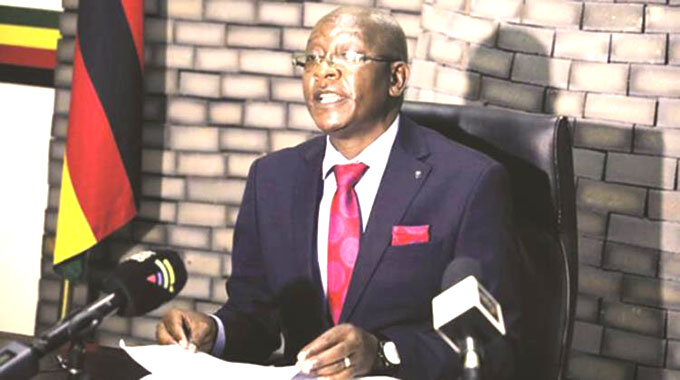
Addressing a separate Council session dedicated to the Right to Development, Ambassador Shava gave an overview of efforts made under the Second Republic to promote socio-economic development across the country, and to improve the lives of all Zimbabweans, in line with the National Development Strategy 1 (NDS1).
Addressing the Council by way of video-link, the minister highlighted the prioritisation of agriculture, infrastructural development, industrialisation and the creation of employment opportunities, noting that, due to sanctions and lack of access to affordable funding, most of these development programmes were “self-financed”.
Building upon and further buttressing the earlier intervention by Minister Ziyambi, Ambassador Shava bemoaned the negative impact Western sanctions were having upon Zimbabwe’s efforts towards economic recovery and growth in the wake of natural disasters, climate-change-related drought and the Covid-19 pandemic.
Crucially, he said, the continued imposition of such illegal, punitive measures was severely affecting national efforts to attain the SDGs and Zimbabwe’s own developmental agenda —Vision 2030, to become an upper middle class economy.
A number of other progressive nations, in their own addresses to the Council session, echoed Zimbabwe’s observations about the illegal nature of such unilateral sanctions and the negative impact such measures were having upon the sanctioned countries and their right to development. – The Herald


