



South Africa’s public sector wage bill has topped R700 billion, painting a complex picture for the government which is trying to tighten spending as labour unions pile on the pressure for above-inflation salary increases.
Tabling the budget for the 2023/2024 financial year, Finance Minister Enoch Godongwana said he expects compensation for workers in the employ of the public service to reach R701.2 billion, surpassing a level he once thought would be reached in 2025.
In the previous financial year, the government spent R690 billion on the wage bill, which included an additional R14.6 billion it spent to fund wage increases, following its unilateral implementation of a 3 percent increase in October last year.
In his budget, the minister flagged unaffordable public-service wage bill settlements as one of the key risks to South Africa’s fiscal outlook, adding that stricter controls to manage the public service’s infamously bloated headcount are needed to rein in spending.
Additionally, wage agreements that exceed the growth of the compensation budget pose a threat to public finances.
Government spending since the 2008 financial crisis has grown faster than South Africa’s GDP growth, largely driven by a mounting public service wage bill, among other line items such as rising debt-service costs and transfers to households.
By 2026, the public wage bill is expected to increase to R760,6 billion, at an annual rate of 3,3 percent, signalling that the government plans to curtail salary increases and keep them below inflation.
By its own measure, National Treasury expects inflation to come in at an average of 5.3 percent this year, and to average 4,9 percent and 4,7 percent in 2024 and 2025 respectively.
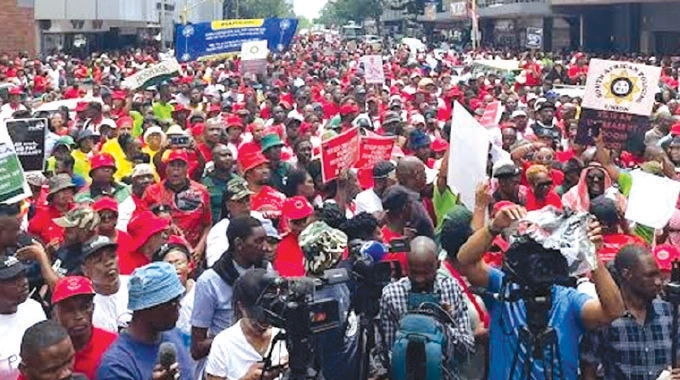
But unions have put on a relentless fight in pay negotiations, with their demand for 10 percent hikes and a refusal by some to resume discussions pertaining to the new financial year.
“As for the wage negotiations that just commenced, the budget does not pre-empt the outcomes … Nevertheless, this and future wage negotiations must strike a balance between fair pay, fiscal sustainability, and the need for additional staff in frontline services,” Godongwana said.
While Federation of Unions of South Africa (Fedusa) unions have kicked off negotiations for the 2023/2024 financial year, members of the Congress of South African Trade Unions (Cosatu) and the South African Federation of Trade Unions (Saftu) have rendered talks for the previous year unresolved and are planning to embark on a full-blown strike.
The unions previously said they would issue strike notices when Godongwana delivered his budget speech.
In contrast to their demands, the government has tabled a 4,7 percent increase for 2023, the 235 000 workers strong Public Servants Association (PSA), which attended a special council meeting at the Public Service Co-ordinating Bargaining Council (PSCBS), told to Moneyweb.
If unions pile on the pressure and manage to push the government into granting their demands, a 10 percent increase may effectively push the state’s wage spend to R770 billion for the 2023/2024 year.
While a 10 percent demand from public unions seems a tall order, the upcoming 2024 national elections may fuel workers’ fight for an increase higher than inflation at least, with the ANC scrambling for support in many spheres among the South African public.
“An unbudgeted wage settlement will require very significant trade-offs in government spending because the wage bill is a significant cost driver. It will mean that funds must be clawed back in other ways,” Godongwana said. – Moneyweb


