


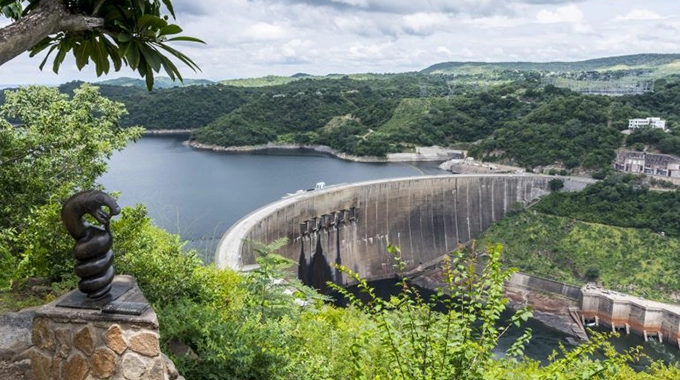
ZESA HOLDINGS and Zambia’s Zesco have had the generation limit on the Kariba power stations inched up to 350MW each, from 300MW, pending further review at the end of next month as the Zambezi River Authority builds up reserves for increased power production ahead of the electricity intensive winter wheat crop.
Staying within the given generation range is expected to guarantee seamless and undisrupted winter wheat crop production as Zimbabwe eyes consolidation of its self-sufficiency status.
With nearly 6 billion cubic metres of water in the lake that can be used in power stations, a further 8 billion cubic metres is expected by the end of February.
This is still low to influence an upward review of the water allocation for power generation, paving the way for increased production.
In an interview, ZRA chief executive Engineer Munyaradzi Munodawafa said if power utilities stick to the given generation parameters, there would be room for increased power production.
“The power utilities (Zesa and Zambia’s Zesco) should generate 700MW between them. I know in Zimbabwe there is winter wheat production,” said Eng Munodawafa.
“If the levels of production are maintained up to the end of March, then there shouldn’t be any problems with the allocation for the winter wheat crop production.”
Eng Munodawafa said the lake was expected to have received between 40 and 44 billion cubic metres by the end of the season in June which would allow the utilities to operate at their base production level of 1 200MW.
Such a position, he said, would allow the utilities to oscillate between base and peaking functions as the situation demands.
The Kariba South and North power stations are generally peaking stations which are ramped up in response to increased demand or a fault at short notice.
Hydro stations can bring a turbine-generator unit from stand down to flat out on the grid in a few minutes. Thermal stations need to light the boilers and have steam, a process that can take over an hour.
With the reservoir being affected by climate change, implementation of the Batoka Gorge Hydropower Project and 13 other points is seen as a way of sorting out some of Southern African woes.
The 14 projects have a potential to produce 14 000MW, although this could vary drastically between low and high water marks on each river, since storage of the order of Lake Kariba is rare.
As part of steps towards implementation of the Batoka Gorge dam and power stations, ZRA has been instructed to streamline its personnel.
This entails coming up with dedicated personnel including engineers for the project.
Previously, engineers for the project would work on both the Kariba Dam Rehabilitation Project and the Batoka Gorge Hydropower Project.
Mobilisation of funds for the project is underway.
Very little water enters Lake Kariba from Zimbabwe or southern Zambia, with the main flows coming from southeast Angola and northwest Zambia.
Indications are that the Barotse Plains were filling up and expected to start releasing water by the end of this month and then the Angolan run-off starts building up a little later.
“The only hope we are having is the upper catchment.
“The Barotse Plains are getting there and they should start releasing water by the end of February,” said Eng Munodawafa. – The Herald


