



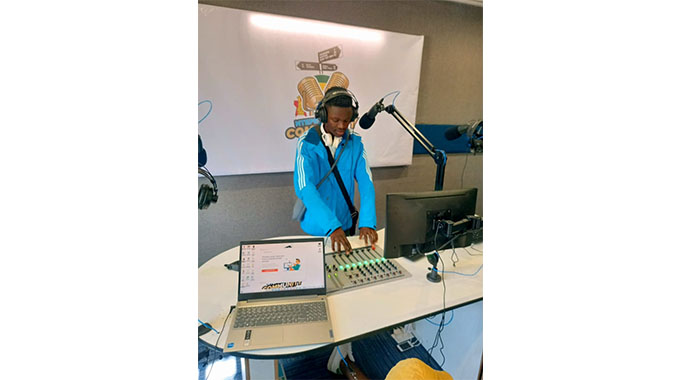
THE Second Republic has given previously marginalised communities a voice to determine their development agenda following the licensing of community radio stations that broadcast in local languages.
Government licensed 14 community radio stations and the majority of them are located in the Matabeleland region.
Zimbabwe’s information dissemination was previously centralised in cities and rural communities were on the margins.
But since the coming in of the Second Republic led by President Mnangagwa, Government has opened up the broadcasting sector and for the first time in history, Zimbabwe has matched the international broadcasting tiers of having public, commercial and community broadcast media.
The country today joins the rest of the world in commemorating World Radio Day at a time when Government has committed to further opening up the broadcast sector in pursuit of the country’s development.
Radio day commemorations are running under the theme “Radio for Peace.”
In an interview yesterday, Information Publicity and Broadcasting Services Deputy Minister Kindness Paradza said Government values the power of radio considering that it is an important developmental tool.
He said licensing of community radio stations shows the country’s commitment to investing in an informed citizenry.
“We have licensed 14 community radios and half of those are in the Matabeleland region. On Saturday, we are going to launch Shashe-Beitbridge Community Radio. Our focus is to increase and as soon as these 14 are on air, we issue more licenses and this time around taking into consideration community interests. These were all language based and as far as we are concerned, we have covered all the 16 languages in the Constitution and now we are going for community of interest including some prominent dialects,” said Deputy Minister Paradza.
He said the theme for the commemoration is in sync with the national discourse of peace for development.
Deputy Minister Paradza said preaching peace is important as the country is heading towards an election.
“In terms of the theme, the President is always saying this is an election season so he is preaching to all of us. So it is our hope as a Ministry and Government that we preach peace as we go to elections to be held between July and August,” said Deputy Minister Paradza.
He said the programming of community radio stations should reflect the aspirations of the localities they operate from.
Deputy Minister Paradza said Government is reviewing legislation relating to the broadcasting sector to attract more investors.
He said licensing of more radio stations is expected to enhance the country’s democratic space.
“The more radios we have the better for democracy. You are aware that Zimbabwe was the first country to introduce radio in 1933 and television in 1960 ahead of South Africa and countries in the region. But over the years, we have lagged behind so we are trying to catch up and even overtake our colleagues in the region,” he said.
“In terms of democracy, these are community radio stations and the communities are going to produce content for their own good and development and we have democratised the media landscape.”
Broadcasting players operating community radio stations have commended Government for spreading information to previously forgotten communities.
Gwanda’s Ntepe-Manama Radio station manager Mr Mvelo Zondo said their radio station, which broadcasts in Sotho and IsiNdebele, is a development tool and the community is feeling the impact of having its local radio station.
“We want to express gratitude to the Government for opening up radio airwaves. Importantly, these radios were awarded to marginalised communities that did not have access to national radio airwaves. The community radio is important for information dissemination and cultural and language preservation for the marginalised communities. As Ntepe-Manama Radio we are even giving voices to rural artistes whose talents were not showcased by the national stations,” said Mr Zondo.
He said Ntepe-Manama Radio also broadcasts to livestock farmers and their programming addresses the needs of the community.
“So now there is easy dissemination of information relating to livestock and we broadcast information that is key in busting livestock theft, even issues to do with animal vaccination are shared to communities. Even issues to do with inputs distribution, health related matters are readily available so we can say the community radio is key to community development,” he said.
Beitbridge based community radio station, Lotsha FM board chairman Mr Mekia Muyambo said they wanted to launch their station today to coincide with World Radio Day commemorations but due to unforeseen issues they have rescheduled to Saturday.
He said community radio is important for the preservation of the Venda language spoken in Beitbridge. “We are really excited to have our radio station as we are going to be broadcasting on issues that are happening in our community. We did not really get much coverage in national radios. We are going to speak about our challenges as well as educate and entertain,” said Mr Muyambo.
He said the radio station will enable the Beitbridge community to market economic opportunities that exist in the district.
His sentiments were shared by Mr Thulani Muyandi the station manager for Lyeja FM, a community radio station based in Hwange.
He said the community radio station has given a voice to locals.
“In the past we did not have reliable access to radio. Some areas could access national stations but other areas were blacked out. But now we are enjoying broadcasting in our local languages, which include Nambya, Nyanja, Chewa and IsiNdebele. Community media has closed the information gap that existed nationally and locally,” said Mr Muyandi.
United Nations Educational, Scientific and Cultural Organisation (Unesco) world radio day coordinator and veteran broadcaster Mr John Masuku said more needs to be done to support the growth of the broadcast sector in the country.
“I welcome the proliferation of commercial stations, community radio stations and what we call for is that they need support and Unesco also is making that call. They cannot just exist without the support from advertisers, listeners and so forth,” said Mr Masuku. – The Chronicle


