



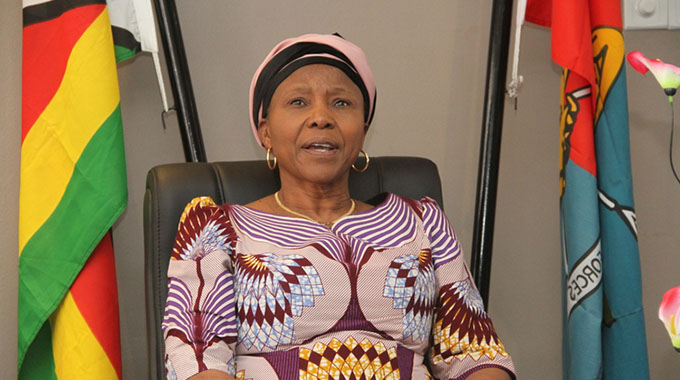
The Zimbabwe Defence Forces will continue to invest resources in manpower training in order to produce multi-skilled cadres that will become a source of national inspiration, ideas, polices, decisions, innovations and leadership in the future, Minister of Defence and War Veterans Affairs Oppah Muchinguri-Kashiri has said.
Presenting the Zimbabwe Defence Policy to students of the Joint Command and Staff Course at Zimbabwe Staff College last week, Minister Muchinguri-Kashiri said manpower development had become the inspiration of any defence force that intended to do its functions properly.
“In the area of manpower development, our policy promotes the regular training of military personnel at both organisational and individual levels in order to equip them with knowledge and skills that they may use in both their military and civilian lives,” she said.
“This is not unique to Zimbabwe, but is a trend among defence forces the world over.
“The policy clearly recognises the importance of creating multi-skilled cadres that become a source of national pride and inspiration.”
Zimbabwe’s Defence Policy placed great emphasis on sound management of the military establishment and its defence resources and recognised the need to establish and maintain a resource management system that was judicious, transparent and accountable.
This, she said, had seen the Zimbabwe Defence Forces achieving its Constitutional objectives even against the backdrop of limited resources, resulting from subdued economic activity owing to the effects of the illegal economic sanctions imposed on the country by the West.
The policy encouraged active participation of the Zimbabwe Defence Forces in social and economic development by rendering military assistance to civil authorities, in addition to placing focus on the improvement and enhancement of conditions of service and welfare of troops through the pursuit of dynamic programmes to provide decent and adequate accommodation, salaries and transport.
Turning to the engagement and re-engagement efforts being undertaken by the Second Republic, she said they have yielded positive and promising political and economic relations between Zimbabwe and the international community of nations, while at the same time revitalising the investment climate in the country and attracting the much-needed foreign direct investment.
“Since his coming into office on 24th November 2017, His Excellency President ED Mnangagwa, embarked on a serious engagement and re-engagement programme with those in the international community that had turned their backs on us,” she said.
“These efforts, undertaken under the popular mantra, have yielded positive and promising political and economic relations between Zimbabwe and the international community of nations, while at the same time revitalising the investment climate in the country and attracting the much-needed foreign direct investment.
“This has resulted in the country securing substantial investments such as the $4,2 billion Darwendale Platinum project, the Mvuma Iron and Steel project, and several other mining projects. It is, however, critical to note that most of these projects are long-term in nature and require longer turnaround periods to have direct impact on the economy.
“This, therefore, calls upon our people to be patient whilst the fruits of these projects are trickling down the economy. His Excellency the President’s economic drive is ultimately aimed at achieving the country’s vision of an upper middle-income economy by 2030.”
Minister Muchinguri-Kashiri said while the re-engagement had been successful, it had not been an easy task as detractors intermittently threw spanners into the works to derail progress.
“Previously, we have witnessed a series of alleged abductions, which surprisingly coincided with international conferences and high-level visits to the country, meant to project a negative image of the country’s human rights record,” she said.
On regional security, Minister Muchinguri-Kashiri said the political situation presently remained stable, however, the influx of undocumented immigrants from west and north Africa with the help of human trafficking syndicates remained a challenge.
She said modernisation of the defence forces across the globe had invariably become the order of the day. – The Herald


