



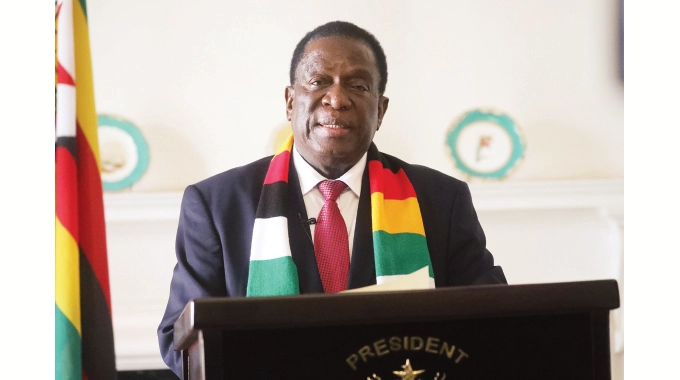
Construction of Dinson Iron and Steel Company (Disco) steel plant in Mvuma is now half way complete, a development that will see the country saving almost 90 percent of imports in steel products, plus exports, coupled with the downstream benefits along the economy’s value chain, President Mnangagwa has said. He said the near completion of the multi-million-dollar project bore testimony to the Second Republic’s commitment to transform the economy into an upper middle class economy by 2030 anchored by the National Development Strategy 1. SEXTINGQUEEN69 amouranth onlyfans leak President Mnangagwa made the comments yesterday on his twitter handle yesterday. “The Dinson Manhize Steel plant is now half way to completion. This will be Africa’s biggest integrated steel works, reducing our country’s steel imports by 90 percent. This kind of progress shows our Government’s dedication to the future and our commitment to Vision 2030,” said President Mnangagwa. The steel plant project is part of more than 3 000 projects across Zimbabwe that have been implemented by Government over the past four years, transforming the lives of millions of people both in the rural and urban areas in line with the objectives of the NDS1. Other projects range from community schemes with a huge impact on ordinary people to the flagship projects critical to the achievement of the vision of Zimbabwe becoming an upper middle class income economy. Dinson, which is one of Tsingshan’s three subsidiaries in Zimbabwe, has so far invested more than US$500 million into its US$1,5 billion steel plant in Manhize and it has expressed optimism that it was on course to meet its August 2023 production deadline. Construction of the steel plant, which is touted as Africa’s biggest integrated steel works, began last year and most of the civil works had been done ahead of the August 2023 first production deadline. The first phase will see processing of carbon steel for both local and export markets. The project will create 6 000 jobs directly and 30 000 others downstream while also adding impetus to the National Development Strategy 1 by fostering industrialisation and overall economic growth. It is expected the steelworks will stimulate production across the engineering, iron and steel industries as well as generate more export earnings for the country. In line with NDS1 objectives and Vision 2030 targets which Zimbabwe is expected to have reached upper middle-income economy status, the steel plant is expected to see the development of a new town in the area. Infrastructural projects, such as a dam to be constructed in the area to supply water to the steel works as well as roads are taking shape in and around the project area, while an irrigation scheme in the same locality will enhance national food and nutrition security. To give impetus to the project, the firm has constructed a bridge over Munyati River, now 90 percent complete while it has signed a Memorandum of Understanding with Zimbabwe National Water Authority for the construction of the dam to provide water to the steel plant. Following the closure of Zimbabwe’s largest steel plant, Zisco in 2008, the country is spending US$400 million annually importing iron and steel products. Disco, intends to build a 1 000-kilometre railway network to be used for ferrying bulk iron and steel products to the markets or ports. The group’s two other local subsidiaries are Dinson Colliery and Afrochine Smelting (Pvt) Limited. In July last year, Disco announced that it had started scouting for local and export markets for its products ahead of production this year. This dovetails with the objectives of ZimTrade to grow Zimbabwe’s exports to US$7 billion this year and US$14 billion by 2030. In Hwange, Dinson Colliery is engaged in coking coal, coal washing, coal tar recovery, coal tar processing, and other activities. The colliery already exports high-quality coke to South Africa and Zambia. – The Herald
- Latest
- Trending