



Ordinary Zimbabweans and businesspeople are optimistic that the successes recorded last year will continue, at an accelerated pace, in 2023.
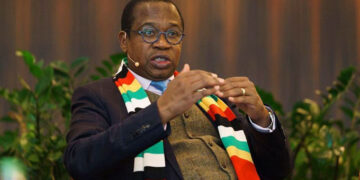
The Reserve Bank of Zimbabwe has already indicated that it will ensure inflation continues to cool off in line with the stability achieved since mid-last year. To get more on this year’s economic outlook and other issues keeping people awake, our Deputy News Editor Africa Moyo (AM) engaged Finance and Economic Development Minister Professor Mthuli Ncube (Prof MN) yesterday. Read the excerpts . . .
AM: Zimbabwe starts a new year on the back of a successful 2022 characterised by infrastructural development and price stability from mid-year. Can you give us the economic outlook for this year?
Prof MN: We are very upbeat about the outlook of the economy as I presented in the 2023 National Budget statement. We still expect the economy to register a 3,8 percent economic growth during 2023, sustained by bullish performance in the mining, construction and agriculture, as well as accommodation sectors. To reiterate the new year message delivered by his excellency the President of the Republic of Zimbabwe, Cde. Dr E. D. Mnangagwa, the focus for this year is on continuing to our economic transformation agenda by modernising, industrialising and growing the economy as we push towards the attainment of Vision 2030.
We are cognisant of the risks ahead such as the domestic power generation constraints, potentially uneven rainfall pattern, as well as global economic uncertainties emanating from geo-political developments and the post-Covid-19 impact on the global economy.
Notwithstanding, we are optimistic that we will achieve the 2023 macroeconomic targets as outlined in the 2023 National Budget, as Government is implementing mitigatory measures against the risks to ensure the economy remains on the desired trajectory. It remains our aim to consolidate stability and resilience so that economic growth, going forward, is achieved in a less volatile environment. The historical volatility of GDP growth where one or two years of high growth are interrupted by a year or two of low or negative growth, militate against the long-term compounding of annual growth rates. Sustained growth to achieve the Vision 2030 targets require consistent and stable annual growth rates of above 5 percent.
AM: Some people say there is an artificial price and exchange rate stability because Government is not paying all suppliers at the moment. What’s your take on that?
Prof MN: The prevailing price and exchange rate stability is as a result of deliberate Government interventions such as the enforcement of value for money on all Government contracts, introduction of gold coins and increasing the bank rate to positive real interest rates, as well as other cocktail of measures introduced by both Government and Central Bank during the course of the year, 2022.
Let me set the record straight, Government is paying all its suppliers after the validation exercise, while re-negotiations were undertaken on overpriced contracts. Therefore, the current stability cannot be attributed to non-payment of suppliers. The value for money exercise is meant to ensure that supplies to Government are correctly priced in the public interest and to ensure that overpriced goods do not adversely impact exchange rate and inflation stability.
AM: Some economists say the auction rate is not reflective of what is obtaining on the market and the bubble might burst at some stage this year. What’s your view on that and are there plans to liberalise the rate further?
Prof MN: The current auction system has always been a stepping stone towards a market determined exchange rate as part of the broad macroeconomic reforms, hence the introduction of the willing-buyer willing-seller exchange rate system. We have already re-affirmed our commitment to refine the current auction system to enhance efficiency through further liberalisation of the market as outlined in the 2023 National Budget.
This was further buttressed by the resolution of the Monetary Policy Committee in December 2022.
AM: going back to suppliers’ payments, there are reports that the value for money concept has affected some infrastructural development projects. How far true is this?
Prof MN: It is important to understand that the concept of value for money is meant to safeguard public resources through ensuring goods and services are priced fairly, as well as to tame speculative tendencies which cause inflation.
Therefore, the exercise was necessary and inevitably affected the smooth implementation of some Government programmes and projects including infrastructure projects. The process did not affect all the contractors, Treasury was disbursing at least 20 percent of the funding to sustain ongoing works, for the few affected contractors.
AM: What are we doing to ensure honest suppliers are paid on time so that projects are completed on time?
Prof MN: All contracts with fair price are already being paid on time. Going forward, using provisions in the Public Finance Management Act, accounting officers are required to ensure that all contracts are fairly priced, enabling timeous payment of complying suppliers.
As a long-term solution, Government is strengthening the relevant public procurement regulations, including standardisation of prices for goods and services supplied to all Government departments. This includes strengthening capacity within procurement management units of Ministries, Departments and Agencies, to uphold due diligence principles at every stage of the procurement cycle.
AM: Being an election year, there are fears of economic instability, especially as focus would be on campaigns. Tell us if there is a plan to ensure the economic growth and infrastructural development momentum are maintained.
Prof MN: Government operations are autonomous of political calendar. We have already set the economic agenda through the 2023 National Budget outlining projected economic growth, supporting policies and programmes. Budget has been allocated to priority areas including the harmonised elections.
Instead, holding of elections has the potential of enhancing economic activities as political parties and contestants spend their resources through campaigns and related activities.
AM: Turning to electricity challenges, Zimbabwe isn’t out of load shedding yet. What is Government doing to improve the electricity supply?
Prof MN: The country is currently experiencing power supply shortages emanating from low water levels at Kariba Dam and frequent breakdowns and logistical challenges at Hwange Power Station. Zimbabwe is not alone in this situation as the whole region is in short supply for one reason or another. The situation is affecting the region compromising electricity sharing through the Southern African Power Pool (SAPP).
In the meantime, Government has mobilised resources to secure additional imports from Electricidade de Moçambique of Mozambique and other SAPP members to support the current power supply, assisting in reducing the load shedding. Efforts will be made to secure additional imports while work is underway to ramp up domestic production at Hwange Power Station and other small thermal power stations, complemented by Independent Power Producers initiatives.
AM: Reports say Government has not supported IPPs well so they generate more power. What has been done now to boost IPP operations?
Prof MN: Recently, Government has announced a Government Implementation Agreement (GIA) to expedite the commissioning of 27 solar IPP installations with potential to generate over 900MW. The GIA includes a project development support agreement, a power purchase agreement, and an agreement with the RBZ for guaranteed payments of dividends and foreign loan repayments to external investors and lenders.
AM: Lastly Prof, what other measures are in place to ensure a steady availability of electricity?
Prof MN: Government is working tirelessly to ensure the completion of Hwange 7 & 8 which is set to bring an additional 600MW to the national grid. To date, it is pleasing to see that the technical tests are progressing well and the utility expects the first additional 300 Megawatts from Unit 7 soon.
AM: Thank you for your time Professor.
Prof MN: Welcome. – The Herald


