



04 Jan, 2023 – 00:01
Nqobile Bhebhe, Senior Business Reporter
AS the raft of economic policy adjustments outlined in the 2023 National Budget come into effect this month, hopes are high that incentives for production through tax relief measures will boost business operations and benefit ordinary citizens.
The Senate and the National Assembly have both passed the budget statement, giving the required legal approval to the taxation changes and allowing Government to spend money in line with the detailed estimates of expenditure.
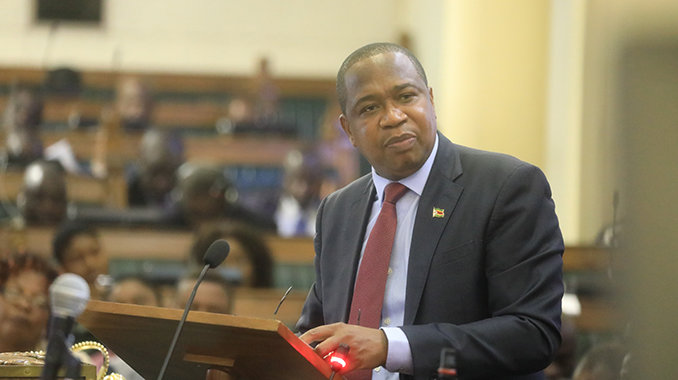
Finance and Economic Development Minister Professor Mthuli Ncube presented a $4,5 trillion budget that was welcomed as people-centred by ordinary Zimbabweans and economic experts.
The budget comprises the Finance Bill, which deals with taxation changes and other revenue matters, and the Appropriation Bill, which gives permission to Government to spend as precisely detailed in the long estimate of expenditure.
The Finance Bill seeks to amend the Finance Act, the Income Tax Act, the Value Added Tax Act, the Capital Gains Act, the Customs and Excise Act, and the Revenue Authority Act.
The Appropriation Bill provides for the money allocated to all ministries and Government departments. From January 1, an array of taxes including tax holidays for selected capital goods, among others, have come into effect.
Following intensive lobbying from the business community, a downward review of the Intermediate Money Transfer Tax (IMTT) on domestic foreign currency transfers from 4 percent to 2 percent came into effect.
Captains of industry have been complaining about IMTT, which they said was too high and, therefore, crippling business operations.
The objective of the IMTT was to bring the previously untaxed informal businesses under the tax bracket but formal businesses are saying this is double taxation.
Similarly, the increase of the standard value-added tax rate, from 14.5 percent to 15 percent is now operational.
The impact on low-income households will be mitigated by existing exemptions and zero-rating on selected basic goods and services.
According to the budget statement, Prof Ncube said regionally, the country’s VAT rates of 14.5 percent are comparatively lower than the SADC regional standard Value Added Tax (VAT) rate, which averages 16 percent.
The VAT rate was reduced from 15 percent with effect from January 1, 2020, in order to support households during the peak period of the Covid-19 pandemic.
“I, therefore, propose to reinstate the VAT rate to the previous rate of 15 percent, with effect from 1 January 2023,” said Prof Ncube in his budget statement.
“The impact on low-income households will be mitigated by existing exemptions and zero-rating on basic goods and services.”
To mitigate revenue loss to the fiscus through abuse of deferment tax, the budget has called for an increase from US$500 000 to US$ 1 million.
Treasury has said that while the VAT deferment facility was put in place to mitigate the cash flow impact on business, the benevolence has, however, been abused by most of the beneficiaries through non-payment after the due date.
Deferment of VAT is a temporary postponement of paying VAT on the importation of specified goods of a capital nature. The goods should have been imported for their own use by the importer.
Contacted for comment, development economist Dr Prosper Chitambara said the fiscal adjustments will have positive developments as they are in line with inputs from various stakeholders.
He, however, said the marginal 0,5 percent adjustment on VAT, for instance, will have a slight impact on prices of goods and services.
“The reduction in the IMTT and the deferment of VAT is a welcome development, which should provide a lot of relief to business and ordinary citizens. This is in line with obvious expectations from various stakeholders,” said Dr Chitambara.
“The increase in value-added tax by 0,5 percent will have a marginal increase in some commodities where VAT is levied but this is going to be marginal.
“Generally, in terms of reduction of IMTT, we are on the right path and the minister (Prof Ncube) during a post-budget meeting promised to continue to further review downwards and even tax deductible for business.
“We are happy with promises and commitment and that is in line with inputs from various stakeholders.”
A reduction in the period for exporting goods under bond from 10 days to five, has also come into effect.
Authorities have said the 10-day period within, which goods in bond must be exported provides an opportunity for abuse or tampering.
The budget statement said in addition, the battery charge on cargo seals cannot sustain a 10-day period of discharge thereby exposing the consignment to risk.
To that end, the exportation period has been reduced to five days. Another noticeable change is electronic sealing of exports in bond and use of prescribed routes .
Prof Ncube said excisable products such as cigarettes are exported in bond and despite the administrative measure to secure export-bound goods from being consumed on the domestic market without payment of requisite tax, incidences of false acquittals and smuggling are rampant.
In order to mitigate these malpractices, the budget made provisions for excisable products exported in bond to be electronically sealed.
Added to that, exports in bond will now be consigned through designated routes from the point of loading to ports of exit.
The prescribed routes will be synchronized with the current Ports of Entry and Routes Orders. – The Chronicle