



Zimbabwe registered the much-needed macro-economic stability milestone to meet the National Development Strategy 1 (NDS 1) targets in 2022 on the back of sound policies initiated by the Second Republic.
NDS 1 is a five-year economic blue-print that seeks to drive transformation of the country towards the attainment of a national vision of a prosperous upper middle-income economy by 2030.
The economic development programme, which runs up to 2025 succeeded the two-year Transitional Stabilisation Programme (TSP) implemented from October 2018 to December 2020 to set the economy on a recovery trajectory after years of stagnation.
The TSP acknowledged policy reform initiatives of the Second Republic that came into being in November 2017 led by President Mnangagwa, to stimulate domestic production, increase exports, rebuild and transform the economy.
Hence the objectives of NDS 1, can only be sustained in a stable macro-economic environment that the Government in 2022 managed to achieve through the implementation of a cocktail of fiscal and monetary interventions.
Economist, Mr Eddie Cross noted; “We managed to achieve macro-economic stability in 2022 and this is seen by all the economic indicators such as the balance of payments, and budget surplus which were positive.
“However, our monetary policy exhibited weakness in addressing issues to do with exchange rate, so the weakness needs to be addressed going into 2023.”
On the back of tight monetary and fiscal policies, inflationary pressures were contained with Zimbabwe ending the year with a month-on-month inflation rate of 2,4 percent in line with the authorities’ prognosis of below 3 percent at the end of 2022.
Though still on the high side, the annual inflation rate was reversed from a peak of 285,1 percent in August last year to 243,8 percent in December 2022.
Of note also, is the fact that last year, the Government managed to curtail uncouth tendencies on the market such as speculative behaviour and arbitrage opportunities that oiled the viability of the black market and an onslaught on local currency.
Last year, authorities also managed to stabilise the exchange rate that was causing depreciation of the Zimbabwe dollar and fuelling inflationary pressures and prices increases.
To this, economist, Mrs Tracy Dube, said NDS 1 targets to grow the economy by raising the living standards of ordinary citizens through employment creation and ensuring national food security and nutrition would be achieved.
“NDS 1 targets are likely to be met if authorities continue to implement policies that stimulate production across all sectors as well as attracting investment into the country. A tight monetary policy stance is needed if the economy is to sustain a positive growth momentum,” she said.
On the infrastructure side, a vital cog in driving Zimbabwe towards Vision 2030, the Second Republic registered significant milestones as the country pursued a number of capital expenditure projects.
Such projects include construction of Lake Gwayi-Shangani and its pipeline to bring water to Bulawayo, expansion works at Hwange Thermal Power Station also continued in 2022 under a US$1,5 billion funding.
The power station’s units 7 and 8 to add a combined 600MW into the national grid, are expected to come on stream this year (2023), bringing relief to thecountry.
In 2022, the Second Republic completed the first phase of the US$300 million Beitbridge Border Post upgrading project and the Harare-Beitbridge Highway, which is being rehabilitated to a world class infrastructure, has 354,47 kilometres already opened totraffic.
On the investment side, Zimbabwe received a number of investors from across the globe including the United Arab Emirates businessman, Mr Shaji Ul Mulk, who is also the chairman of Mulk Holdings and Abu Dhabi T10 who came to explore areas of cooperation in various economic sectors.
The President also attended the World Economic Forum in Davos, Switzerland, where he put the country within reach of the global economic arena in line with the “Zimbabwe is open for business” mantra.
In 2022, he commissioned a number of mining projects including the US$1,5 billion steel plant under construction in Manhize near Mvuma by Dinson Iron and Steel Company (Disco), one of the subsidiaries of China’s largest stainless steel producer, Tsingshan Holding Group Limited.
The President also signed a Memorandum of Understanding with two Chinese investors — Eagle Canyon International Group Limited and Pacific Goal Investment, for the establishment of a US$13 billion mine-to-energy industrial park, which is the first of its kind inZimbabwe.
The mine-to-energy industrial park, to be operational by 2024, among others includes the development of two 300MW power stations, a coking plant, graphite processing plant, nickel chromium alloy smelter, and a nickel sulphate plant.
Moreso, during the course of last year, Australia-listed Invictus Energy, which is exploring for oil and gas in the Cabora Bassa Basin in Muzarabani, along the Zambezi Valley, continued with its exploration activities.
2022 major economic highlights
Fiscal and monetary interventions
The Government introduced the value for money process and directed ministries, departments and agencies to review all contracts
Treasury stopped payments on overpriced goods/services by Government suppliers
Reserve Bank of Zimbabwe raised bank policy rate to 200 percent from 80 percent
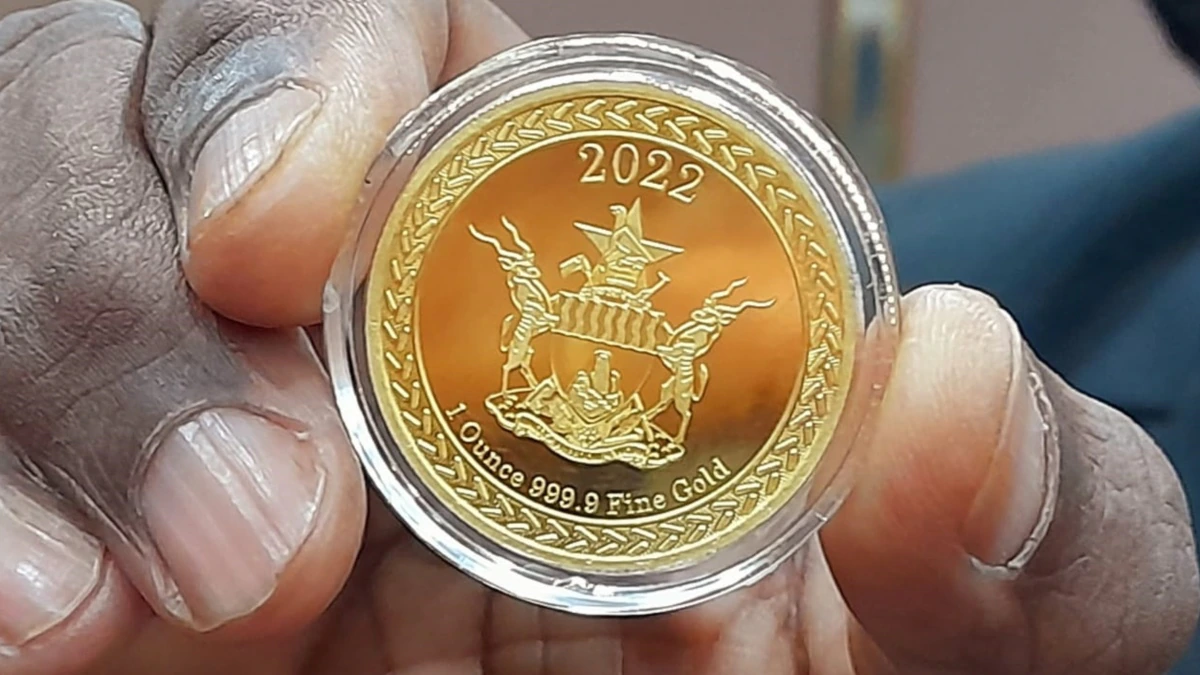
RBZ introduced Zimbabwe’s Mosi-oa-Tunya gold coins in smaller and larger denominations as an alternative store of value to the US dollars
Multi-currency system gazetted into law through Statutory Instrument 118A of 2022 for the duration of NDS 1
Inflation
Month-on-month inflation target of below 3 percent by December 2022 achieved
Investment
In May, President Mnangagwa attended the World Economic Forum in Davos, Switzerland
Government launched funding facilities for the productive sectors whose financing will come from the US$958 million International Monetary Fund (IMF) Special Drawing Rights.
Karo Mining Holdings commenced operations on the US$4,2 billion platinum project in Mhondoro, Mashonaland West
Government and two Chinese investors Eagle Canyon International/Pacific Group in September signed a Memorandum of Understanding for the development of US$13 billion mine-to-energy industrial park
Invictus Energy bought its drilling rig into Zimbabwe and started drilling for oil and gas in Muzarabani in September
Disco steel plant accorded national project status by the Government in February
Disco US$100 million worth of equipment for the large steel mills were brought into the country in June.
President Mnangagwa officiated at the groundbreaking ceremony of the US$1,5 billion Disco steel plant in October
Construction of the US$88 million Mbudzi interchange project began
Facilities to support the productive sectors like agriculture (irrigation schemes rehabilitation), horticulture, and manufacturing under the US$958 million IMF Special Drawing Rights were launched
President Mnangagwa commissioned the US$300 million spodumene project at Bikita Minerals
President Mnangagwa in December officiated at the US$130 million Sabi Star Lithium Mine ground-breaking ceremony in Buhera – The Herald


