


THE Government’s various support programmes for agriculture are set to spawn growth and enhanced productivity in the sector, which will woo the financial sector to participate more in agriculture.
“Improving throughput is indeed a key issue as productivity always anchors the business viability of the agriculture sector,” Agricultural Advisory and Rural Development Services (AARDS) chief director, Professor Obert Jiri has said.
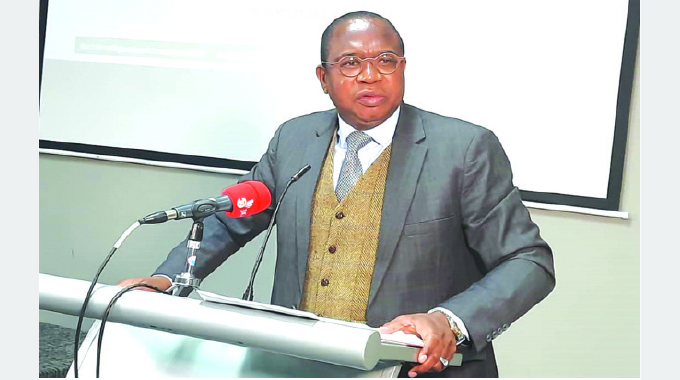
Prof Jiri’s comments come on the backdrop of Finance and Economic Development Minister Professor Mthuli Ncube’s observations that low yields undermined the competitiveness of the other sectors dependant on agriculture for inputs and increased the demand for imports to cover the production shortfalls, which in turn increased fiscal outlays to unsustainable levels undermining the balance of payment positions.
“Despite the opportunities and the ongoing transformation of the agriculture sector, the financial sector has largely been hesitant to support the sector and they are still to develop mechanisms associated with the sector, such as low production and crop failure due to climate change,” said Professor Ncube.
Government’s support towards a number of agriculture programmes has significantly increased output of strategic crops output levels for targeted crops such as wheat, which achieved a record 375 000 tonnes this year.
The country’s maize yields are generally below one and half tonnes per hectare, lower than neighbouring countries like Malawi, Zambia and South Africa at two and half tonnes.
There Pfumvudza programme to climate-proof agriculture is undoubtedly essential, as it address the improvement of production yields from the bulk of the country’s population in future and minimises Government’s subsidising of food production.
“The aim is to limit the Government’s role to supporting the vulnerable households, provision of requisite infrastructure as well as extension services, among other relevant support services,” said Professor Ncube.
The Government will therefore continue to restructure the sector and strengthen existing agro-based value chains, increase domestic production of fertilisers and other agriculture inputs, as well as deepen the liberalisation of agriculture markets.
“We have up-scaled engagements with relevant stakeholders to review the current agricultural financing model in order to increase the role of the private sector in the financing of the agricultural sector,” stressed Professor Ncube.
The Ministry of Lands, Agriculture, Fisheries, Water and Rural Development remains seized with improving on crop yields through a holistic approach by encouraging the right varieties, pest and disease management and proper agro-ecological matching of crop choices.
“This is what we may control, but there are also other factors, which we may need to adapt to and mitigate such as climate change and the development of irrigation and harnessing water for crop production is a way of climate proofing and increasing productivity,” said Professor Jiri. – The Herald


