



A more detailed policy to speed up viable investment in solar power by independent power producers, will ensure the implementation of the national renewable energy policy to boost generation.
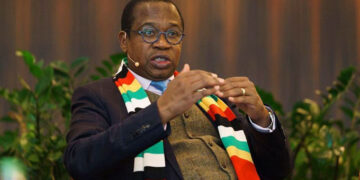
At a press conference yesterday, Minister of Finance and Economic Development Professor Mthuli Ncube said the renewable policy was aimed at fostering the production and use of renewable sources to supply the grid and provide energy off-grid.
“You may recall that in the formulation of the National Development Strategy 1 (2021-2025) and in line with national vision of attaining an upper middle-income status by 2030, the major key enabler in realising sustained economic growth is stable, sustainable, reliable and affordable electricity supply,” he said.
“Government crafted the national renewable energy policy strategy which sets to achieve and install renewable capacity of 1 100 MW or 16,5 percent of total electricity by 2025. By 2030, the target is that the installed renewable energy capacity should be 2 100MW or 26,5 percent of the overall electricity supply.
“The policy is aimed at fostering the production and use of renewable sources in the grid and off-grid. It aims to raise the share of renewables in the energy mix by creating incentives from the supply, to distribution and demand, in both urban and rural settings.”
To achieve the objective of powering the economy towards upper middle income by 2030, Government undertook to upgrade, rehabilitate and maintain the existing power generation infrastructure with priority being given to the development of new generation capacity through fast tracking ongoing projects and opening new energy sources, which take cognisance of a diversified energy mix.
“The strategy clearly outlines that Government policy will promote independent grid operators who want to contribute power into the national grid and to their clients,” he said.
“To this end, Government intends to speed up investment by the independent power producers with main focus on solar installation.
“A key ingredient to the successful implementation of the solar investment by the independents is a bankable Government implementation agreement with an economic tariff.
“The Government implementation agreement has three major components which are project development support agreement, power purchase agreement and the RBZ undertaking for foreign currency convertibility and transfer.
“I am delighted to announce the finalisation of the Government implementation agreement with these three components through the work of the Ministry of Energy and Power Development, Attorney General, Reserve Bank of Zimbabwe and the Ministry of Finance and Economic Development.”
Minister Ncube thanked the African Legal Support Facility (an international organisation hosted by the African Development Bank Group in Abidjan, Cote d’Ivoire) for their invaluable legal advice and support with coming up with the standardised Government implementation agreement which is in line with the international best practice.
Independent solar investors were at different stages in their investment processes. Some had agreements negotiated with ZETDC, which Government is now extending with Government guarantees.
Under the deal, Government guaranteed the economic tariff to qualifying independent solar investors that would have passed the screening process.
That process involved applying for the ZERA licencing, negotiating a production agreement and submitting proof of funding. Successful investors then signed the Government implementation agreement process, and the investor was ready to invest.
The independent producers are expected to put in US$1 billion for the first 1 000MW, a huge investment that thus required the general deal with the Government to minimise risk. – The Herald


